
Solana’s Latest Price Fluctuations and Institutional Involvement: Insights for Long-Term Investors
- Solana (SOL) faced 2025 price swings from $155 to $294, driven by macroeconomic pressures, on-chain weakness, and institutional adoption dynamics. - Institutional ETFs like Bitwise's BSOL attracted $2B AUM by mid-2025, with major holders staking SOL to deepen ecosystem integration despite short-term volatility. - Risks include network centralization, competition from Ethereum 2.0, and reliability concerns after the 2024 cluster outage amid Fed rate uncertainty. - Ecosystem resilience with 500+ dApps and
Solana in Late 2025: Navigating Volatility and Institutional Growth
By the end of 2025, Solana (SOL) has captured significant attention from both individual and institutional investors, as it faces a mix of global economic challenges, shifting on-chain activity, and increasing institutional participation. The asset’s value has fluctuated dramatically, dropping to a three-month low of $155 in November before rebounding to $294 in December. These price swings mirror broader market trends and highlight the growing impact of institutional capital. For those considering long-term investments, it’s essential to understand the factors driving this volatility and how institutional involvement shapes Solana’s outlook.
Understanding the 2025 Price Drop: Key Influences
Solana’s sharp decline to $155 in November 2025 resulted from a combination of macroeconomic pressures, on-chain weaknesses, and ecosystem-specific issues. The U.S. Federal Reserve’s ongoing tightening measures, including higher interest rates and reduced liquidity, put additional strain on the crypto sector. Solana, in particular, felt the impact due to its dependence on speculative capital.
On-chain statistics revealed a notable drop in network activity: daily active addresses fell from 7–9 million to just 3–4 million by mid-2025. Simultaneously, both decentralized exchange (DEX) trading volumes and total value locked (TVL) shrank, indicating waning user engagement and liquidity.
Technical challenges compounded these issues. Despite Solana’s reputation for speed, users increasingly encountered transaction failures and delays, undermining confidence among developers and participants. The convergence of these operational setbacks with unfavorable macroeconomic conditions triggered a significant price correction.
Institutional Involvement: Opportunities and Challenges
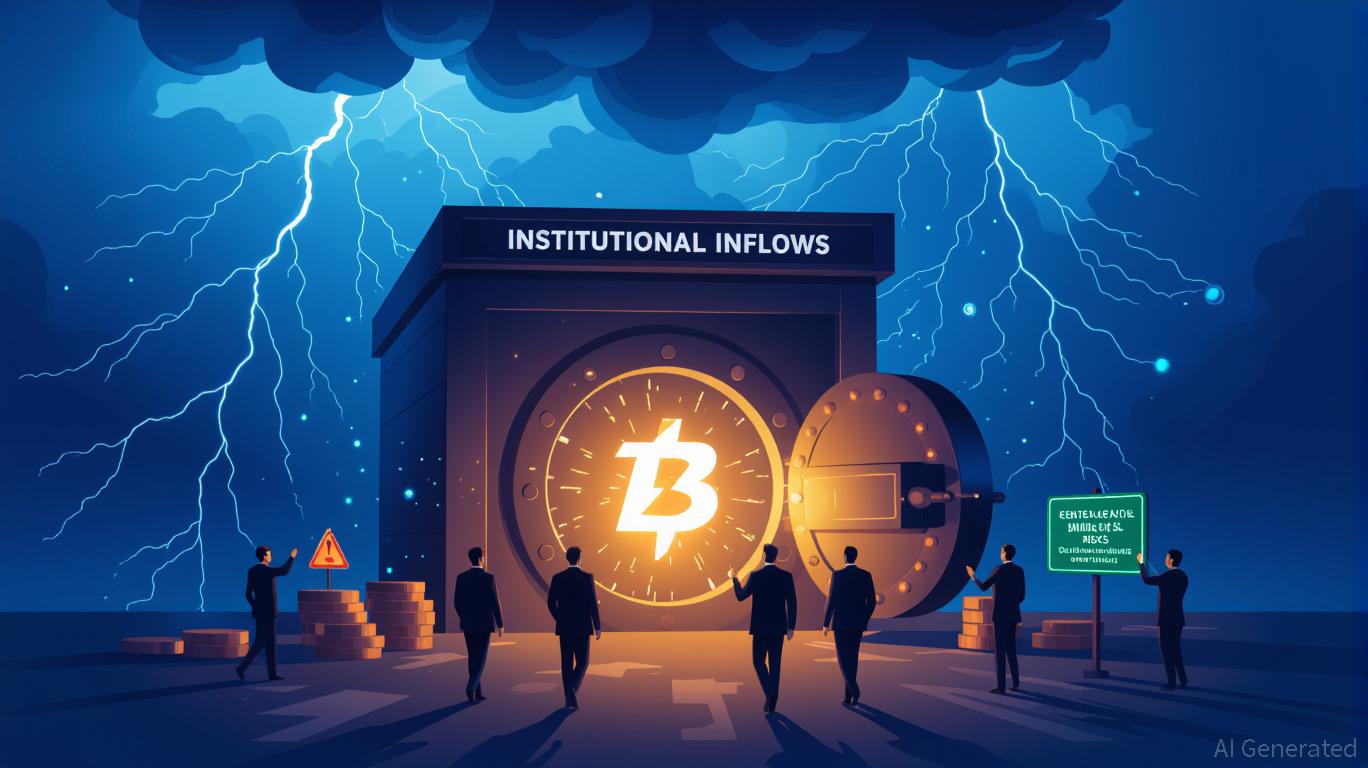
2025 saw a surge in institutional interest in Solana, fueled by the introduction of regulated exchange-traded funds (ETFs) such as 21Shares’ TSOL, Bitwise’s BSOL, and an upcoming product from VanEck. By mid-year, these funds managed a combined $2 billion in assets, with Bitwise’s BSOL alone attracting $420 million in its first week. This influx of institutional capital has helped stabilize Solana amid retail-driven volatility. For example, even after a 9% price dip in December, Solana ETFs still recorded $101.7 million in net inflows, signaling sustained institutional confidence.
Major players like Forward Industries (holding 6.82 million SOL) and Upexi (2.018 million SOL) have deepened their engagement, often staking their tokens to earn rewards and further integrate with the ecosystem. However, institutional participation does not guarantee short-term price stability. In late November, Solana ETFs experienced their first net outflow of $8.2 million, coinciding with a 15% price drop. This underscores that while institutional flows often reflect long-term strategies, short-term prices remain sensitive to broader economic and market sentiment shifts.
Risks Facing Long-Term Solana Investors
Despite the positive momentum from institutional adoption, several risks remain for those considering Solana as a long-term investment:
- Centralization Concerns: High hardware requirements for validators limit decentralization, raising questions about the network’s security and governance.
- Competitive Pressure: Rivals like Ethereum 2.0 and new layer-1 blockchains threaten Solana’s market position, especially if they deliver superior scalability or developer support.
- Reliability Issues: The network outage in February 2024 exposed vulnerabilities that could deter enterprise and developer adoption.
- Macroeconomic Uncertainty: Delayed interest rate cuts and risk-averse investor sentiment in late 2025 contributed to price declines, highlighting the need to distinguish between temporary setbacks and deeper structural issues.
Opportunities: Ecosystem Strength and Technological Progress
Despite these challenges, Solana’s ecosystem remains robust. The network supports over 500 decentralized applications (dApps) spanning DeFi, NFTs, and DePIN, generating significant transaction fees and attracting a vibrant developer community. Ongoing technical improvements, such as upgrades to the Proof of History (PoH) protocol and enhanced energy efficiency, continue to bolster Solana’s appeal.
Institutional adoption is expected to accelerate further, with the launch of a Solana + Staking ETF and increased use of Solana-based stablecoins. Industry analysts anticipate that these developments could push SOL’s price into the $200–$400 range by 2026, supported by both technical and fundamental factors.
Is Solana’s Volatility an Opportunity or a Warning?
For those with a long-term perspective, Solana’s recent price swings present both risks and potential rewards. The November 2025 correction offered a lower entry point for investors confident in Solana’s future. Strong institutional inflows and a resilient ecosystem suggest that the network’s core strengths remain intact. However, ongoing macroeconomic risks, centralization issues, and competitive threats mean that caution is warranted.
Diversification and patience are key. Investors willing to endure short-term turbulence and focus on Solana’s technological advancements and institutional support may find the current price range appealing. Conversely, those prioritizing stability should carefully consider the risks related to network reliability and regulatory developments.
Conclusion
Solana’s recent price volatility highlights both the difficulties of navigating a tightening economic environment and the opportunities created by growing institutional interest. The sharp drop to $155 in November 2025 served as a reminder of the network’s vulnerabilities, but also showcased its underlying strengths and the increasing confidence of major investors. For long-term participants, the central question is whether Solana’s technology, ecosystem, and institutional backing can overcome ongoing challenges. A balanced investment approach—capitalizing on attractive entry points while managing systemic risks—may offer the best path forward.
Disclaimer: The content of this article solely reflects the author's opinion and does not represent the platform in any capacity. This article is not intended to serve as a reference for making investment decisions.
You may also like
Zcash Halving and Its Impact on Cryptocurrency Market Trends
- Zcash's 2028 halving will cut block rewards to 0.78125 ZEC, continuing its deflationary supply model to reduce annual inflation to 2%. - Historical data shows halvings trigger extreme volatility, with ZEC surging 1,172% in 2025 but collapsing 96% within 16 days. - Institutional adoption grows via $137M Grayscale Zcash Trust, yet EU's MiCA regulations challenge privacy coins' compliance with transparency rules. - Future success depends on balancing privacy features with regulatory adaptability as Zcash's

Emerging Prospects for Industrial Real Estate in Webster, NY
- Webster , NY, is transforming its industrial real estate through the $9.8M FAST NY Grant, upgrading infrastructure on a 300-acre Xerox brownfield into a high-tech hub. - The initiative aims for a 2% industrial vacancy rate by 2025, boosting residential property values by 10.1% and attracting projects like the $650M fairlife® dairy facility. - Xerox campus reconfiguration and 600 Ridge Road redevelopment, supported by state programs, create shovel-ready spaces with modern infrastructure for advanced manuf
Why Solana's Latest Plunge Highlights Underlying Weaknesses in the Crypto Market
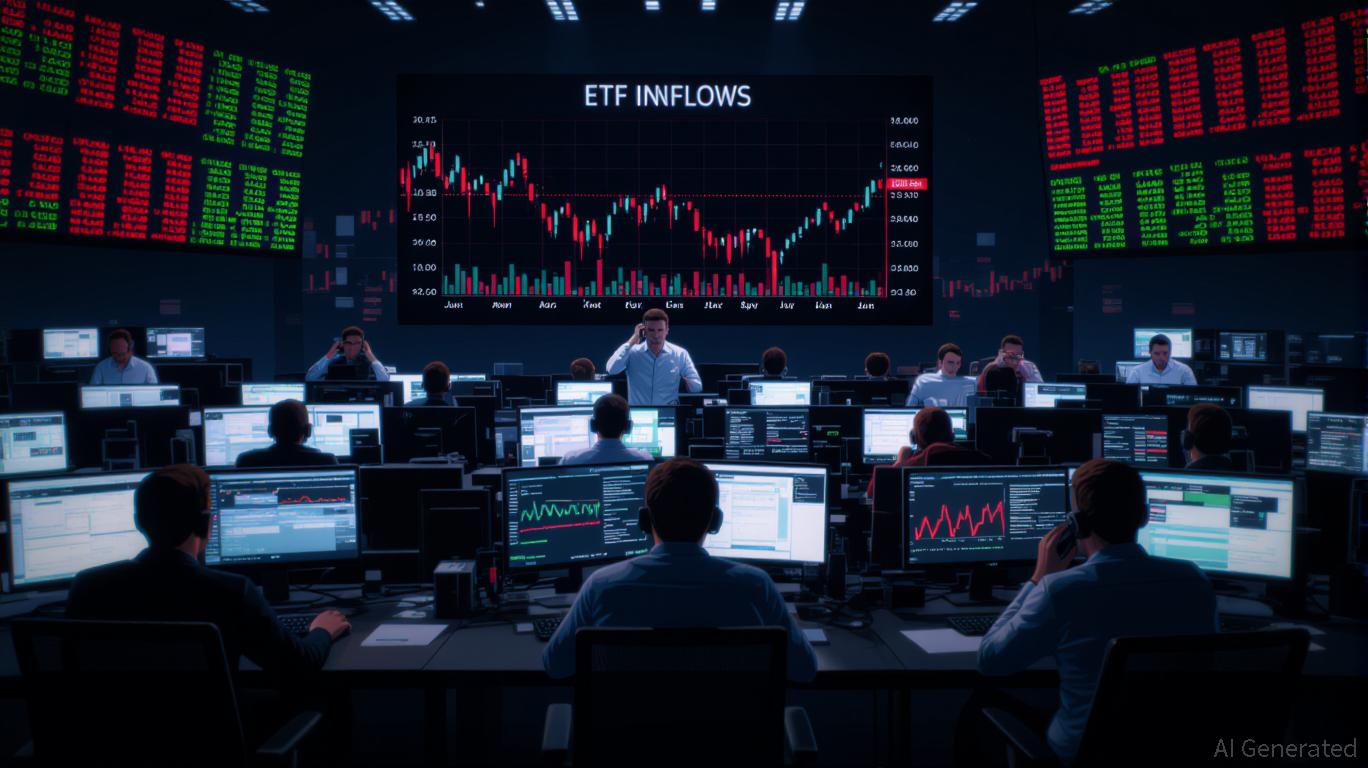
- Solana's 57% price crash in Nov 2025 exposed systemic crypto vulnerabilities, including psychological biases, excessive leverage, and fragile infrastructure. - Token unlocks from Alameda/FTX estates and $30M selling pressure triggered the downturn, yet $101.7M in institutional inflows highlighted market paradoxes. - Fed rate cuts drove $417M into Solana ETFs, but uncertainty caused 14% price drops, revealing crypto's growing integration with traditional finance. - $19B in liquidations during the Oct 11 "
The Growing Impact of Security Systems Technology on the Future Development of Higher Education Infrastructure
- 21st-century higher education infrastructure increasingly relies on advanced security systems to address cyberattacks and campus safety threats. - AI and zero-trust architectures enable proactive threat detection, with 80% of institutions adopting zero-trust strategies by 2025. - Integrated security investments boost enrollment, research credibility, and institutional reputation, though skill gaps and outdated infrastructure hinder full implementation. - ROI extends beyond cost savings, with 60% of stude

Trending news
MoreCrypto prices
More





