
PancakeSwap banned in Turkey in DEX crackdown: is Uniswap next?

Turkey’s financial regulator announced a ban on decentralized exchanges like PancakeSwap.
On Friday, July 4, local media reported that Turkey’s Capital Markets Board (CMB) blocked access to PancakeSwap (CAKE) for the country’s citizens. Along with the DEX, the country also blocked access to the crypto comparison platform CryptoRadar.
Authorities cited “unauthorized crypto asset service provision” as the reason for the ban, stating that the platforms did not have the required authorization to operate in the country. The decision was made under powers granted to the agency in 2024, when new legislation allowed the CMB to block foreign crypto service providers operating without a license.
In March, the CMB introduced updated regulations on licensing and oversight of crypto asset service providers. The new rules mandated stricter transparency and reporting requirements, including the provision of monthly account statements for all customers. Platforms are also required to disclose details of all user transactions.
Despite the crackdown, Turkey still permits regulated exchanges to operate. In March 2025, Turkish bank Bank Pozitif partnered with Taurus to launch a suite of crypto services.
Turkey tightens crypto legislation
The PancakeSwap ban was the first time a decentralized exchange was targeted by enforcement. Previously, only centralized platforms, like Binance and FTX , were banned in the country. For this reason, other DEXs like Uniswap (UNI) , Raydium may be at risk. What is more, other crypto platforms, including DEX aggregators, analytics dashboards, etc, could also be banned.
Interestingly, the enforcement came after significant crypto asset adoption in the country. Since 2022, Turkey has suffered from prolonged inflation . This has pushed many of its citizens to invest in crypto assets, which offered relative stability compared to the national currency.
The scramble to invest in crypto assets also showed up in the country’s crypto stats. Notably, in June 2024, the Turkish lira became the third-largest fiat currency that was used in purchasing crypto, taking the Euro’s spot.
Disclaimer: The content of this article solely reflects the author's opinion and does not represent the platform in any capacity. This article is not intended to serve as a reference for making investment decisions.
You may also like
Who decides the fate of 210 billions euros in frozen Russian assets? German Chancellor urgently flies to Brussels to lobby Belgium
In order to push forward the plan of using frozen Russian assets to aid Ukraine, the German Chancellor even postponed his visit to Norway and rushed to Brussels to have a working meal with the Belgian Prime Minister, all in an effort to remove the biggest "obstacle."
The "Five Tigers Competition" concludes successfully | JST, SUN, and NFT emerge as champions! SUN.io takes over as the new driving force in the ecosystem
JST, SUN, and NFT are leading the way, sparking increased trading and community activity, which is driving significant capital inflows into the ecosystem. Ultimately, the one-stop platform SUN.io is capturing and converting these flows into long-term growth momentum.
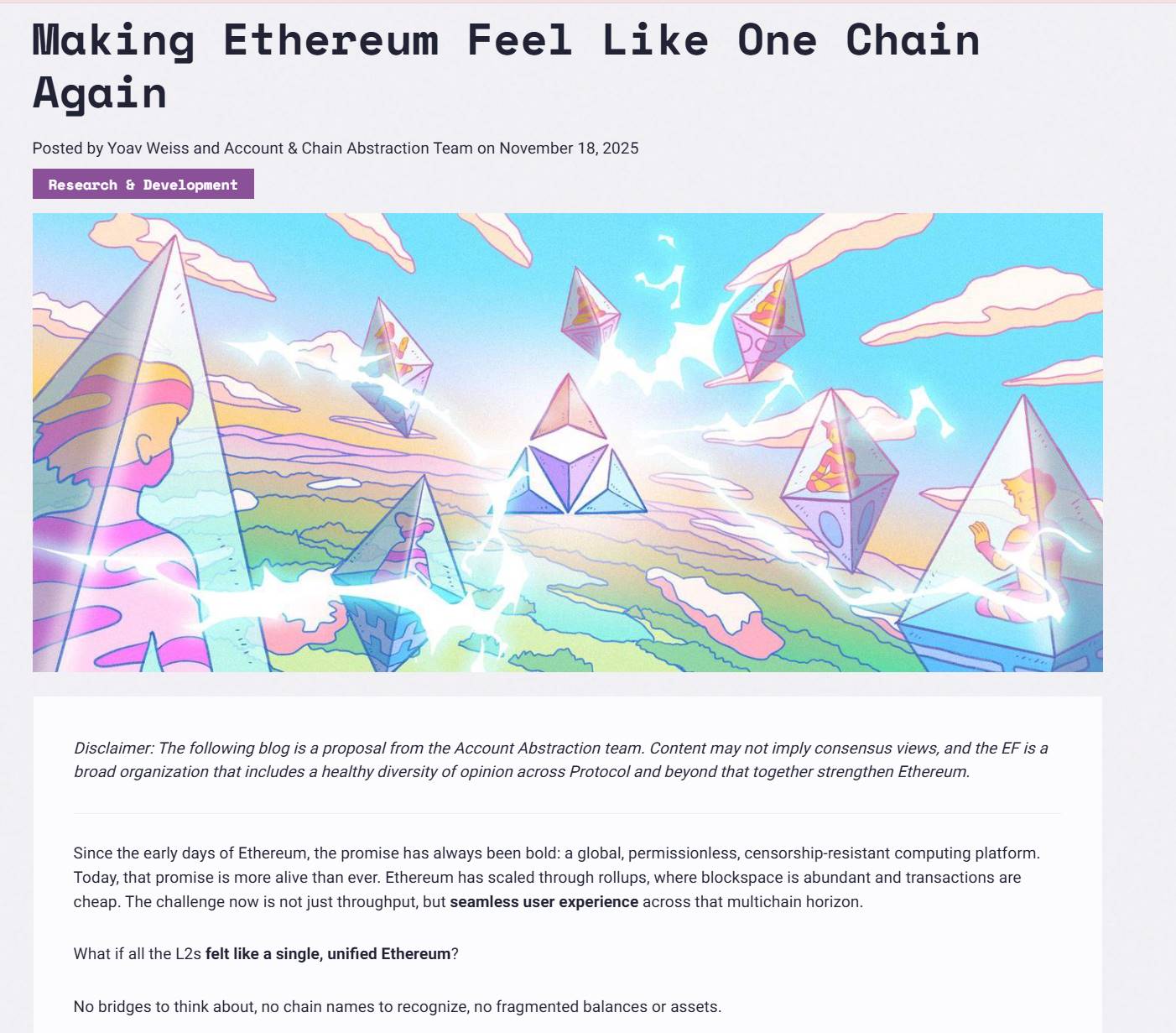
The End of Ethereum's Isolation: How EIL Reconstructs Fragmented L2s into a "Supercomputer"?
EIL is the latest answer provided by the Ethereum account abstraction team and is also the core of the "acceleration" phase in the interoperability roadmap.
Trending news
MoreCrypto prices
More





