
CKpool rolls out low-latency pool after solo miner racks up 3.175 BTC reward

CKpool developer and administrator Con Kolivas announced on X the launch of a new solo BTC pool located in Brisbane, Australia. The goal of this Bitcoin mining pool is to service Oceania and Asia-Pacific miners.
The new AU solo pool is separated from the main CK pool and the EU solo BTC mining pool due to latency and performance reasons. As per the X post, the AU BTC pool will operate with low latency.
Con Kolivas stated that blocks generated from the AU BTC mining pool will be propagated between other sibling pools. Moreover, the AU BTC blocks will carry the same signature from the main CK pool but with the prefix “ckpoolau.”
The developer clarified that miners will have the option to utilize other sibling pools for backup. The main solo CK pool covers most of the world, but with relatively lower latency.
AU pool is likely Bitaxe dominated
Con Kolivas predicted that the AU pool will comprise mostly of Bitaxe mining rigs. He also predicted that the AU pool will have the lowest hashrate compared to other solo CK pools. This is due to high electricity costs in Australia.
Currently, the average cost of residential electricity in Australia is AUD 33 cents per kilowatt-hour (kWh), while commercial electricity costs between AUD 25 and AUD 45 cents per kWh. In the United States, the average residential electricity rate is USD 12.89 cents per kWh (AUD 19.6 cents), compared with AUD 33 cents per kWh in Australia. This is 60% of what Australians pay for each kilowatt-hour of electricity.
The average Bitaxe rig hashrate ranges between 0.4–1.2 Terahash (TH/s). This means the electricity costs in Australia for running a Bitaxe solo miner will be AUD 16 cents per day at the average residential rate of AUD 33 cents, and between AUD 12 cents and AUD 22 cents per day at commercial rates of AUD 25 to 45 cents per kWh.
While the daily costs seem minimal, the chance of solving a Bitcoin block and winning the mining fees of 3.175 BTC will take 14,075 years based on calculations from SoloChance.
A Bitaxe rig tends to sell for roughly USD 150 each, and committed hobbyists usually run a cluster of 2 to 4 BTC rigs.

Solo Bitcoin miner racks in 3.175 BTC with 200 Ph/s
Yesterday, Con Kolivas congratulated a solo miner for winning 3.175 BTC after solving block number 904,989. The miner solved the 302nd solo block with a huge hashrate of 200 petahashes per second (Ph/s). Con Kolivas wrote, “A miner of this size would solve a block once every ~35 days on average at current mining difficulty.”
He further clarified that a miner of this size is probably renting hashrate. This is because the high hashrate of 200 Ph/s is much higher than the hashrate of available mining hardware. The developer said that this miner started mining Bitcoin on January 9, 2025. That’s around 7 months only.
In 2017, Con Kolivas opened a shared Bitcoin mining pool with zero fees. The pool provided instant coinbase payment to miners. The developer created the pool as a service for the community. However, he shut it down in 2020 because it failed to attract enough hashrate to stay running.
Disclaimer: The content of this article solely reflects the author's opinion and does not represent the platform in any capacity. This article is not intended to serve as a reference for making investment decisions.
You may also like
Five charts to help you understand: Where does the market go after each policy storm?
After this regulatory crackdown, is it a harbinger of an impending downturn, or the beginning of a new cycle where all negative news has been fully priced in? Let’s examine the trajectory after the storm through five key policy milestones.

Mars Morning News | The crypto market rebounds across the board, Bitcoin rises above $94,500; The "CLARITY Act" draft is expected to be released this week
The crypto market has fully rebounded, with bitcoin surpassing $94,500 and US crypto-related stocks rising across the board. The US Congress is advancing the CLARITY Act to regulate cryptocurrencies. The SEC chairman stated that many ICOs are not securities transactions. Whales are holding a large number of profitable ETH long positions. Summary generated by Mars AI. The accuracy and completeness of the content generated by the Mars AI model is still being iteratively updated.

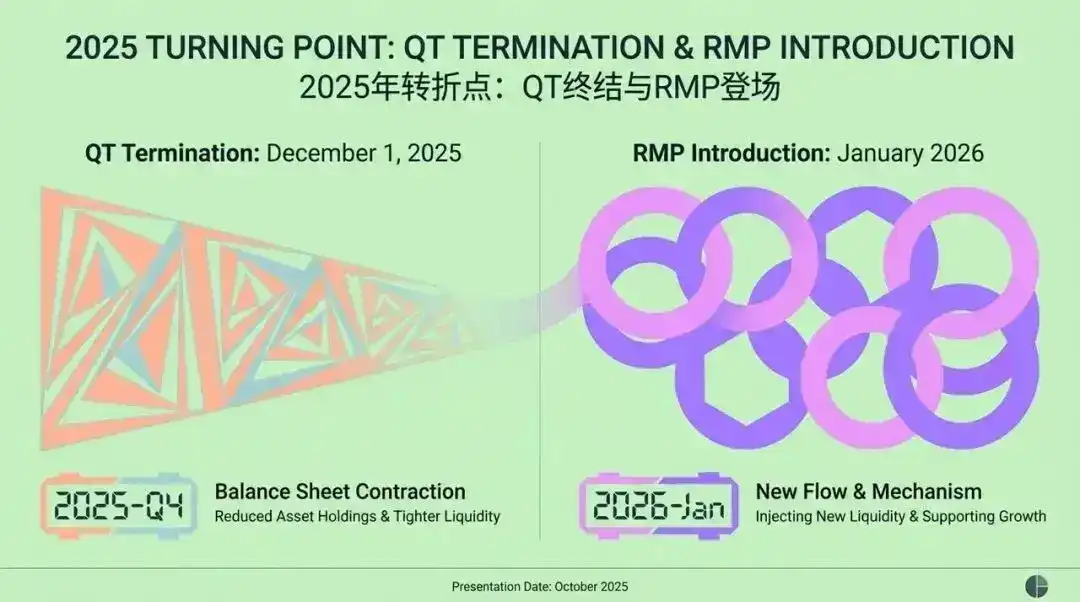
Federal Reserve’s Major Shift: From QT to RMP, How Will the Market Transform by 2026?
The article discusses the background, mechanism, and impact on financial markets of the Federal Reserve's introduction of the Reserve Management Purchases (RMP) strategy after ending Quantitative Tightening (QT) in 2025. RMP is regarded as a technical operation aimed at maintaining liquidity in the financial system, but the market interprets it as a covert easing policy. The article analyzes RMP's potential effects on risk assets, the regulatory framework, and fiscal policy, and provides strategic recommendations for institutional investors. Summary generated by Mars AI This summary was generated by the Mars AI model, and the accuracy and completeness of its content are still in the process of iterative improvement.
Rate Hike in Japan: Will Bitcoin Resist Better Than Expected?
Trending news
MoreCrypto prices
More





