
The Impact of Rising Core PCE Inflation on the Fed's Rate-Cut Path and Market Implications
- Fed faces dilemma as July 2025 core PCE inflation hits 2.9%—highest since February—forcing delay in rate cuts amid cooling labor market. - FOMC remains divided: some seek cuts to support employment, while others warn premature easing risks entrenched inflationary expectations. - Markets price 87% chance of 25-basis-point cut in September, contrasting Fed's cautious stance which sustains dollar strength against global risks. - Investors favor tech, healthcare, and financials for resilience in prolonged hi
The Federal Reserve faces a delicate balancing act as July 2025 core PCE inflation rose to 2.9% year-over-year—the highest level since February 2025—while labor market signals show signs of cooling [1]. This persistence above the 2% target, driven by tariff-induced price pressures and resilient services-sector inflation, has forced policymakers to adopt a cautious stance on rate cuts. The July FOMC minutes reveal a committee divided: while some members advocate for cuts to support employment, others warn that premature easing could entrench inflationary expectations [3]. This tension underscores the Fed’s dilemma: how to navigate a slowing economy without reigniting inflation.
Inflation Persistence and the Case for Caution
The July core PCE data, which excludes volatile food and energy, highlights the stickiness of inflation. A 0.3% monthly increase, coupled with a 2.9% annual reading, suggests that price pressures are not abating despite the Trump administration’s tariff policies [3]. Services-sector inflation, in particular, remains a red flag, as it is less responsive to monetary policy and more deeply embedded in wage-price feedback loops. Fed Chair Jerome Powell has emphasized the need for “more data” before committing to cuts, citing the risk of repeating the 2022 miscalculation that allowed inflation to spiral [5].
Markets, however, are pricing in a 87% probability of a 25-basis-point rate cut at the September meeting [1]. This disconnect between market expectations and central bank caution reflects the Fed’s credibility challenge: investors may lose confidence in its ability to balance growth and inflation if cuts are delayed too long. Yet, the Fed’s hawkish signals have kept the dollar resilient, offering a temporary buffer against global economic uncertainties [4].
Strategic Asset Allocation in a Delayed Easing Cycle
A slower Fed easing cycle creates both risks and opportunities for investors. Sectors with pricing power and defensive characteristics are likely to outperform. Technology, for instance, remains a key beneficiary of AI-driven innovation and digital transformation, with large-cap firms like Microsoft and Alphabet gaining traction amid high capital expenditures [1]. Healthcare, particularly biotechnology and medical devices, is another winner, as demand for advanced therapies and robotics accelerates [2].
Financial services, including regional banks and insurance companies, are also well-positioned. Higher interest rates have boosted net interest margins, while insurance firms leverage their ability to adjust premiums in response to inflation [2]. Utilities and aerospace/defense sectors are additional beneficiaries, supported by policy-driven demand for energy infrastructure and global defense spending [4].
Conversely, smaller-cap equities and sectors reliant on consumer discretionary spending face headwinds. The delayed easing cycle prolongs high borrowing costs, squeezing margins for firms with less pricing power. Investors should also consider hedging against dollar volatility by diversifying into international equities, which have gained appeal as the Fed’s hawkish stance wanes [4].
Conclusion
The July core PCE data reinforces the need for a measured approach to rate cuts. While the Fed’s caution is justified by inflationary risks, investors must adapt to a prolonged high-rate environment by prioritizing sectors with structural growth and pricing resilience. A strategic asset allocation—favoring technology, healthcare, and financials—can mitigate the drag of delayed easing while capitalizing on long-term trends. As the Fed navigates this complex landscape, patience and agility will be critical for preserving portfolio value.
**Source:[1] Core inflation rose to 2.9% in July, highest since February [2] Sector opportunities for Q3 2025 [3] July PCE Forecasts Show Inflation Above Fed's Target [4] 2025 Q3 Market Outlook: Global Tailwinds in a World of ... [5] Fed acknowledges slowing US economy as two vote for an immediate rate cut
Disclaimer: The content of this article solely reflects the author's opinion and does not represent the platform in any capacity. This article is not intended to serve as a reference for making investment decisions.
You may also like
Mars Morning News | Ethereum Fusaka upgrade officially activated; ETH surpasses $3,200
The Ethereum Fusaka upgrade has been activated, enhancing L2 transaction capabilities and reducing fees; BlackRock predicts accelerated institutional adoption of cryptocurrencies; cryptocurrency ETF inflows have reached a 7-week high; Trump nominates crypto-friendly regulatory officials; Malaysia cracks down on illegal Bitcoin mining. Summary generated by Mars AI. The accuracy and completeness of this summary are still undergoing iterative updates.

Do you think stop-losses can save you? Taleb exposes the biggest misconception: all risks are packed into a single blow-up point.
Nassim Nicholas Taleb's latest paper, "Trading With a Stop," challenges traditional views on stop-loss orders, arguing that stop-losses do not reduce risk but instead compress and concentrate risk into fragile breaking points, altering market behavior patterns. Summary generated by Mars AI. The accuracy and completeness of this summary are still being iteratively improved by the Mars AI model.

With capital outflows from crypto ETFs, can issuers like BlackRock still make good profits?
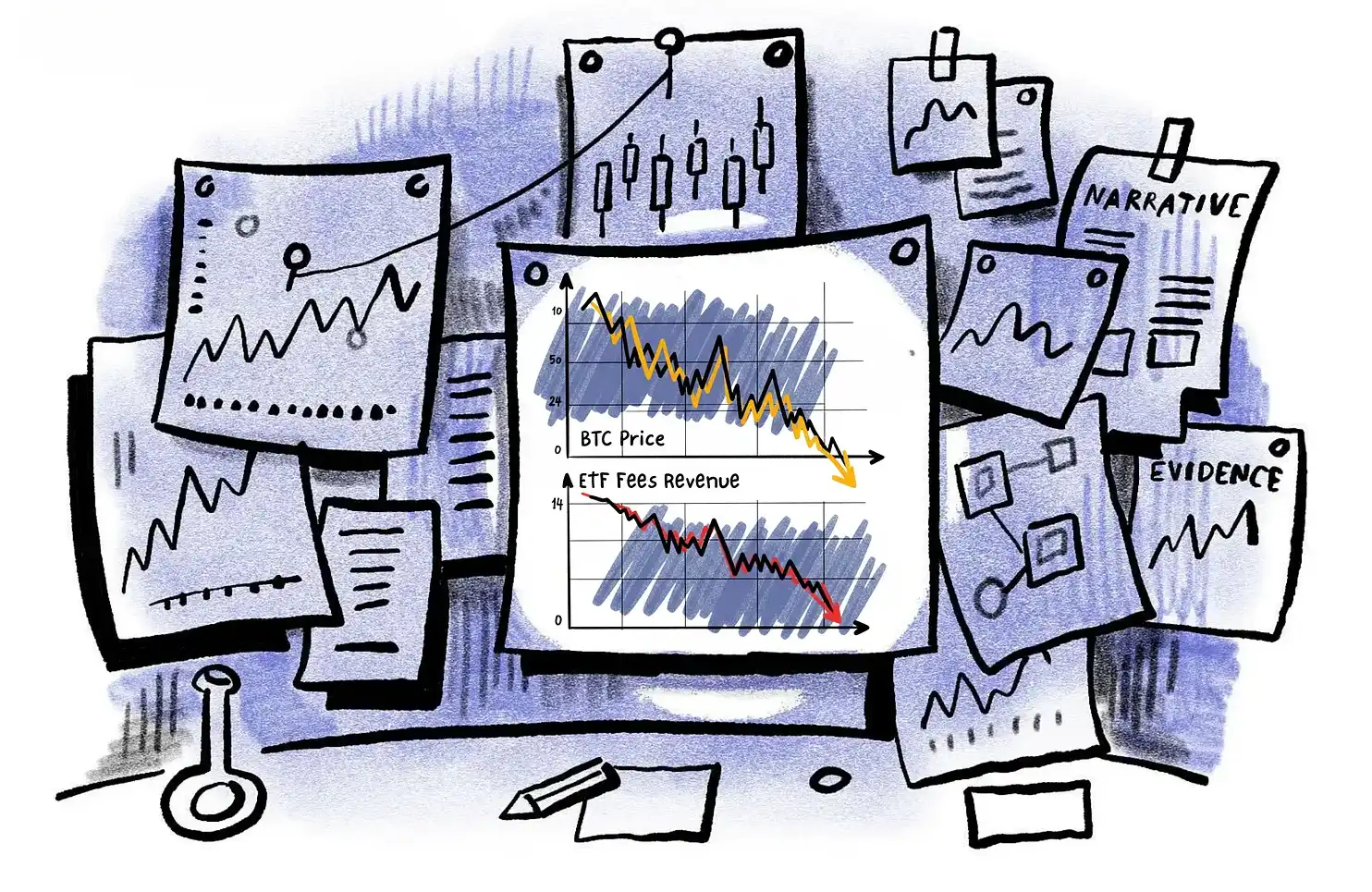
BlackRock's crypto ETF fee revenue has dropped by 38%, and its ETF business is struggling to escape the cyclical curse of the market.
Incubator MEETLabs today launched the large-scale 3D fishing blockchain game "DeFishing". As the first blockchain game on the GamingFi platform, it implements a dual-token P2E system with the IDOL token and the platform token GFT.
MEETLabs is an innovative lab focused on blockchain technology and the cryptocurrency sector, and also serves as the incubator for MEET48.

Trending news
MoreCrypto prices
More






