
India Joins Global Crypto Surveillance Web by 2027
- India will implement the OECD's Crypto-Asset Reporting Framework (CARF) by 2027, joining 69 jurisdictions to enhance crypto tax transparency through cross-border data sharing. - The framework requires crypto service providers to collect and report customer/transaction data annually, with international exchanges starting in 2027 and compliance covering exchanges, brokers, and ATMs. - Exclusions include investment funds and DAOs unless directly facilitating transactions, while OECD updated technical guidel
India is preparing to implement the OECD's Crypto-Asset Reporting Framework (CARF), aligning with global efforts to enhance transparency in the cryptocurrency sector. The framework, set to be adopted by 69 jurisdictions by June 2025, mandates crypto-asset service providers (RCASPs) to collect and report detailed customer and transaction data annually to national tax authorities. These reports will then be exchanged internationally to ensure cross-border monitoring of crypto-related revenues and tax compliance [1].
Under CARF, RCASPs must obtain self-certifications from customers to determine tax residency and conduct due diligence to identify reportable customers or controlling persons. The first annual reports are expected to be submitted for the calendar year starting January 2026, with international data exchanges beginning by 2027 [1]. Entities providing services that facilitate exchange transactions—such as converting crypto-assets into fiat currencies or other crypto-assets—are required to comply. This includes exchanges, brokers, market makers, and operators of crypto-asset ATMs. However, certain activities, such as those of investment funds or decentralized autonomous organizations (DAOs), are typically excluded unless they engage directly in exchange facilitation [1].
The OECD has also updated its technical documentation for tax administrations, including a revised XML schema to support the automatic exchange of information under CARF, released in July 2025 [2]. This schema enables standardized reporting, streamlining the process for authorities to collect and analyze cross-border data. The revisions ensure alignment with existing frameworks like the Common Reporting Standard (CRS) and aim to avoid overlapping reporting requirements for entities already under FATCA or CRS [1].
Jurisdictional obligations under CARF depend on factors such as tax residency, incorporation, and operational presence. RCASPs will report to the jurisdiction where they are tax-resident or have a significant business presence. The framework includes safeguards against duplicate reporting for entities operating across multiple jurisdictions [1]. Additionally, customers are broadly defined to include any user of a RCASP’s services, with specific exclusions for financial institutions and entities that are publicly traded or government-related [1].
Transactions subject to reporting include both exchange and transfer activities. Exchange transactions involve the swapping of crypto-assets for fiat or other digital assets, while transfers refer to movements of crypto-assets outside of exchange contexts, such as collateralized loans or staking activities. Certain high-value transactions—such as payments for goods or services exceeding USD 50,000—require additional reporting to help tax authorities identify potential evasion [1]. The framework also covers wrapping services and liquid staking, which are considered exchange transactions for reporting purposes [1].
Entities in the crypto sector are advised to assess their exposure under CARF, determine whether they qualify as RCASPs, and prepare internal systems for compliance. This includes updating policies, training staff, and ensuring IT infrastructure can handle reporting requirements. As more jurisdictions finalize implementation plans, businesses must stay informed about local legislative developments and guidance from the OECD and national tax authorities [1].
Source:
Disclaimer: The content of this article solely reflects the author's opinion and does not represent the platform in any capacity. This article is not intended to serve as a reference for making investment decisions.
You may also like
Mars Morning News | Ethereum Fusaka upgrade officially activated; ETH surpasses $3,200
The Ethereum Fusaka upgrade has been activated, enhancing L2 transaction capabilities and reducing fees; BlackRock predicts accelerated institutional adoption of cryptocurrencies; cryptocurrency ETF inflows have reached a 7-week high; Trump nominates crypto-friendly regulatory officials; Malaysia cracks down on illegal Bitcoin mining. Summary generated by Mars AI. The accuracy and completeness of this summary are still undergoing iterative updates.

Do you think stop-losses can save you? Taleb exposes the biggest misconception: all risks are packed into a single blow-up point.
Nassim Nicholas Taleb's latest paper, "Trading With a Stop," challenges traditional views on stop-loss orders, arguing that stop-losses do not reduce risk but instead compress and concentrate risk into fragile breaking points, altering market behavior patterns. Summary generated by Mars AI. The accuracy and completeness of this summary are still being iteratively improved by the Mars AI model.

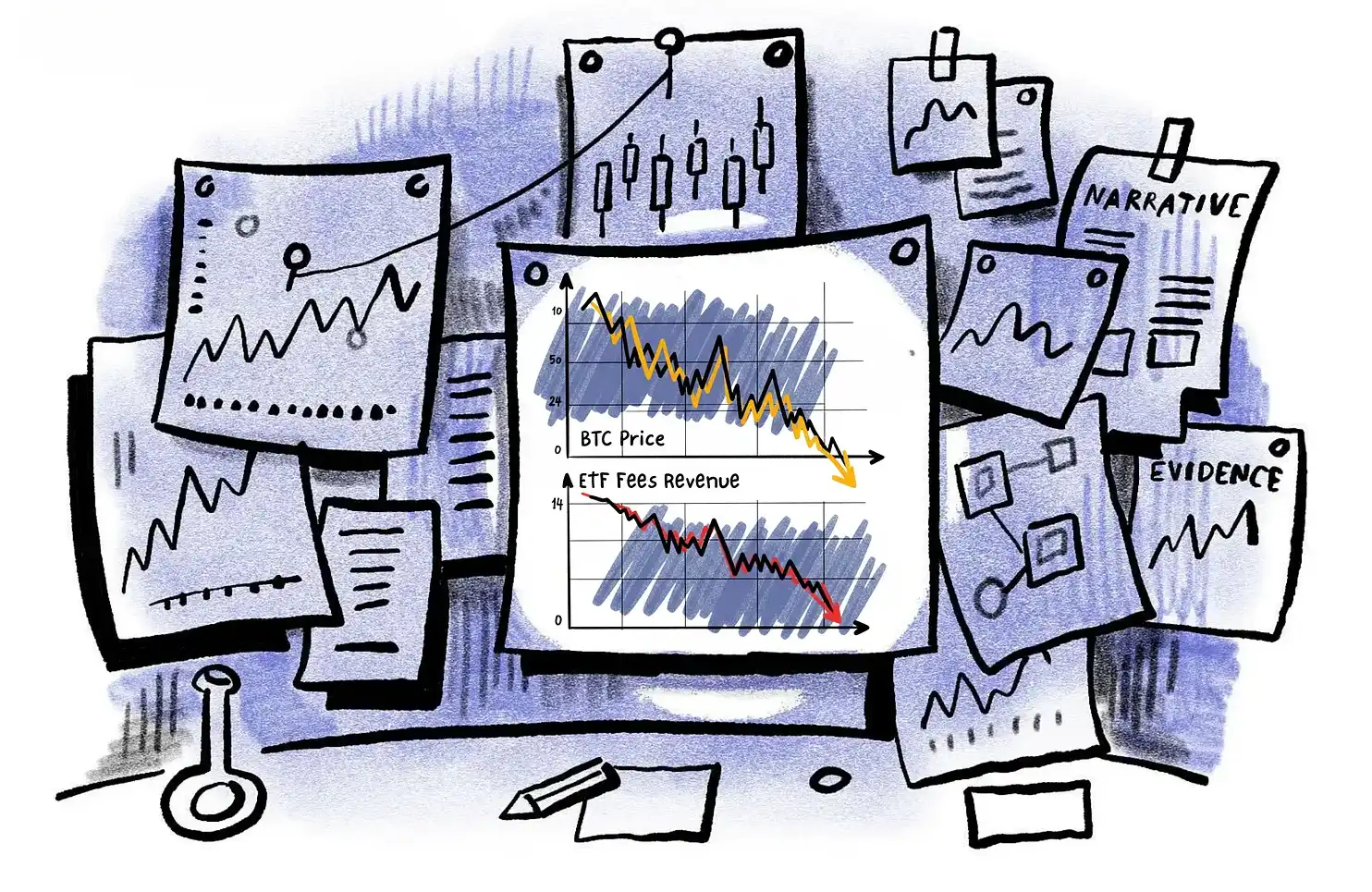
With capital outflows from crypto ETFs, can issuers like BlackRock still make good profits?
BlackRock's crypto ETF fee revenue has dropped by 38%, and its ETF business is struggling to escape the cyclical curse of the market.
Incubator MEETLabs today launched the large-scale 3D fishing blockchain game "DeFishing". As the first blockchain game on the GamingFi platform, it implements a dual-token P2E system with the IDOL token and the platform token GFT.
MEETLabs is an innovative lab focused on blockchain technology and the cryptocurrency sector, and also serves as the incubator for MEET48.

Trending news
MoreCrypto prices
More






