
Trump Appears Live to Refute Rumors: Amid Tariff Concerns and Geopolitical Tensions, BTC and ETH May Become Global Safe-Haven Focus

Recently, former U.S. President Trump made a public appearance via livestream, directly refuting the "death rumors." Two consecutive days of silence had caused panic in global markets, but his statement not only stabilized some sentiment, it also released a series of important signals impacting the macroeconomy and crypto assets.
1. Rumor Refutation and Market Volatility
During the livestream, Trump emphasized that he was "healthy and energetic," and stated he would continue to pursue aggressive economic policies. After the rumors were dispelled, U.S. stocks briefly stabilized, but uncertainty still shrouded the market. Safe-haven funds quickly flowed into gold, bitcoin (BTC), and ethereum (ETH), highlighting the "digital safe haven" status of crypto assets during unexpected events.
2. Tariff Policy as the Core
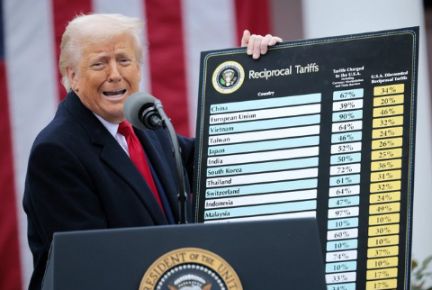
Trump insisted that tariffs are an important fiscal tool for the United States, and their removal would result in trillions of dollars in losses. He confirmed that the 50% tariff on India would continue, despite widespread pressure from the business community to relax it.
For traditional markets, this means increased cost pressures for export-oriented industries and manufacturing;
For the crypto market, the inflation risk brought by high tariffs may further stimulate capital inflows into BTC and ETH.
3. The Double-Edged Sword of Geopolitics
On foreign policy issues, Trump criticized Putin while downplaying the threat of China-Russia relations, emphasizing "America First." This tough stance has heightened international tensions. Historical experience shows that whenever global geopolitical situations deteriorate, the demand for gold and bitcoin as safe havens tends to rise simultaneously.
4. Ukraine and Spillover Effects
Although Trump did not reveal many details, only promising support for a "better future," any policy adjustment by the U.S. towards Ukraine will affect the dollar's trend and commodity prices. Such volatility can easily transmit to the crypto market, accelerating short-term price fluctuations of BTC and ETH.
5. Stablecoins and Emerging Markets
Tariff wars and trade frictions not only affect global inflation but also drive emerging markets to accelerate the adoption of stablecoins such as USDT and USDC. Data shows that whenever geopolitical tensions rise, on-chain trading volumes of stablecoins surge significantly, becoming a "gray dollar alternative" for cross-border capital.
Conclusion
Trump's livestream clarified the "death rumors," but at the same time reinforced market uncertainty. Three key judgments can be drawn:
Trump still leads with tough economic policies, and tariffs will remain the most important policy tool for the U.S.
Global inflation and escalating geopolitical tensions will further enhance the safe-haven asset attributes of BTC and ETH.
Stablecoin adoption continues to expand, becoming a new channel for trade friction and capital flows.
For crypto investors, September and October 2025 may usher in a period of high volatility. Institutional funds have already made early arrangements. If retail investors want to avoid passive buying at highs and selling at lows, they should adjust their positions early and focus on BTC, ETH, and high-quality altcoins with real application scenarios.
Disclaimer: The content of this article solely reflects the author's opinion and does not represent the platform in any capacity. This article is not intended to serve as a reference for making investment decisions.
You may also like
Decoding VitaDAO: A Paradigm Revolution in Decentralized Science

Mars Morning News | ETH returns to $3,000, extreme fear sentiment has passed
The Federal Reserve's Beige Book shows little change in U.S. economic activity, with increasing divergence in the consumer market. JPMorgan predicts a Fed rate cut in December. Nasdaq has applied to increase the position limit for BlackRock's Bitcoin ETF options. ETH has returned to $3,000, signaling a recovery in market sentiment. Hyperliquid has sparked controversy due to a token symbol change. Binance faces a $1 billion terrorism-related lawsuit. Securitize has received EU approval to operate a tokenization trading system. The Tether CEO responded to S&P's credit rating downgrade. Large Bitcoin holders are increasing deposits to exchanges. Summary generated by Mars AI. The accuracy and completeness of this summary are still being iteratively improved by the Mars AI model.

The central bank sets a major tone on stablecoins for the first time—where will the market go next?
The People's Bank of China held a meeting to crack down on virtual currency trading and speculation, clearly defining stablecoins as a form of virtual currency with risks of illegal financial activities, and emphasized the continued prohibition of all virtual currency-related businesses.

Trending news
MoreCrypto prices
More





