
Fed Rate Cut Hopes Fade as Crypto ETFs See $660M Outflow
- Bitcoin and Ethereum ETFs recorded $660M net outflows as macroeconomic uncertainty and regulatory scrutiny drove investor caution. - Major issuers like Fidelity (FBTC/FETH) and Grayscale (GBTC/ETHE) led redemptions, with cumulative Ethereum ETF outflows hitting $500M. - Prices fell 1.7% for Bitcoin and 1.5% for Ethereum, while the Crypto Fear and Greed Index hit 32, signaling extreme bearish sentiment. - Analysts warn of deeper corrections if key support levels break, with institutional flows and U.S. in

Bitcoin and Ether exchange-traded funds (ETFs) ended the week with total net outflows surpassing $660 million, signaling increased investor wariness amid ongoing economic uncertainty and regulatory pressures. U.S. spot
Leading issuers were at the forefront of these outflows. Fidelity’s Wise Origin Bitcoin Fund (FBTC) recorded the largest single-day redemption at $114.8 million on September 25, while Grayscale’s
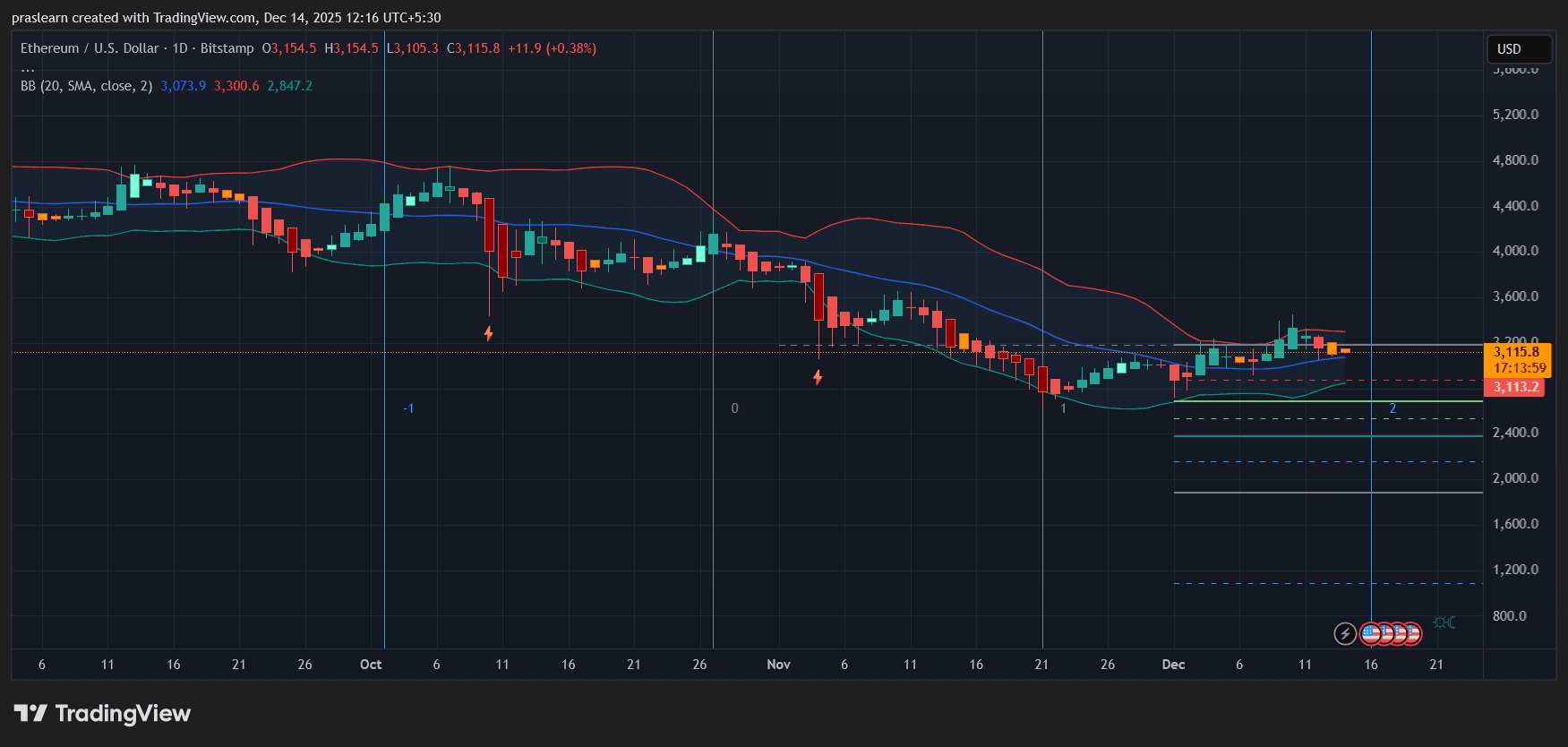
This wave of selling coincided with a broader market downturn. Bitcoin declined by 1.7% to $109,329, wiping out nearly 6% of its value over the week, while Ethereum dropped 1.5% to $3,956, with a seven-day loss of 12.5%. According to on-chain analytics provider Glassnode, long-term Bitcoin investors have realized profits on over 3.4 million BTC, a trend often seen near market peaks. Experts attributed the outflows to profit-taking, economic uncertainty, and the Federal Reserve’s recent rate reduction, which initially boosted optimism but has since lost momentum [2].
Market sentiment grew more negative, as shown by the Crypto Fear and Greed Index, which dropped to 32 (“Fear”) on September 26, its lowest reading since March. Technical signals also indicated increased risk. Bitcoin was trading below both its 50- and 100-hour moving averages, with crucial support at $107,300 appearing vulnerable. Ethereum’s relative strength index (RSI) plunged to 14.5, its most oversold point since June 2025, suggesting a possible short-term bounce if
The recent ETF outflows underscore the delicate state of institutional involvement in crypto. While Bitcoin ETFs have accumulated $57.2 billion in net inflows since their inception, the latest redemptions indicate a more cautious stance ahead of upcoming U.S. inflation reports and possible regulatory changes. The surge in institutional interest for Ethereum earlier this summer, which saw ETH ETFs attract $2.4 billion in August, has reversed as capital shifts back to Bitcoin. BlackRock’s ETHA, the largest Ethereum ETF, continues to play a significant role, though its influence has diminished amid renewed selling [6].
Experts remain split on what lies ahead. Markus Thielen from 10x Research cautioned that a deeper drop could occur if Bitcoin falls below $107,500, while analysts at CryptoQuant pointed out that the decline is still within the range of a typical correction unless support is clearly breached. The next few weeks will reveal whether ETF flows stabilize or continue to reflect the crypto market’s volatility, with institutional activity expected to remain a key factor shaping market trends [2].
Disclaimer: The content of this article solely reflects the author's opinion and does not represent the platform in any capacity. This article is not intended to serve as a reference for making investment decisions.
You may also like
Zcash Halving 2025: Effects on the Market, Investor Reactions, and Tactical Investment Prospects
- Zcash's 2025 halving reduces block rewards by 50%, tightening supply and reinforcing its deflationary model. - The event coincided with a 1,172% price surge, driven by institutional investments and growing shielded transaction adoption. - Institutional demand, including Grayscale and Cypherpunk's ZEC acquisitions, highlights Zcash's strategic value in privacy-focused crypto markets. - Regulatory risks under MiCA and short-term volatility remain concerns, but long-term projections suggest potential for $1

New Prospects in EdTech and Career Training: Fast-Expanding Academic Pathways Tailored to Meet Industry Demands
- Global higher education is reshaping curricula to align with AI, security, and green energy industry demands, creating high-growth career pathways. - AI programs see 45% annual enrollment growth (2020-2025), with graduates earning 56% higher wages than non-AI peers in fields like cybersecurity and data science. - Security programs address 750,000 U.S. cybersecurity job gaps through AI-driven threat detection, while wind energy training responds to 64% global wind power growth in 2025. - Institutions like

Will Fed Leadership Change Disrupt Ethereum’s 2026 Rally?
India’s Spinny set to secure $160 million in funding for GoMechanic acquisition, sources report
Trending news
MoreCrypto prices
More





