
Polymarket's token giveaway connects the world of cryptocurrency with conventional finance
- Polymarket launches POLY token and airdrop, backed by $2B ICE investment valuing it $9B-$15B. - Airdrop rewards 1.35M users based on trading volume, with top traders receiving largest shares. - U.S. relaunch delayed until 2025 to ensure compliance, following CFTC-regulated QCX acquisition. - Platform aims to bridge crypto and traditional finance through tokenization and institutional data integration. - Regulatory restrictions in 15+ countries persist, but partnerships target mainstream financial adoptio
Polymarket, a prominent platform in the prediction market space, is preparing to introduce its own POLY token alongside a much-awaited airdrop, marking a significant step forward for the company. During an appearance on the Degenz Live podcast, Chief Marketing Officer Matthew Modabber revealed these initiatives, stressing that the token’s main focus will be on “real utility, durability, and lasting value” in a
This token debut comes after a $2 billion investment from
Polymarket’s strategy for re-entering the U.S., made possible by acquiring the CFTC-regulated exchange QCX, reflects a wider industry trend toward regulatory adherence. “Why rush the token if our priority is the U.S. app?” Modabber questioned, underlining the company’s commitment to building a compliant legal structure before rolling out token incentives, as Cointelegraph noted. The launch of the U.S. app is anticipated to align with the airdrop, which many in the community believe will follow the model of decentralized exchanges, distributing tokens based on user engagement.
Prediction markets have seen a dramatic rise in activity, especially during the 2024 U.S. elections, with trading volumes up 565% so far this year, according to a
Nonetheless, regulatory barriers remain. Polymarket is still inaccessible in more than 15 countries—including the U.S. (until its 2025 relaunch), the U.K., and Singapore—due to laws governing gambling and derivatives, as listed by
As the prediction market industry continues to develop, Polymarket’s move toward tokenization could transform both user participation and institutional involvement. With its U.S. relaunch on the horizon and $2 billion in support from Wall Street, the platform is well-placed to connect speculative trading with mainstream financial systems.
Disclaimer: The content of this article solely reflects the author's opinion and does not represent the platform in any capacity. This article is not intended to serve as a reference for making investment decisions.
You may also like
U.S. Marine Policy and Blue Economy Prospects: Key Infrastructure and Geostrategic Roles in Oceanic Commerce
- U.S. oceans policy balances geopolitical strategy, deep-sea tech investments, and UNCLOS ratification challenges to secure maritime influence. - Executive actions accelerate seabed mineral extraction while facing environmental criticism and legal risks from bypassing international seabed authority rules. - Offshore energy partnerships with Australia, Japan, and Saudi Arabia aim to diversify supply chains but face geopolitical tensions in chokepoints like the Red Sea. - Maritime security contracts expand

Aster DEX's On-Chain Momentum: Signaling the Future of DeFi
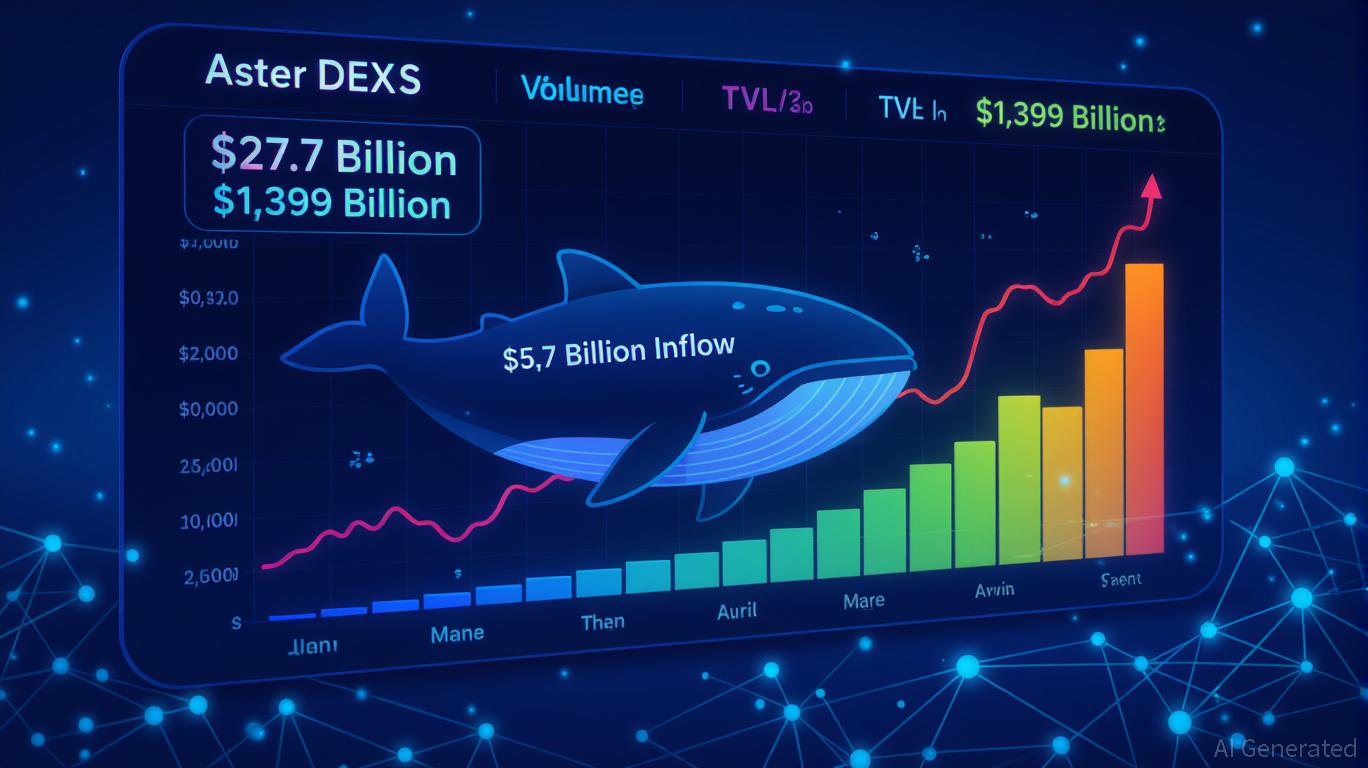
- Aster DEX reported $27.7B daily volume and $1.399B TVL in Q3 2025, outpacing DeFi benchmarks with 2M users. - Institutional whale activity, including CZ's $2M ASTER purchase, drove $5.7B inflows and 800% volume spikes. - Hybrid AMM-CEX model and ZKP privacy tech enabled 40.2% TVL growth, 77% private transactions, and 19.3% perpetual DEX market share. - ASTER's margin trading upgrades and Stage 4 airdrops fueled 30% price surges, while Aster Chain's 2026 launch will integrate privacy-preserving ZKPs. - On
Astar (ASTR) Price Rally: Protocol Enhancements and Ecosystem Growth Drive Long-Term Value
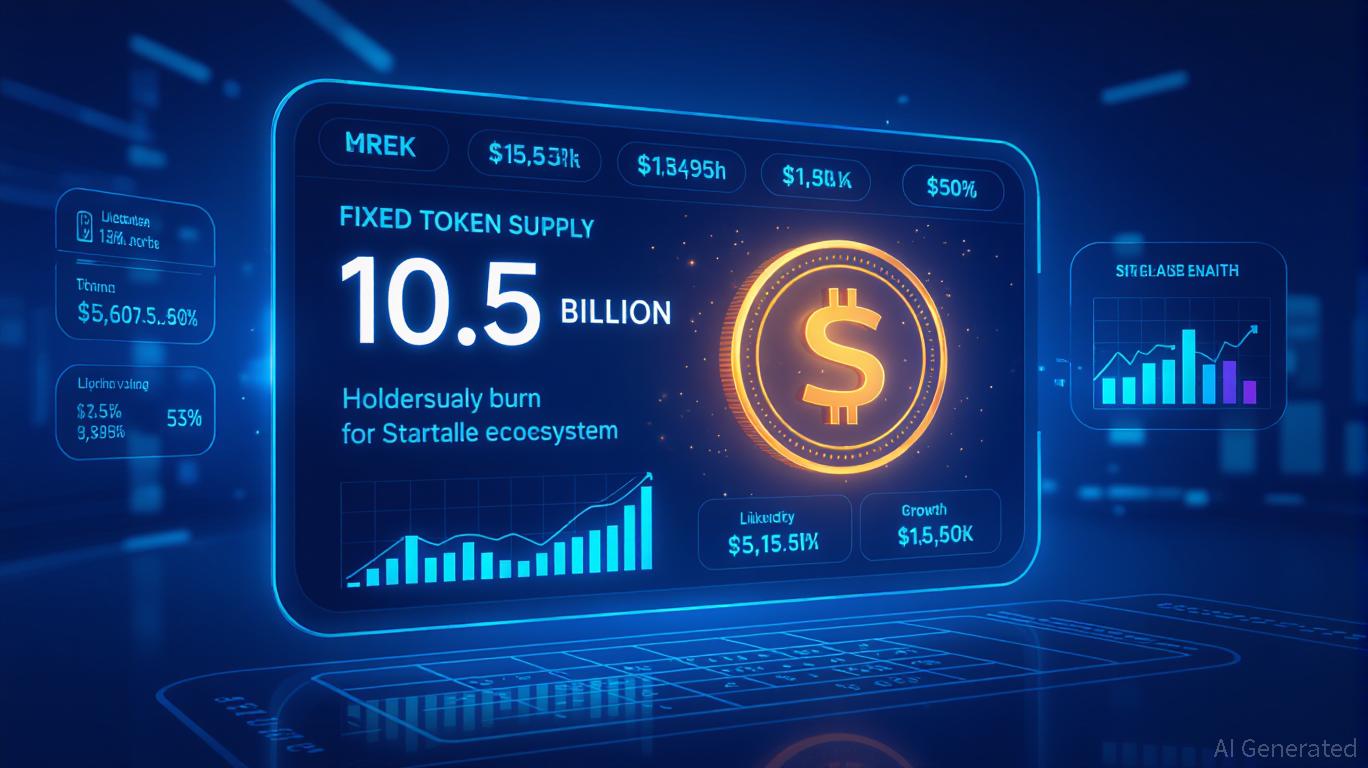
- Astar (ASTR) surged 150% due to protocol upgrades and ecosystem expansion, positioning it as a sustainable value creation case study in blockchain. - Tokenomics 3.0 (fixed 10.5B supply) and Burndrop mechanism created deflationary incentives, supported by Galaxy Digital's $3. 3M OTC investment and Astar's $29.15M buyback. - Cross-chain interoperability with Polkadot/Plaza and Sony's Soneium, plus partnerships with Toyota and Japan Airlines, expanded real-world utility in logistics, identity, and loyalty p
Astar 2.0 Debut and Tokenomics Revamp: Driving DeFi Innovation and Attracting Institutional Participation
- Astar Network's Astar 2.0 introduces Tokenomics 3.0 with fixed 10.5B ASTR supply and 5% annual burn rate to stabilize value for institutional investors. - The update features Burndrop mechanism, asynchronous cross-chain security, and ESG-aligned protocols to address regulatory risks and attract traditional capital. - Plaza platform enables seamless asset transfers across Ethereum , BSC, and Polkadot , while zkEVM scalability targets 300,000 TPS by 2026 for enterprise-grade DeFi solutions. - Governance sh
Trending news
MoreCrypto prices
More





