
Crypto Oversight Changes: Trump’s CFTC Decision Ignites Political Dispute
- Trump nominates SEC crypto task force chief Michael Selig to lead CFTC, aiming to consolidate digital asset regulation under one agency. - Selig, known for bridging SEC-CFTC regulatory approaches, replaces a stalled nomination and brings legal expertise in derivatives and crypto markets. - Partisan divide persists: Republicans favor CFTC-led commodity rules for lighter oversight, while Democrats support SEC's securities framework for investor protection. - Industry praises Selig's balanced approach, but
According to coverage from
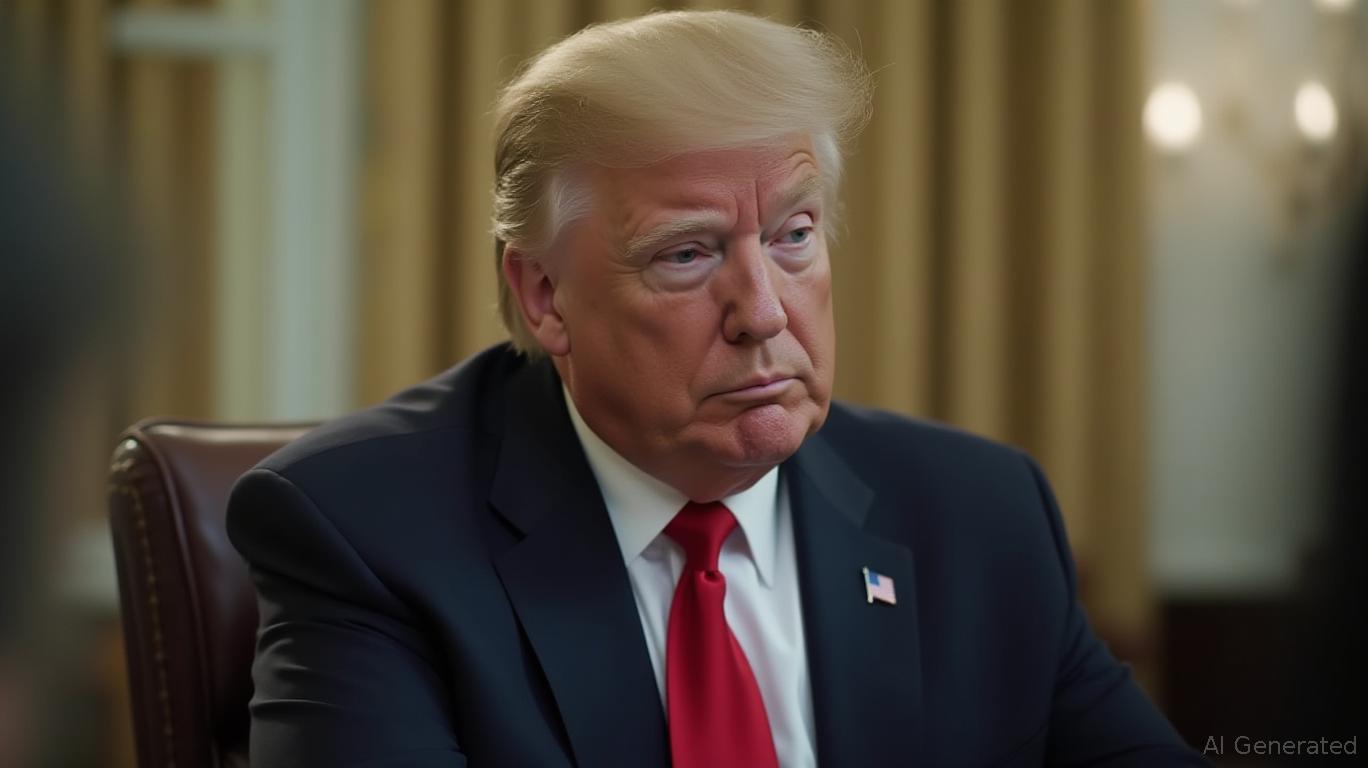
Selig, who is a top advisor to SEC Chairman Paul Atkins, has been instrumental in bringing the SEC and CFTC into closer alignment on digital asset, swaps, and futures policy. His nomination follows Trump’s previous, unsuccessful effort to install Brian Quintenz, a16z’s global policy chief, as CFTC chair—a move that was blocked by industry resistance, the reports note. Selig’s experience includes ten years as a partner at Willkie Farr & Gallagher, where he counseled asset managers on derivatives and regulatory matters. Industry figures have commended his legal expertise and balanced perspective on fostering innovation while maintaining regulatory standards. “Mike Selig recognizes the importance of supporting innovation, but he’s also committed to finding the right legal solutions,” Amanda Tuminelli of the DeFi Education Fund told Bloomberg.
The CFTC, which regulates swaps, futures, and prediction markets, has become increasingly significant as Congress considers new laws to clarify its authority over crypto. Analysts writing for Blockworks point out that proposed legislation in both the House and Senate would broaden the CFTC’s jurisdiction over digital assets, potentially making it the primary regulator in a field long plagued by unclear rules. Policy initiatives like the Clarity Act have received in-depth examination from sources such as
This nomination comes as political disagreements over crypto policy intensify. Trump and other Republicans support classifying most digital assets as commodities under CFTC oversight, favoring a lighter regulatory touch to encourage innovation—a stance explored by Coinotag. In contrast, Democrats want the SEC to retain broad authority over securities to better protect investors. This divide has delayed comprehensive legislation, with debates over how to categorize tokens, regulate decentralized finance (DeFi), and enforce anti-money laundering (AML) standards keeping the issue unresolved. The bipartisan Digital Asset Market Clarity Act, which aims to establish clear regulatory boundaries, remains central as lawmakers search for common ground.
If the Senate confirms Selig, it would represent a major turning point for crypto oversight. The CFTC’s enhanced powers could significantly impact exchanges and DeFi projects, which would need to meet new requirements for real-time monitoring and proof-of-reserves under the Clarity Act. Supporters claim these measures will reduce market manipulation and draw more institutional investors, while critics caution that stricter rules could hinder innovation, especially for smaller ventures.
With the CFTC poised to take a leading role in crypto regulation, Selig’s guidance will be vital as the industry faces a pivotal regulatory moment. As
---
Disclaimer: The content of this article solely reflects the author's opinion and does not represent the platform in any capacity. This article is not intended to serve as a reference for making investment decisions.
You may also like
The PENGU USDT Sell Alert: Is This a Turning Point for Stablecoin Approaches?
- PENGU/USDT's 2025 collapse triggered a $128M liquidity shortfall, exposing algorithmic stablecoin fragility and accelerating market shift to regulated alternatives. - USDC's market cap surged to $77.6B by 2025, while MiCA-compliant euro-stablecoins gained $680M in cross-border adoption amid regulatory clarity. - DeFi protocols adopted oracle validation and reserve-backed models post-PENGU, reducing exploit losses by 90% since 2020 through institutional-grade security upgrades. - Regulators now prioritize

Emerging Prospects in EdTech and AI-Powered Learning Systems: Ways Educational Institutions Are Transforming Programs and Enhancing Student Achievement
- AI is transforming education by reshaping curricula, enhancing student engagement, and optimizing institutional efficiency. - Universities like Florida and ASU integrate AI literacy across disciplines, offering microcredentials and fostering innovation. - AI tools like Georgia Tech’s Jill Watson and Sydney’s Smart Sparrow boost performance and engagement through personalized learning. - AI streamlines administrative tasks but faces challenges like ethical misuse and skill gaps, requiring structured train

Anthropological Perspectives on Technology and Their Impact on Education and Workforce Preparedness for the Future
- Interdisciplinary STEM/STEAM education integrates technology tools like AI and VR to bridge theory and real-world skills, driven by $163B global edtech growth. - U.S. faces 411,500 STEM teacher shortages and 28% female workforce representation gaps, prompting equity-focused programs like Girls Who Code. - STEM occupations earn $103K median wages (vs. $48K non-STEM), with 10.4% job growth projected through 2033, driving investor opportunities in edtech and workforce alignment. - Strategic investments in t

The Revival of Educational Technology in Higher Education After the Pandemic
- Global EdTech market grows to $7.3T by 2025, driven by hybrid learning and AI/AR/VR adoption in higher education. - Institutions like MIT and Harvard integrate AI across disciplines, boosting enrollment and workforce alignment through $350M-$500M investments. - EdTech platforms enabling personalized learning and immersive experiences see rising demand, with 45% annual growth in AI-related programs since 2020. - Undervalued EdTech stocks offer investment opportunities as $16B+ VC funding accelerates innov

Trending news
MoreCrypto prices
More





