
ZEC Surges 265.57% Over the Past Month as Market Experiences Robust Rally
- Zcash (ZEC) surged 265.57% in 30 days, hitting $270.88 amid crypto market rebound post-$19B liquidation. - Analysts highlight ZEC's bullish technical patterns, institutional interest, and macroeconomic tailwinds driving its 382.83% annual gain. - A proposed backtest aims to analyze ZEC's historical performance after 15%+ daily surges, though data collection challenges persist. - Market observers monitor key levels for trend continuation, with ZEC maintaining strong volume support and bullish on-chain act
As of OCT 25, 2025,
These recent gains have put ZEC in the spotlight, especially as the broader cryptocurrency market recovers from a $19 billion liquidation event. Market analysts have pointed to this correction as a possible entry point, particularly for assets with strong momentum and technical signals that suggest the trend may continue. ZEC has capitalized on this environment, breaking through major resistance levels and sustaining high trading volumes.
From a technical perspective, ZEC has consistently posted higher highs and higher lows over both weekly and monthly periods, indicating a persistent upward trend. Its performance over the past year highlights a significant change in market sentiment, fueled by increased institutional participation and larger economic factors. ZEC’s price action also reflects broader trends, such as the growing popularity of privacy-oriented cryptocurrencies and heightened interest in alternative assets.
With ZEC consolidating its recent advances, market participants are watching closely for signs of the next move. Traders are monitoring important support and resistance zones to assess the probability of further gains. The prevailing trend indicates that ZEC is still in a long-term uptrend, bolstered by on-chain metrics and favorable macroeconomic conditions.
Backtest Hypothesis
To gain deeper insight into how ZEC has behaved during significant price surges, a backtesting strategy is under consideration. The plan is to identify every occurrence where ZEC’s daily price jumped by 15% or more, then analyze what happened afterward. This approach seeks to reveal whether such spikes have historically led to profitable trades or signaled increased volatility.
However, initial efforts to collect ZEC’s daily percentage change data faced obstacles, as the ticker symbol used did not resolve properly. To move forward, several points need clarification:
- Ticker Symbol: It’s necessary to confirm the correct ticker for ZEC, such as “ZEC-USD” or “ZECUSDT.”
- Strategy Rules: The backtest will be based on a clear entry rule—purchasing at the close (or the next day’s open) when ZEC rises by at least 15%. Exit strategies may involve holding for a set period or selling at the next day’s close, depending on further guidance.
- Risk Management: Criteria like stop-loss thresholds, take-profit targets, and maximum holding durations will be established to fine-tune the risk profile of the strategy.
- Backtest Period: The intended testing window runs from January 1, 2022, through October 24, 2025, though this may be adjusted based on additional input.
Once these factors are settled, the backtest will proceed using the appropriate data to assess the effectiveness of the identified trading pattern. The findings could provide valuable perspective on ZEC’s reactions to major price movements and help inform future trading strategies.
Disclaimer: The content of this article solely reflects the author's opinion and does not represent the platform in any capacity. This article is not intended to serve as a reference for making investment decisions.
You may also like
U.S. Marine Policy and Blue Economy Prospects: Key Infrastructure and Geostrategic Roles in Oceanic Commerce
- U.S. oceans policy balances geopolitical strategy, deep-sea tech investments, and UNCLOS ratification challenges to secure maritime influence. - Executive actions accelerate seabed mineral extraction while facing environmental criticism and legal risks from bypassing international seabed authority rules. - Offshore energy partnerships with Australia, Japan, and Saudi Arabia aim to diversify supply chains but face geopolitical tensions in chokepoints like the Red Sea. - Maritime security contracts expand

Aster DEX's On-Chain Momentum: Signaling the Future of DeFi
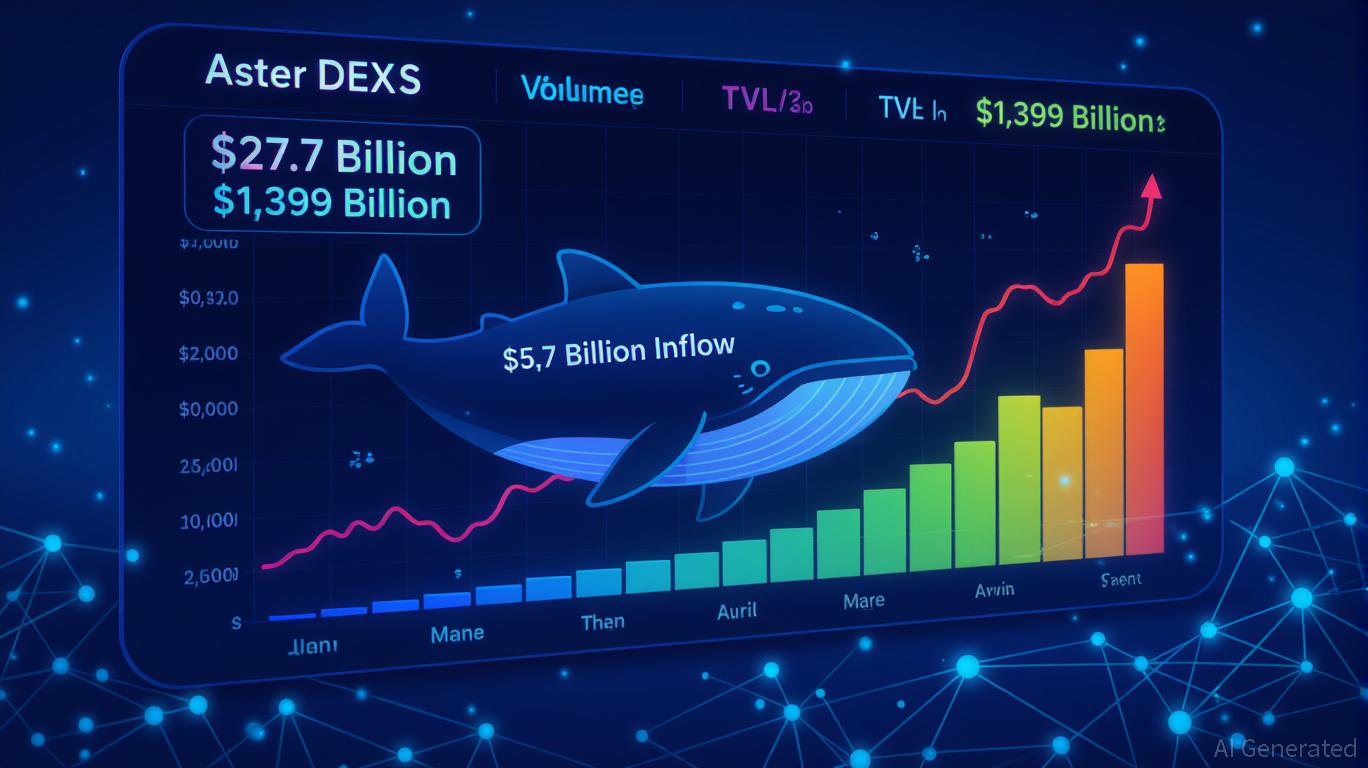
- Aster DEX reported $27.7B daily volume and $1.399B TVL in Q3 2025, outpacing DeFi benchmarks with 2M users. - Institutional whale activity, including CZ's $2M ASTER purchase, drove $5.7B inflows and 800% volume spikes. - Hybrid AMM-CEX model and ZKP privacy tech enabled 40.2% TVL growth, 77% private transactions, and 19.3% perpetual DEX market share. - ASTER's margin trading upgrades and Stage 4 airdrops fueled 30% price surges, while Aster Chain's 2026 launch will integrate privacy-preserving ZKPs. - On
Astar (ASTR) Price Rally: Protocol Enhancements and Ecosystem Growth Drive Long-Term Value
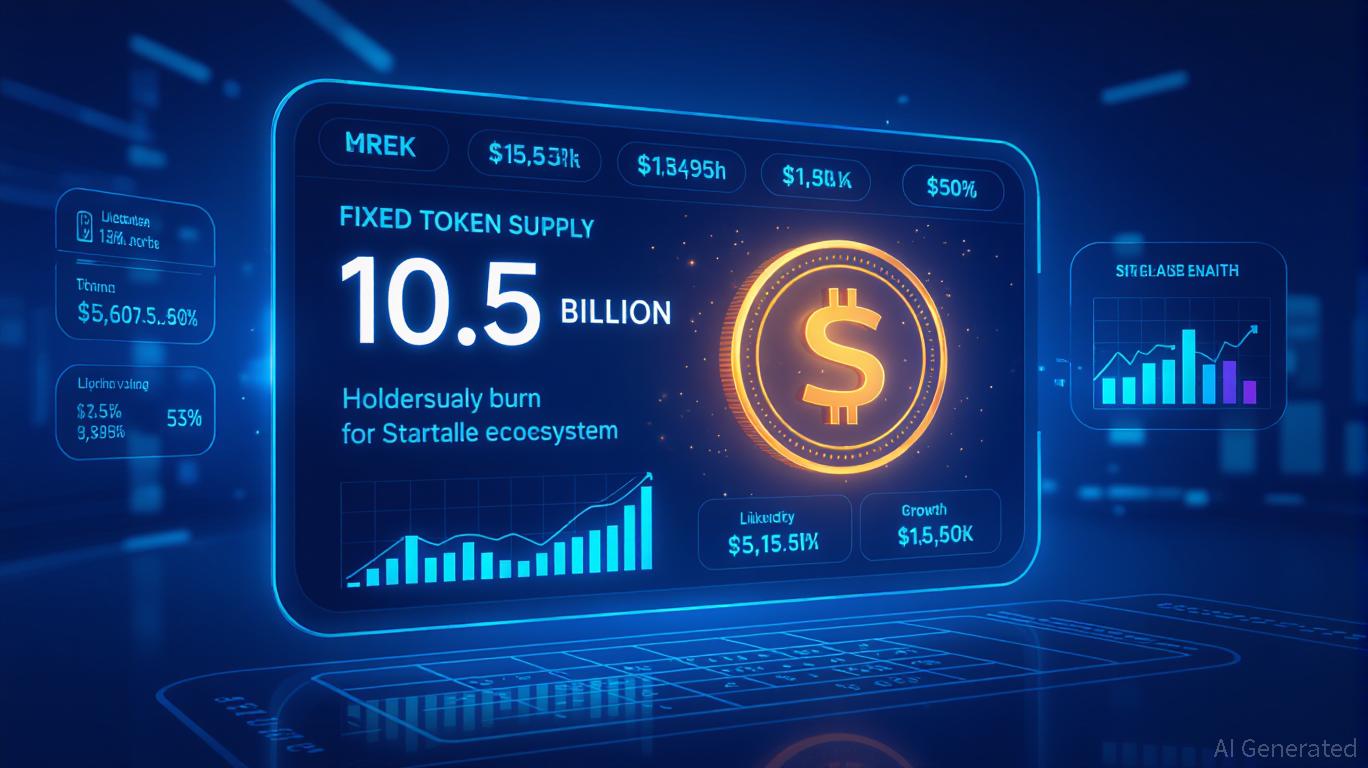
- Astar (ASTR) surged 150% due to protocol upgrades and ecosystem expansion, positioning it as a sustainable value creation case study in blockchain. - Tokenomics 3.0 (fixed 10.5B supply) and Burndrop mechanism created deflationary incentives, supported by Galaxy Digital's $3. 3M OTC investment and Astar's $29.15M buyback. - Cross-chain interoperability with Polkadot/Plaza and Sony's Soneium, plus partnerships with Toyota and Japan Airlines, expanded real-world utility in logistics, identity, and loyalty p

Astar 2.0 Debut and Tokenomics Revamp: Driving DeFi Innovation and Attracting Institutional Participation
- Astar Network's Astar 2.0 introduces Tokenomics 3.0 with fixed 10.5B ASTR supply and 5% annual burn rate to stabilize value for institutional investors. - The update features Burndrop mechanism, asynchronous cross-chain security, and ESG-aligned protocols to address regulatory risks and attract traditional capital. - Plaza platform enables seamless asset transfers across Ethereum , BSC, and Polkadot , while zkEVM scalability targets 300,000 TPS by 2026 for enterprise-grade DeFi solutions. - Governance sh
Trending news
MoreCrypto prices
More





