
The 2025 Bitcoin Collapse: Underlying Factors and Tactical Considerations for Cryptocurrency Investors
- The 2025 Bitcoin crash erased $1.2 trillion in value, driven by macroeconomic tightening, leverage, and geopolitical tensions. - Financialization linked crypto to traditional markets, exposing systemic risks through institutional entanglements and fragile liquidity. - Regulatory divergence between U.S. pro-blockchain policies and EU MiCAR rules created jurisdictional conflicts and operational misalignment. - Investors must prioritize diversification, monitor regulatory shifts, and prepare for prolonged v
The 2025 Bitcoin Crash: A Defining Moment for Digital Assets
In 2025, Bitcoin experienced a dramatic collapse that wiped out more than $1.2 trillion in market capitalization, signaling a significant turning point for the cryptocurrency sector. This event was not simply a result of technical glitches or speculative excess; rather, it was the outcome of broader economic forces, fragmented regulations, and the increasing integration of crypto into mainstream finance. For those investing in digital assets, the crash highlighted the pressing need to rethink risk management strategies in a market that is both highly interconnected and insufficiently regulated.
Main Drivers: Economic Pressures and Excessive Leverage

Several factors converged to trigger the downturn. Global monetary tightening, especially the delayed reduction of interest rates by central banks, led to a rapid withdrawal of funds from riskier investments, including cryptocurrencies. Ongoing inflation and a shift towards safer assets left leveraged traders exposed, resulting in a wave of forced liquidations. Additionally, the introduction of spot Bitcoin ETFs and similar products further intertwined crypto with traditional financial systems, making it more vulnerable to economic cycles.
Geopolitical strife, such as the U.S.-China trade conflict in late 2025, intensified the situation. On October 10, a sudden market drop erased $19 billion from the crypto sector in a single day, revealing the instability of leveraged positions and the lack of effective risk mitigation tools. Technical breakdowns in trading platforms during periods of extreme volatility only made matters worse, as automated sell-offs accelerated the decline.
Systemic Threats: Financialization and Market Weaknesses
The events of 2025 exposed how the growing financialization of Bitcoin has heightened systemic vulnerabilities. Unlike earlier crashes that mainly affected individual investors or smaller exchanges, this downturn drew in major institutions such as hedge funds and ETF managers, creating feedback loops between the crypto world and traditional finance.
Underlying issues in the crypto ecosystem—like fragmented infrastructure, concentrated holdings, and unreliable liquidity—became apparent. While Bitcoin has not yet become a full-blown systemic risk, its increasing ties to global markets raise the possibility of future contagion. The crisis also demonstrated how quickly liquidity can evaporate in crypto, with order books collapsing and no institutional mechanisms in place to stabilize prices.
Regulatory Disarray: Divergent Global Approaches
Differences in regulatory approaches between the United States and the European Union have added complexity to the post-crash environment. The EU’s Markets in Crypto-Assets (MiCAR) regulations, introduced in late 2024, imposed strict requirements on crypto firms to enhance consumer protection and financial stability. Meanwhile, the U.S. government, under the Trump administration, favored blockchain innovation and resisted central bank digital currencies, focusing on maintaining the U.S. dollar’s dominance.
This regulatory divergence has led to opportunities for jurisdictional arbitrage and operational challenges. For example, U.S.-issued stablecoins are prevalent in the EU, but MiCAR’s local entity requirements clash with the decentralized nature of cryptocurrencies. At the same time, U.S. regulators have expedited the approval of crypto ETFs, encouraging institutional participation. However, the absence of a coordinated international regulatory framework leaves the market vulnerable to sudden policy changes and liquidity shortages.
Investor Takeaways: Navigating a Volatile Landscape
The 2025 crash serves as a stark reminder for crypto investors. Diversification remains essential; assets like gold and broad-based equities may provide safer alternatives during periods of economic uncertainty. Staying informed about regulatory developments is also crucial, as the contrasting policies of the U.S. and EU will influence market dynamics and risk profiles in the years ahead.
Furthermore, the emergence of tokenized investment vehicles and structured products presents both new opportunities and additional risks. While these innovations could improve liquidity and collateral management, they may also increase systemic interconnectedness. Investors should brace for ongoing volatility, as the crypto market’s stability will likely remain uncertain without significant changes in monetary policy or a shift in global risk appetite.
Final Thoughts
The 2025 Bitcoin crash stands as a warning for the future of digital assets. Systemic risks are now a reality, fueled by the deeper integration of crypto into global finance and inconsistent regulatory oversight. For investors, successfully navigating this evolving landscape will require a sophisticated understanding of economic trends, regulatory shifts, and the inherent weaknesses of crypto markets. As the industry continues to develop, adaptability and prudent risk management will be more important than ever.
Disclaimer: The content of this article solely reflects the author's opinion and does not represent the platform in any capacity. This article is not intended to serve as a reference for making investment decisions.
You may also like
XRP News Today: Clearer Regulations Propel XRP ETFs to $628M as the Asset Earns Greater Legitimacy
- Canary Capital's XRPC ETF dominates XRP ETF market with $250M inflows, outpacing all competitors combined. - Grayscale's GXRP and Franklin Templeton's XRPZ drove $164M debut inflows, boosting total XRP ETF AUM to $628M. - 2025 SEC ruling cleared XRP's secondary sales as non-securities, enabling institutional adoption and $2.19 price rebound. - XRPC's 0.2% fee waiver and institutional focus fueled $6B+ ETF trading volumes, reversing prior outflows. - Analysts project $6.7B XRP ETF growth within 12 months
Bitcoin Updates: Anxiety Sweeps Crypto Market, Yet ETFs Ignite Optimism for Recovery
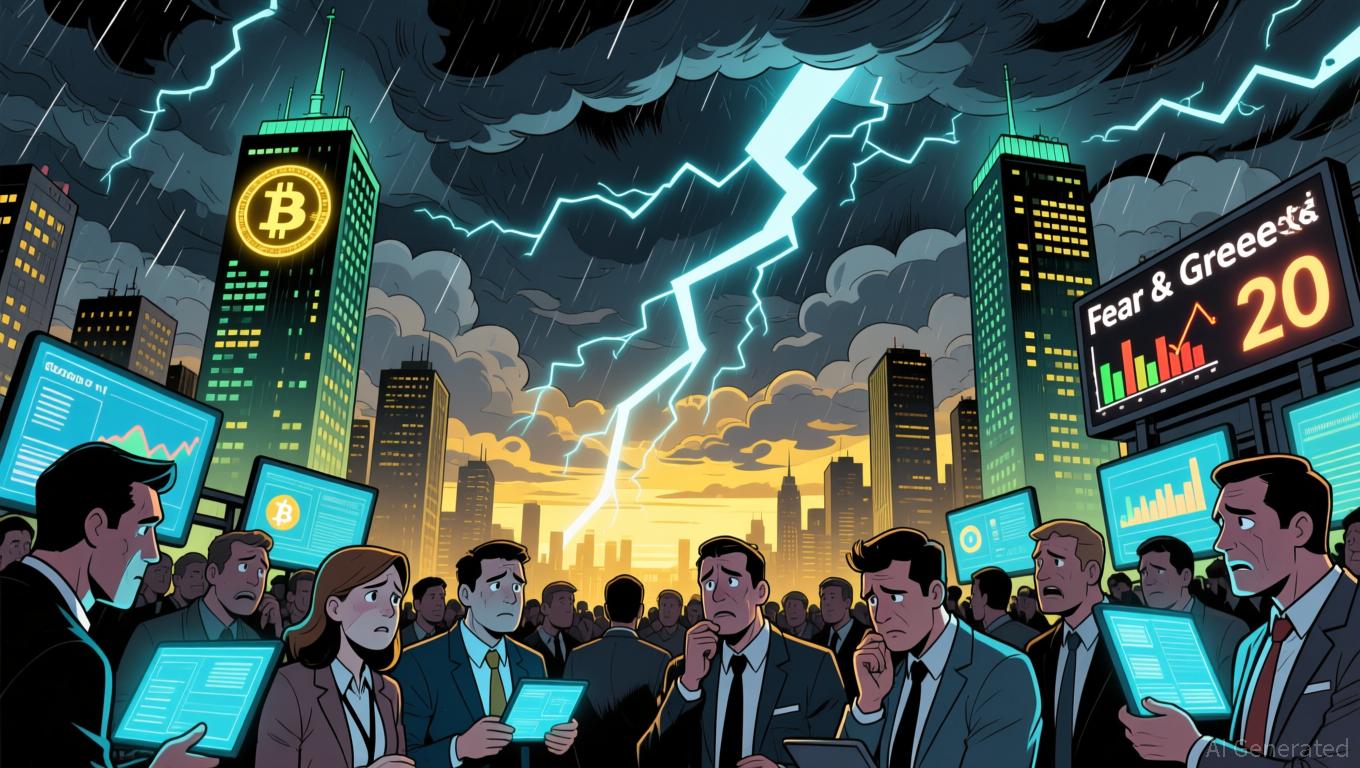
- Crypto Fear & Greed Index hits 20, signaling extreme fear as BTC/altcoins face renewed volatility amid Tether's "weak" stablecoin downgrade. - Tether CEO defends USDt stability with $215B Q3 assets, while Bitcoin-focused firms adopt defensive stances against mNAV risks. - Altcoin Season Index at 25/100 shows modest rebound, with Zcash surging 1,000% and Grayscale filing first U.S. Zcash ETF. - Upcoming spot altcoin ETF launches and potential Fed rate cuts (80% priced) spark optimism despite fragile on-ch
The Impact of Artificial Intelligence on Transforming Business Efficiency and Entrepreneurial Expansion
- AI-driven tools are becoming essential for SMEs and startups to enhance productivity and operational efficiency amid competitive pressures. - McKinsey reports 71% of organizations now use generative AI in 2025, but SMEs lag behind large enterprises in scaling AI adoption. - AI adoption delivers measurable ROI, with case studies showing 15-140% productivity gains in sectors like legal, sales, and customer service. - Investors are prioritizing AI-enhanced SaaS platforms that address SME pain points, enabli

The Federal Reserve's Policy Change and Its Effects on Solana (SOL): How Infrastructure Funding and Clearer Regulations Are Speeding Up Blockchain Adoption in 2025
- Fed's 2025 policy clarity and liquidity injections accelerated Solana's institutional adoption in blockchain finance. - Regulatory frameworks like OCC Letter 1186 and GENIUS Act enabled banks to engage with Solana's stablecoin and DeFi infrastructure. - Solana's Alpenglow upgrades (100ms finality) and $508M funding fueled partnerships with Visa , Western Union , and Coinbase . - $2B ETF inflows and $1T DEX volume highlight Solana's role in reshaping cross-border payments and DeFi ecosystems.

Trending news
MoreCrypto prices
More





