
The End of Ethereum’s Island: How EIL Reconstructs Fragmented L2s into a “Supercomputer”?

Chainfeeds Guide:
EIL is the latest answer provided by the Ethereum account abstraction team and is also the core of the "acceleration" phase in the interoperability roadmap.
Source:
imToken Labs
Opinion:
imToken Labs: The key to understanding EIL (Ethereum Interoperability Layer) is not to be misled by the term "Layer." It is not a new blockchain, nor is it a traditional cross-chain bridge in the conventional sense, but rather a set of standards and an operational framework. Its core goal is to enable the entire Ethereum ecosystem to form a virtual unified execution environment, breaking the current state of multi-chain fragmentation, disconnected accounts, and difficulty in asset sharing. In the current Ethereum ecosystem, although different L2s share the same Ethereum address system, account states and signature permissions are not interoperable: you may have the same address on Arbitrum and Optimism, but they exist in isolation. This is the core reason why cross-chain usage is complex, authorizations are duplicated, and gas fees cannot be shared. EIL attempts to achieve cross-chain unification through two key components: the first is smart accounts based on ERC-4337, which integrate key management, gas fee sponsorship, and cross-chain account synchronization; the second is a trust-minimized cross-chain messaging layer, allowing user operations (UserOp) to be securely transmitted between chains via light client proofs or official bridges. This approach does not rely on third-party validators nor does it introduce new trust assumptions. In the future, cross-chain transactions will become as natural as swiping a Visa card, with no need to switch chains, change gas, or swap wallets. Users will only need a single signature to complete cross-chain execution. If EIL is implemented, it will drive Web3 from a "cross-chain" paradigm to "chain abstraction," where users will no longer perceive the existence of chains. For example, if your assets are on the Base chain but you want to start a game on Arbitrum, you won’t need to switch RPC or top up ARB gas; you just click start and complete a single signature, and the backend Paymaster will automatically handle gas sponsorship and cross-chain execution, making the experience nearly identical to native single-chain operations. This will greatly lower the barrier for users to enter Web3. At the same time, compared to traditional cross-chain bridge solutions that rely on multisig or third-party oracles, EIL uses rollup’s own storage proofs or official bridges for verification, which better aligns with Ethereum’s trust-minimization principles and fundamentally prevents cross-chain bridges from becoming single points of attack. In addition, EIL also makes multi-chain development reusable and standardized. Developers no longer need to write logic for multiple chains separately; by targeting the ERC-4337 standard, they can directly serve users across all chains. However, for EIL to be truly implemented on a large scale, the issue of migration costs for legacy wallet users needs to be addressed. The emergence of EIP-7702 provides a solution, allowing existing EOAs to temporarily become smart accounts during transactions and revert to regular addresses after the transaction, enabling a smooth migration from EOA to the smart account system. Currently, the advancement of EIL is not just a conceptual discussion but an engineering roadmap led by the Ethereum Foundation account abstraction team. The implementation of EIL mainly relies on three directions: expanding the UserOp structure of ERC-4337 in a multi-chain environment to embed chain IDs and execution targets for cross-chain execution; promoting EIP-7702 so that existing users can have smart contract capabilities without migration; and standardizing message interfaces, which are evolving in collaboration with interoperability solutions such as Optimism Superchain, Polygon AggLayer, and ZKsync Elastic Chain. In addition, EIL will also be combined with the privacy framework Kohaku to provide chain-level privacy capabilities for smart accounts, allowing users to conduct privacy transactions as naturally as regular transfers, while retaining mechanisms to prove legitimacy. At this point, the blueprint for Ethereum’s future interoperability is gradually becoming clear: OIF (Intent Framework) is responsible for enabling applications to understand user needs, while EIL is responsible for execution, allowing users not to need to understand the chain itself. As these capabilities are gradually launched, future Web3 users may not need to know the concepts of L2, RPC, or cross-chain bridges; all they will see are wallets and assets, while the chain itself recedes into the background, becoming true underlying infrastructure.
Disclaimer: The content of this article solely reflects the author's opinion and does not represent the platform in any capacity. This article is not intended to serve as a reference for making investment decisions.
You may also like
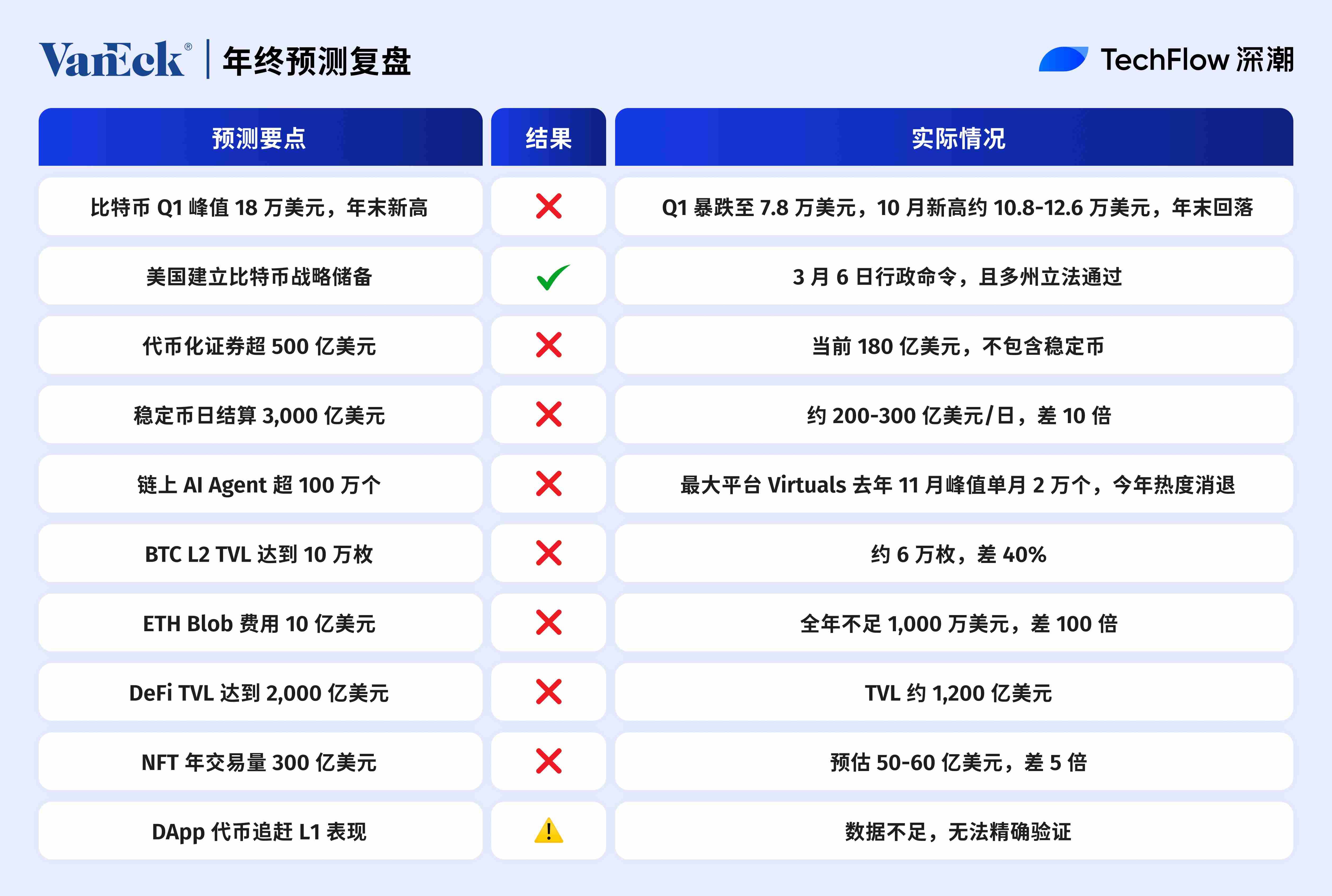
2025 Crypto Prediction Review: 10 Institutions, Who Got It Wrong and Who Became Legends?
We can consider these predictions as indicators of industry sentiment. If you use them as an investment guide, the results could be disastrous.
SEC launches innovative exemption policy—Has U.S. crypto regulation entered a new era?
The door to exploration has just opened.
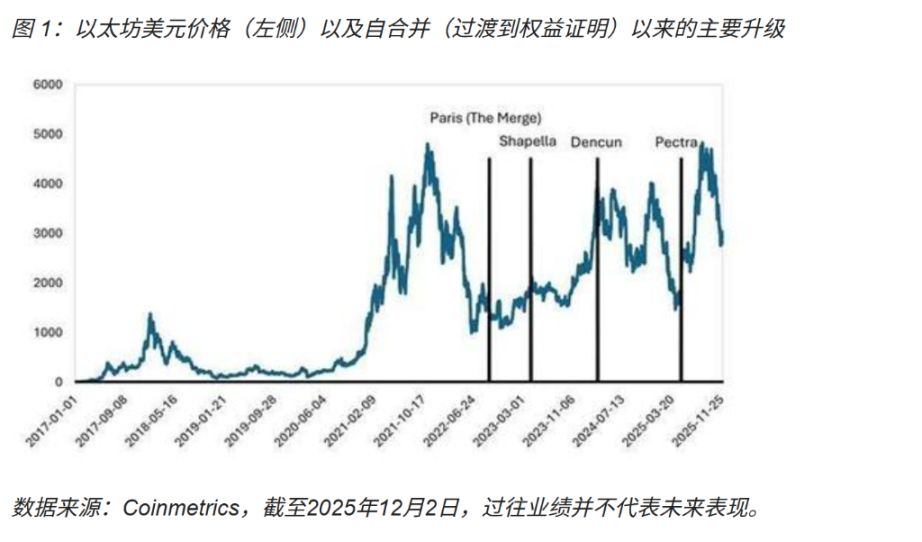
Ethereum undergoes "Fusaka upgrade" to continue "scaling and improving efficiency," strengthening on-chain settlement capabilities
The Fusaka upgrade will consolidate its position as a settlement layer and drive Layer-2 competition towards improvements in user experience and ecosystem depth.
Space Review|Inflation Rebounds vs Market Bets on Rate Cuts: How to Maintain a Prudent Crypto Asset Allocation Amid Macroeconomic Volatility?
In the face of macro volatility, the TRON ecosystem offers a balanced asset allocation model through stablecoin settlements, yield-generating assets, and innovative businesses.
Trending news
MoreCrypto prices
More






