
Bitcoin Leverage Liquidations and Market Fluctuations in Late 2025: Insights from Risk Management and Behavioral Finance
Q4 2025: A Defining Moment for Cryptocurrency Markets
The final quarter of 2025 brought unprecedented upheaval to the cryptocurrency landscape. Bitcoin’s value plunged beneath the $100,000 threshold, setting off a wave of leveraged liquidations that exceeded $20 billion. This dramatic downturn, driven by excessive leverage (with some trades reaching 1,001:1), relentless margin calls, and mounting macroeconomic pressures, revealed deep-rooted weaknesses in crypto derivatives markets. The episode highlighted the dangers of speculative trading fueled by behavioral biases and left institutional investors questioning whether this was a warning sign of unchecked risk or a rare buying window in an evolving market.
The Psychology Behind Leverage and Market Collapse
The liquidation crisis of late 2025 was more than just a technical market event—it was a vivid display of investor psychology at work. Many retail participants, emboldened by previous gains and influenced by crowd mentality, took on significant leverage—often between 10x and 20x—during Bitcoin’s rally. When sentiment shifted, these highly leveraged positions quickly unraveled, leading to a cascade of forced sales. According to Bitget, perpetual futures accounted for 78% of trading activity, intensifying the selloff as automated liquidations drained liquidity from the market.

This cycle is a textbook example of behavioral finance: during bull runs, investors often overestimate their ability to predict market movements, while downturns trigger panic selling and amplify losses. The so-called “black swan” event on October 11, which wiped out $19 billion in leveraged positions in a single day, starkly illustrated the shift from greed to fear and the fragility of markets where leverage and liquidity are tightly intertwined.
Institutional Investors: Risk Management in Action
While individual traders suffered the most during the Q4 downturn, institutional players adopted a more measured strategy. Sygnum Bank reported that 68% of institutional investors either maintained or planned investments in Bitcoin exchange-traded products (ETPs) despite the market turmoil. These organizations managed risk through diversified hedging, utilizing options and futures, and deliberately steering clear of concentrated, leveraged bets on single assets.
The difference in approach is clear: retail traders leaned heavily on leverage, whereas institutions focused on safeguarding capital and seeking risk-adjusted returns. Notably, Bitcoin ETFs saw substantial inflows during the crash, suggesting that many institutional investors viewed the price drop as a strategic entry opportunity. This trend is reinforced by the fact that 81% of high-net-worth individuals now consider Bitcoin a viable asset for treasury reserves.
Structural Weaknesses and Regulatory Shifts
The Q4 selloff also brought to light significant flaws in the structure of crypto derivatives markets. Thin order books, algorithm-driven feedback loops, and fragmented trading infrastructure created an illusion of liquidity that quickly evaporated under pressure. For example, Bitcoin’s order book liquidity fell from $20 million in early October to just $14 million by mid-November, worsening the effects of mass liquidations. Analysis attributes much of this decline to overleveraged treasury operations.
In response, regulators are moving to address these vulnerabilities. The U.S. Senate is weighing new rules to tighten oversight of leveraged trading, and the CFTC is considering expanding its regulatory reach. If implemented, these changes could help stabilize the market by limiting excessive leverage and increasing transparency. However, as highlighted by Alaric Securities, liquidity crises in both crypto and Asian equity markets demonstrate that systemic risks are not confined to a single sector.
Opportunity or Warning for Institutional Investors?
The Q4 2025 crash presents a complex picture for institutions. On one side, the collapse of digital asset technology firms and significant outflows from stablecoins point to waning bullish sentiment. On the other, Bitcoin’s sharp decline to $82,000—a 37% drop from its high—has attracted strategic buyers. Data shows that institutional activity has reshaped Bitcoin’s market, with ETF trading volumes soaring to $9 billion during key events.
Ultimately, the lesson is clear: effective risk management and a focus on long-term fundamentals are essential. While Bitcoin’s reputation as a store of value remains, the recent turmoil underscores the importance of caution. As one analyst put it, “The crash was a stress test for crypto’s infrastructure—and it failed.” For institutions, this means steering clear of excessive leverage and prioritizing regulated investment vehicles, hedging, and diversification.
Looking Ahead
The events of Q4 2025 serve as both a warning about the dangers of unchecked speculation and a milestone in the maturation of institutional crypto investment. As leverage levels return to more sustainable norms and regulatory frameworks become clearer, Bitcoin’s role as a strategic asset may become even more compelling. However, navigating this landscape will require a disciplined approach to risk—one that values resilience over reckless speculation. For now, the crypto market remains a high-stakes arena, where the line between opportunity and disaster is razor-thin.
Disclaimer: The content of this article solely reflects the author's opinion and does not represent the platform in any capacity. This article is not intended to serve as a reference for making investment decisions.
You may also like
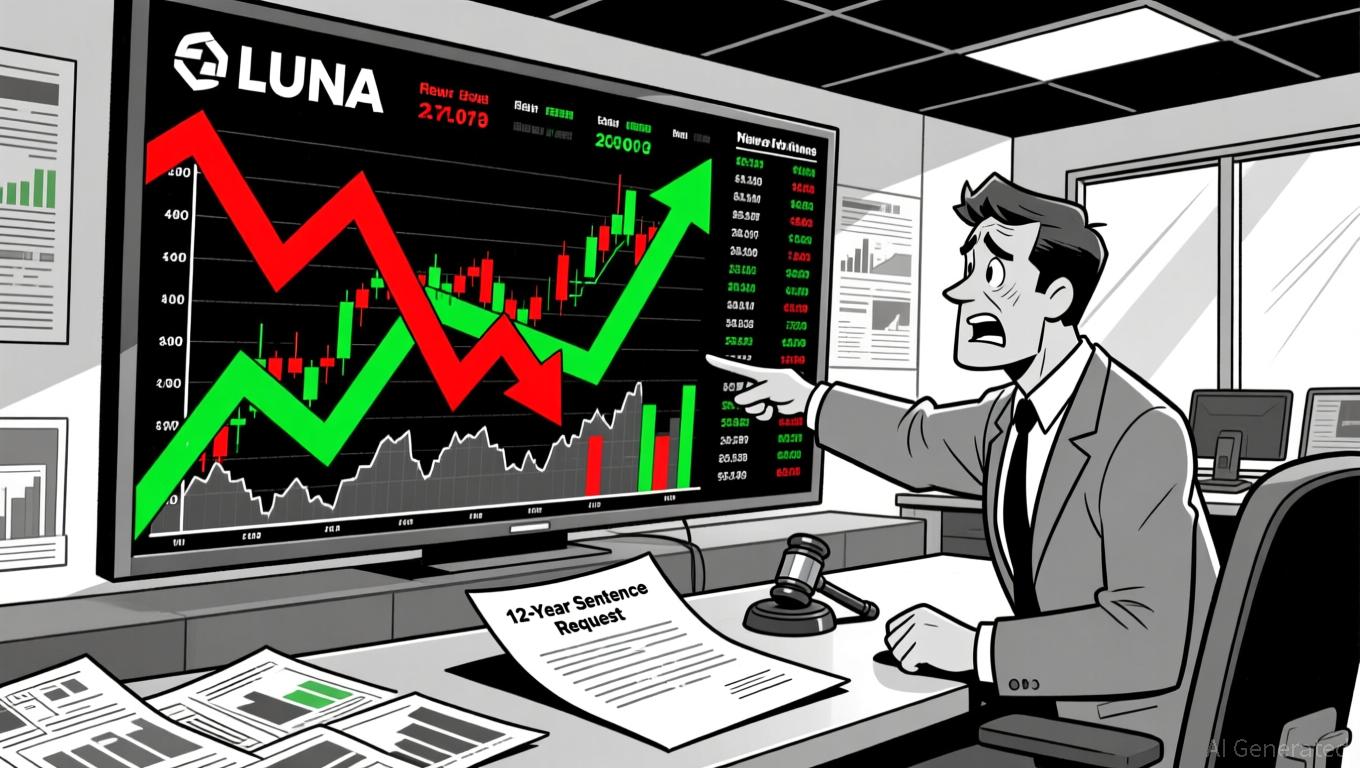
Luna Jumps 46.22% in a Week Following Legal Action Reports
- LUNA surged 5.67% in 24 hours, driven by prosecutors' 12-year prison request for Terra founder Do Kwon. - Kwon faces charges over TerraUSD's collapse, which erased $40B, with prosecutors calling his actions "colossal in scope." - Market reacted strongly: Luna Classic jumped 130% while LUNA rose 70% amid renewed Terra ecosystem interest. - Sentencing on Dec 11 could reshape Terra's future, with legal outcomes potentially influencing crypto regulatory frameworks. - Investors warned of persistent volatility
AI Token Price Fluctuations and Investor Prudence: Insights from the ChainOpera Collapse and Strategies for Building Resilience
- ChainOpera AI's 2025 collapse exposed systemic risks in centralized crypto projects with opaque AI models and governance. - The token lost 90% of value due to liquidity imbalances, unaudited algorithms, and regulatory uncertainty under the U.S. CLARITY Act. - Post-crash lessons emphasize transparent governance, real-world utility, and compliance with frameworks like NIST AI RMF and ISO/IEC 42001. - Projects like ASI and Ocean Protocol demonstrate resilience through decentralized models, auditable systems

The Critical Importance of Financial Education in Young Adulthood: Building Knowledge to Avoid Future Economic Instability
- Gen Z's 38% average score on financial literacy tests highlights a crisis in foundational economic knowledge among U.S. youth. - Low financial literacy doubles debt risk and triples financial instability, with 87% of uneducated graduates feeling unprepared for real-world money management. - Global studies show financial education increases wealth accumulation, retirement confidence, and stock market participation across age groups. - Only 27 U.S. states mandate personal finance education, despite 70% of

ALGO Rises 0.6% as Price Fluctuations Decrease Following a Year of Decline
- Algorand (ALGO) rose 0.6% on Dec 8, 2025, but remains down 60% year-to-date amid prolonged bearish trends. - BitGo filed for a NYSE IPO (ticker BTGO) in Sept 2025, reporting $4.19B H1 2025 revenue and $12.6M net income. - The crypto custodian oversees $90B+ in assets, signaling maturing infrastructure that may indirectly support blockchain ecosystems like Algorand. - Analysts caution ALGO's short-term stability does not indicate a reversal, urging investors to monitor macroeconomic and regulatory risks.
Trending news
MoreCrypto prices
More





