
Investing for Tomorrow: The Role of STEM Education in Advancing the AI Revolution
- U.S. job market sees 17.9% software developer growth and 56.1% AI job listing surge by 2025, driven by AI demand. - Farmingdale State College invests $75M in a Computer Sciences Center to double enrollment and foster AI/cybersecurity talent. - The college's AI Management program combines technical skills with business applications, supported by NSF-funded critical thinking research. - Industry partnerships and curriculum alignment with employer needs aim to reduce skills gaps and boost graduate employabi
The Transformation of the U.S. Job Market: AI and Engineering Take Center Stage
The American employment landscape is experiencing a profound transformation, largely propelled by the rapid advancement of artificial intelligence and the growing demand for engineering skills. Recent data from the U.S. Bureau of Labor Statistics indicates that opportunities for software developers are expected to increase by 17.9% between 2023 and 2033, a pace that far surpasses most other professions. At the same time, AI-related job postings have skyrocketed, with mentions of artificial intelligence in job ads jumping 56.1% in 2025 and the need for AI Engineers soaring by 143.2%. This marks a fundamental change, not a temporary trend. Investors who identify and support educational institutions preparing the workforce for this new era stand to benefit significantly.
Farmingdale State College: Shaping the Next Generation of Tech Talent
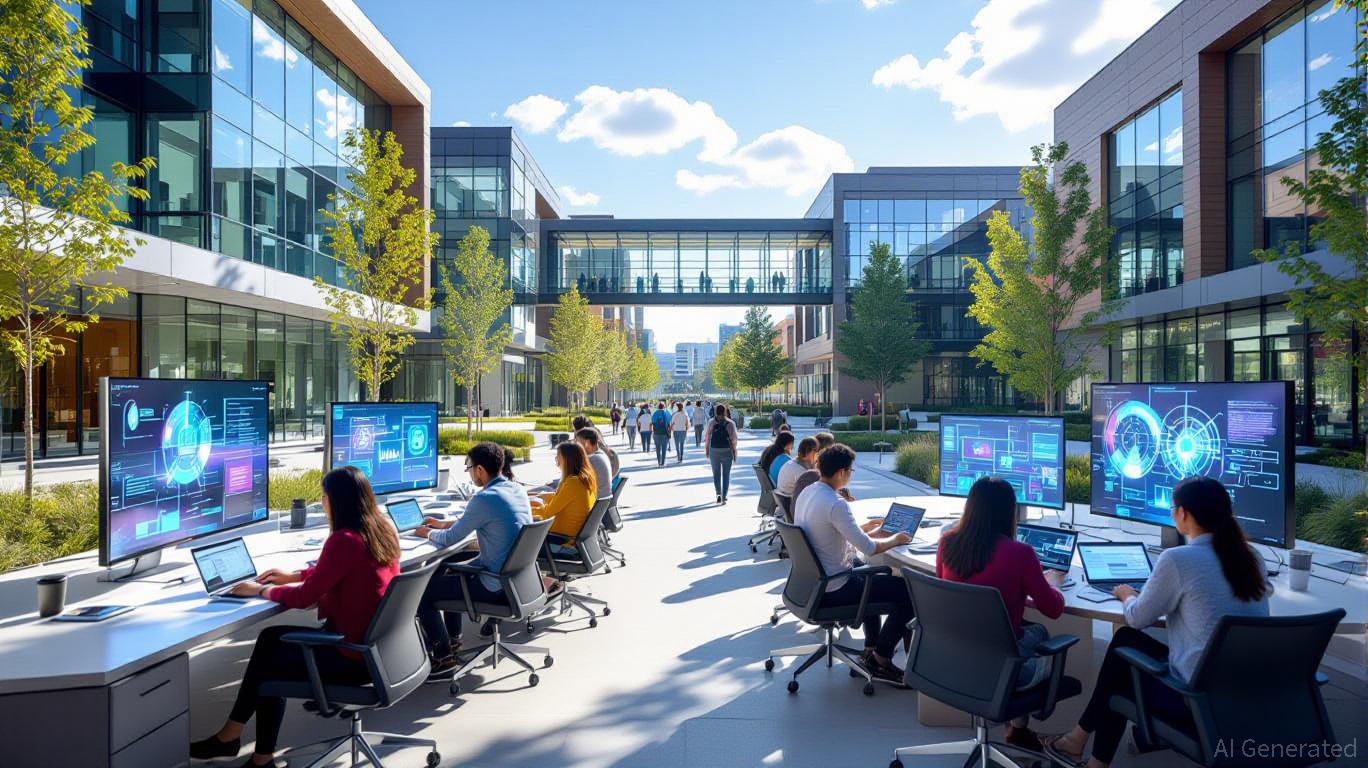
Farmingdale State College, part of the State University of New York system, is emerging as a leader in cultivating expertise in AI and engineering. The college has recently initiated construction on a $75 million Computer Sciences Center, a state-of-the-art facility aimed at doubling student enrollment in computing disciplines and encouraging collaboration across fields. This investment is more than just a new building—it represents a strategic commitment to Long Island’s shifting economic landscape. By bringing together its Division of Computing, Farmingdale is fostering an environment where students can develop essential skills in AI, cybersecurity, and software engineering—abilities that are now indispensable in fast-growing sectors.
Innovative Academic Programs for the AI Era
Farmingdale’s educational approach stands out for its forward-thinking curriculum. The college offers an online Bachelor of Science in Artificial Intelligence Management, a unique program that integrates business strategy with technical expertise. Students gain not only programming knowledge but also insights into how AI is transforming industries such as finance, marketing, and logistics, while also exploring ethical and societal considerations. This comprehensive training ensures graduates are equipped to lead and innovate in an AI-driven world.
Expanding Impact Through Strategic Partnerships
Farmingdale’s influence extends beyond the classroom through impactful collaborations. A notable example is a National Science Foundation-supported initiative led by professors Nur Dean and Xiaojin Ye. Their project, “Enhancing Critical Thinking in Introductory Programming through AI and Socratic Metacognitive Inquiry,” is set to launch in January 2026 and aims to transform how students interact with AI tools. The focus is on nurturing analytical and problem-solving abilities—key assets in a technology-driven economy.
Additionally, the college’s partnership with Nicholas Air to create career pathways in aviation and maintenance highlights its dedication to connecting academic learning with real-world industry needs. These collaborations are crucial for keeping educational programs relevant and ensuring that graduates possess the skills employers are seeking. Although specific job placement rates for AI program alumni have not been disclosed, Farmingdale’s emphasis on scalable, industry-focused education suggests strong prospects for its graduates.
Why Investors Should Pay Attention
The takeaway for investors is clear: educational institutions that proactively embrace the AI revolution are not just adapting—they are securing their future relevance. Farmingdale’s significant investments in facilities, research initiatives supported by the NSF, and industry partnerships make it a standout example. However, the opportunity extends beyond one college. Investors should look for other universities and training organizations that are prioritizing AI, engineering, and interdisciplinary education. These are the institutions that will produce the innovators and leaders of the next decade, and their success is likely to be reflected in their long-term performance.
In summary: The future will favor those who are ready for it. As the demand for AI-ready professionals grows, colleges like Farmingdale are not just keeping pace—they are leading the way.
Disclaimer: The content of this article solely reflects the author's opinion and does not represent the platform in any capacity. This article is not intended to serve as a reference for making investment decisions.
You may also like
The Influence of Educational Institutions on the Development of AI-Powered Industries
- Farmingdale State College (FSC) invests $75M in AI infrastructure , doubling tech enrollment and launching an AI Management degree blending technical and business skills. - Industry partnerships with Tesla and cybersecurity firms, plus 80% graduate employment rates, highlight FSC's success in aligning education with AI-driven workforce demands. - FSC's RAM mentorship program and NSF-funded AI ethics research foster interdisciplinary innovation, addressing supply chain and healthcare challenges through ap

Academic Programs Driving Growth in Green Energy Jobs and Investments Across the U.S.
- U.S. academic institutions drive renewable energy innovation through interdisciplinary programs and workforce training. - Policy frameworks like the Inflation Reduction Act (IRA) boost investments and job growth in solar, wind, and storage sectors. - Collaborations with industry and government address skills gaps, but workforce shortages and hybrid role demands persist. - Academic research influences green energy investments, though policy shifts risk project funding. - Case studies highlight universitie
The Emergence of MMT Token TGE and Its Impact on Institutional Embrace of Blockchain
- Momentum Finance's MMT token TGE on November 4, 2025, unlocked 20.41% of its supply, driving an 885% price surge to $0.8859 within hours due to a 376x oversubscribed Binance Prime Sale. - Institutional backing, including a $10M HashKey Capital investment and U.S. digital asset reserve inclusion, validated MMT's governance and incentive utility for its CLMM decentralized exchange. - MMT outperformed Solana and Ethereum in 2025 with rapid liquidity and regulatory clarity, leveraging deflationary tokenomics

Litecoin Holds $100 Base as Chart Signals 2025 Recovery

Trending news
MoreCrypto prices
More





