
The Influence of Scholarly Studies on Developing Technology Industries
- Farmingdale State College bridges academia and industry through interdisciplinary AI programs and partnerships with firms like Tesla and National Grid . - Its BS in AIM combines technical AI training with ethics courses, addressing workforce gaps in responsible AI deployment and management. - Industry-linked initiatives like the Nexus Center's certificate programs and PSEG's innovation challenge create direct pathways to employment and scalable solutions. - A $164K NSF grant for AI education research and
Academia and Emerging Technology: Driving Innovation Together
The collaboration between higher education and cutting-edge technology has evolved from a theoretical idea into a powerful force for innovation. As artificial intelligence, STEM fields, and technology management rapidly advance, universities are transforming into key centers for developing interdisciplinary talent. Farmingdale State College stands out as a prime example, demonstrating how academic programs can merge technical expertise with management skills to meet the evolving needs of industry. For investors, recognizing these academic-industry connections is vital for spotting promising opportunities in sectors on the brink of transformation.
Interdisciplinary Education: Fueling the Next Generation of Innovators
Farmingdale’s Bachelor of Science in Artificial Intelligence Management (BS in AIM) highlights the increasing need for professionals who understand both the technical and ethical aspects of AI. The curriculum blends machine learning, algorithmic thinking, and statistical analysis with courses focused on ethics and sustainability, such as STS 380: Ethics, Human Society, and AI. This comprehensive approach fills a crucial gap in the workforce by preparing graduates to implement AI solutions responsibly while maximizing their operational and economic benefits.
By 2025, the program’s emphasis on cross-disciplinary learning—including marketing, finance, and supply chain management—will equip students to address complex issues in industries like logistics and project management.

These initiatives go beyond traditional academics; they are strategically aligned with current industry trends. For instance, Farmingdale’s partnership with the Nexus Center connects students to real-world projects through collaborations with companies such as National Grid and Tesla. These experiences ensure that academic training remains relevant to the ever-changing demands of the job market—a crucial consideration for investors evaluating innovation in education.
Collaborative Research and Industry Engagement
The Nexus Center’s programs showcase the impact of applied research in delivering practical results. One standout is the Natural Gas Technician Certificate Program, developed in partnership with National Grid, which guarantees employment for graduates. By combining classroom learning with hands-on experience, this model helps close the skills gap in high-demand sectors. For investors, such initiatives highlight a growing trend: education as a direct route to workforce readiness.
Another example is the PSEG Long Island Innovation Challenge, which encourages students to devise solutions for real-world challenges like waste management. These programs nurture entrepreneurial thinking and produce proof-of-concept projects that industry partners can further develop. Investors interested in sustainability or smart infrastructure may find significant value in institutions that foster these innovation pipelines.
Building the Foundation: Research and Infrastructure for Tomorrow
Farmingdale recently secured a $164,000 grant from the National Science Foundation to explore how AI influences critical thinking in education. This project, which will create an AI-supported learning platform called SMILE, tackles the essential question of how to integrate AI into classrooms without diminishing students’ analytical abilities. For investors, this underscores the importance of supporting institutions that emphasize ethical AI development and forward-thinking educational practices.
Infrastructure investments are equally significant. The upcoming $75 million Computer Sciences Center, scheduled to open in 2025, will serve as a hub for interdisciplinary research and collaboration. Such facilities are vital for attracting top talent, nurturing startups, and building partnerships with technology companies. Investors should keep an eye on institutions developing similar ecosystems, as these are likely to become key players in the next wave of technological advancement.
What This Means for Investors
- Interdisciplinary Programs: Universities that combine technical and managerial education, like Farmingdale’s AIM program, are better equipped to produce graduates ready to meet workforce demands.
- Industry-Connected Research: Initiatives with clear paths to commercialization, such as those led by the Nexus Center, offer attractive early-stage investment opportunities.
- Infrastructure Expansion: New facilities, like the Computer Sciences Center, demonstrate a long-term commitment to innovation and growth potential.
As the global economy shifts toward AI-driven models, academia’s influence on these changes is more significant than ever. For investors, partnering with institutions that prioritize interdisciplinary learning, hands-on research, and industry collaboration is not just wise—it’s essential for staying ahead in a rapidly evolving landscape.
Disclaimer: The content of this article solely reflects the author's opinion and does not represent the platform in any capacity. This article is not intended to serve as a reference for making investment decisions.
You may also like
Renewable Energy Learning: An Unseen Driver of Expansion in 2025
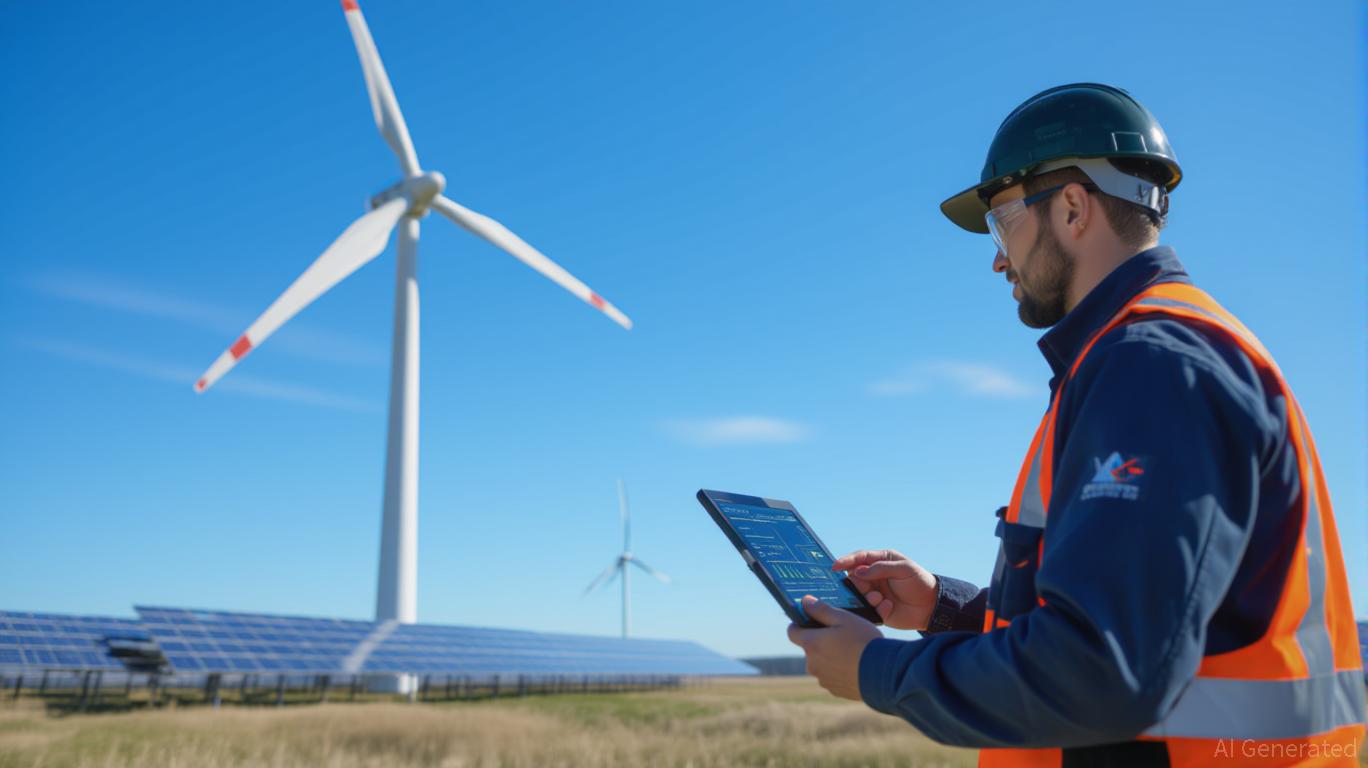
- 2025 wind energy education programs are critical for addressing a 100,000-technician labor gap and advancing green infrastructure. - Institutions like STL USA and NREL integrate AI analytics, blade recycling, and hands-on turbine training to meet industry demands. - Industry partnerships with OEMs and $36M+ in federal funding accelerate workforce development but face policy risks from DOI land-use restrictions. - Global clean energy investment reached $2.1T in 2024, with U.S. renewables accounting for 93
Investing in EdTech and Skills Training to Empower Tomorrow's Workforce
- Global high-growth sectors like AI, renewables, and biotech are reshaping workforce demands, driving rapid STEM education evolution through edtech and vocational training. - AI-powered adaptive learning and immersive VR/AR tools now personalize education, with 36% of 2024 edtech funding directed toward workforce-specific skill development. - Vocational programs and industry partnerships (e.g., U.S. EC4A, EU Green Deal) are closing STEM skills gaps, creating direct pipelines to 16.2M+ clean energy jobs by
The Rising Influence of EdTech on Career-Focused Investment Prospects
- Global EdTech market grows at 20.5% CAGR to $790B by 2034, driven by STEM/digital skills demand. - STEM workers earn 45% higher wages; 10.4% occupation growth vs 4.0% non-STEM, reshaping labor markets. - 2025 EdTech VC investments show 35% YoY decline, concentrating on AI tools and scalable upskilling platforms. - MENA/South Asia EdTech sees 169% funding growth, addressing equity gaps through global platforms. - AI-driven EdTech and M&A activity (e.g., ETS-Ribbon) highlight sector's shift toward outcome-
KITE Price Forecast Following Listing: Managing Post-IPO Fluctuations and Institutional Investor Outlook
- Kite Realty Group (KITE) fell 63% post-IPO despite strong retail occupancy and NOI growth, highlighting valuation disconnect between real estate fundamentals and tech IPO expectations. - Institutional sentiment split: COHEN & STEERS boosted holdings by 190% amid industrial pivot, while others divested $18. 3M , reflecting uncertainty over hybrid retail-industrial strategy execution. - Analysts remain divided on $24–$30 price targets, balancing KITE's 7.4% dividend increase and industrial shift against ma

Trending news
MoreCrypto prices
More





