
Ethereum Report Claims ETH Is Severely Mispriced

Quick Take Summary is AI generated, newsroom reviewed. The report claims Ethereum is mispriced because markets treat it like a company. It proposes valuing Ethereum as a public good similar to Internet protocols. A new model estimates Ethereum’s intrinsic value at $2–6 trillion. Current ETH market cap sits near $400 billion, far below the model’s estimate.References X ref
DeFi Dad, posts the new work by William Mougayar on the fundamental mispricing of Ethereum. The report asserts that markets have developed Ethereum as a profit-making company. Investors will value ETF based on charges and earnings. Stating that Ethereum undervalues its role as a public good, Mougayar positions this lens in a negative way. He likens Ethereum to Internet base layers such as TCP/IP. These schemes generated huge economic revenues without direct profits. Ether behaves in the same manner. The network facilitates trillions of activity in stablecoins, payments, DeFi, and tokenized assets. According to the report, the value of ETH only captures a fraction of this value. The numbers of market cap currently are not indicative of the systemic effect of the network. This gap is identified in the post and a new valuation framework is demanded.
New Valuation Model Has Multi-Trillion Dollar Intrinsic Value
The report presents a three part valuation model. It quantifies captured value, capitalized economic flows and surplus of trust. The market caps of ETH, layer-2 networks, and DeFi protocols captured value. This group constitutes approximately $0.6-0.9 trillion in the present day. Economic flows that rely on Ethereum are capitalized and are such that they include GDP-like activity. This covers the volume of stablecoin settlements, DeFi trading, as well as tokenization transactions.
These flows are over 50 trillion every year. When a conservative multiple is applied with a valuation of 0.3-3 trillion. Trust surplus consists of: reduction of fraud, resistance to censorship and savings by intermediaries. These advantages add up to 0.15- 0.6 trillion. The hybrid model values Ethereum at a range of 2-6 trillion intrinsically. As of December 2025, ETH has a market value of close to 400 billion. It is in the report that there is a great underestimation in this disconnect.
Ethernet Systems as the World’s Trust in Financing
According to the report, Ethereum is referred to as the Global Trust Underlayer of digital finance. The network secures value. It enforces rules. It is the host of international applications and dependent on banks, fintechs, enterprises, and governments. The report compares the early Internet. TCP/IP was the driving force of world communications. It expanded to nothing into trillion dollar economic impact. The same is the case with Ethereum. Tokenization expands.
The adoption of stablecoins picks up. Assets in the real world move to the blockchain. There is an increased institutional demand around the world. The model predicts that the model valued at between 10 to 20 trillion over a period of three years to come (2035). According to McKinsey and World Bank, the growth of digital infrastructure documented historically. The report contends that Ethereum is on the same curve. The post indicates the optimism in the long run utility of ETH. The community considers the research to be a wakeup call to the way markets appreciate base layers.
Disclaimer: The content of this article solely reflects the author's opinion and does not represent the platform in any capacity. This article is not intended to serve as a reference for making investment decisions.
You may also like
COAI Token Fraud: Insights for Cryptocurrency Investors During Times of Regulatory Ambiguity
- COAI token's 88% collapse in late 2025 exposed systemic risks in AI-driven DeFi ecosystems, with $116.8M investor losses. - Governance flaws included 87.9% token concentration in ten wallets, untested AI stablecoins, and lack of open-source audits. - Panic selling accelerated by AI-generated misinformation and CEO resignation, amid conflicting global crypto regulations. - Lessons emphasize scrutinizing token distribution, demanding transparent audits, and avoiding jurisdictions with regulatory ambiguity.

Renewable Energy Training as a Key Investment to Meet Future Workforce Needs
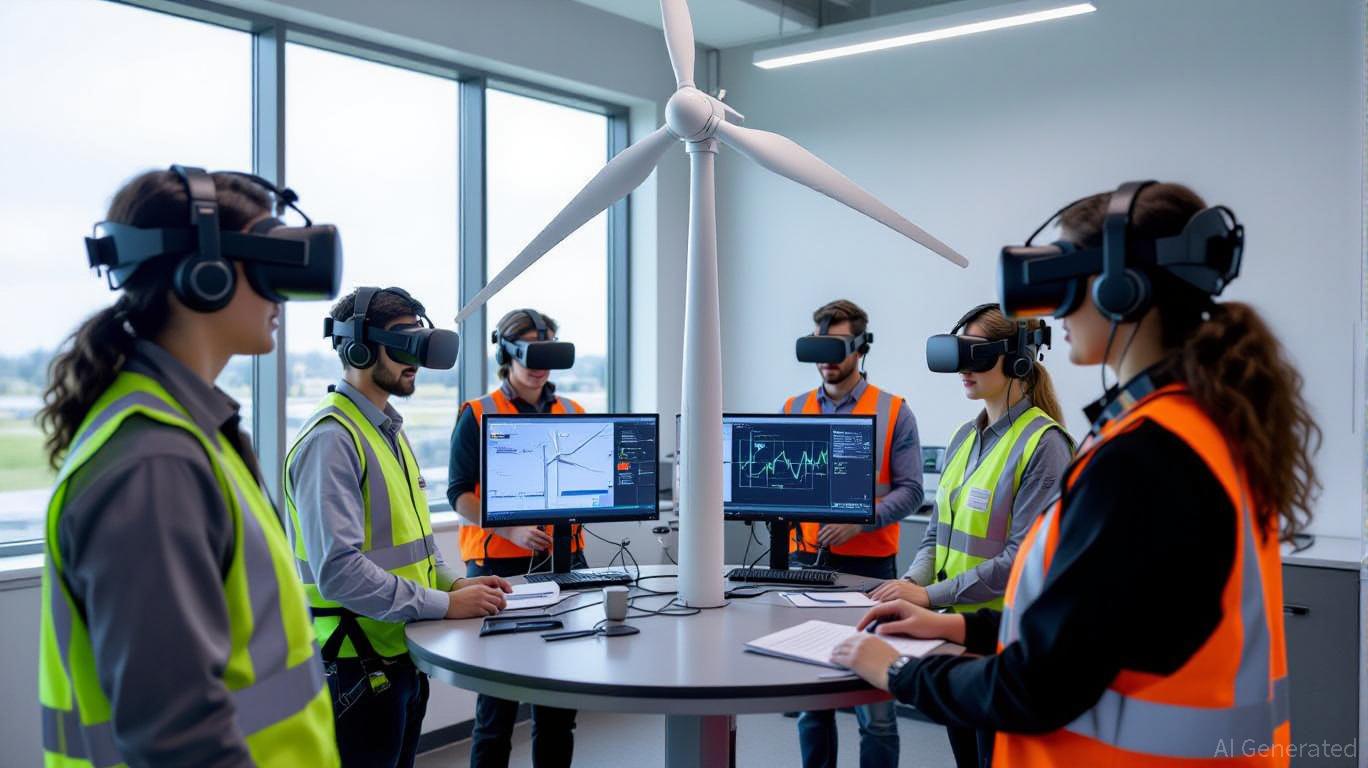
- Farmingdale State College's Wind Turbine Technology program aligns with surging demand for skilled labor in decarbonizing economies, driven by U.S. renewable energy targets. - Industry partnerships with Orsted, GE Renewable Energy, and $500K in offshore wind funding validate the program's role in addressing workforce shortages in expanding wind sectors. - Hands-on training with GWO certifications and VR simulations prepares graduates for high-demand, high-salary roles ($56K-$67K annually), reducing corpo
The Revival of STEM Learning as a Driving Force for Tomorrow’s Technology Investments
- Emerging STEM universities are driving tech innovation through interdisciplinary curricula and industry partnerships, focusing on AI, biotech , and advanced manufacturing. - U.S. programs like STEM Talent Challenge and NSF Future Manufacturing allocate $500K-$25.5M to bridge skills gaps and fund projects in quantum tech and biomanufacturing. - Leadership-focused STEM programs at institutions like Florida State and Purdue boost startup success rates (75-80%) and align with venture capital trends favoring

Assessing KITE’s Price Prospects After Listing as Institutional Interest Rises
- Kite Realty Group (KRG) reported Q3 2025 earnings below forecasts but raised 2025 guidance, citing 5.2% ABR growth and 1.2M sq ft lease additions. - Institutional investors showed mixed activity, with Land & Buildings liquidating a 3.6% stake while others increased holdings, reflecting valuation debates. - Technical indicators suggest bullish momentum (price above 50/200-day averages) but a 23.1% undervaluation vs. 35.1x P/E, exceeding sector averages. - KRG lags peers like Simon Property in dividend yie

Trending news
MoreCrypto prices
More





