
The ZK Atlas Upgrade: Revolutionizing Blockchain Infrastructure Scalability
- ZKsync's 2025 Atlas Upgrade boosts Ethereum L2 scalability to 43,000 TPS with $0.0001 fees via RISC-V zkVM and modular architecture. - Institutions like Deutsche Bank adopt ZKsync for real-time settlements, driving $3.5B TVL in ZK rollups by 2025. - Vitalik Buterin endorses the upgrade as critical for Ethereum's L2 roadmap, with Fusaka set to double throughput by December 2025. - ZK-based platforms now dominate L2 infrastructure, with ZKP market projected to reach $7.59B by 2033 at 60.7% CAGR.
ZK Atlas Upgrade: Transforming Blockchain Scalability and Adoption
In October 2025, ZKsync introduced the ZK Atlas Upgrade, marking a pivotal advancement in blockchain technology. This upgrade reimagines scalability, cost-effectiveness, and institutional integration within the industry. By leveraging a modular framework and a RISC-V-powered zero-knowledge virtual machine (zkVM), ZK Atlas has elevated Ethereum’s Layer 2 (L2) performance, delivering remarkable throughput of 15,000–43,000 transactions per second (TPS), sub-second finality, and transaction fees as low as $0.0001. These achievements address Ethereum’s persistent scalability issues and establish ZK-based solutions as foundational to the next wave of blockchain progress. For investors, this signals a transformative era for DeFi, enterprise blockchain, and the expanding zero-knowledge (ZK) ecosystem.
Breakthroughs in Technology: Foundations of Next-Gen Scalability
Central to the ZK Atlas Upgrade is the Airbender prover, a zkVM built on RISC-V architecture that significantly lowers the cost of transaction proofs and supports parallel processing. Paired with zkSync OS, this system streamlines both execution and proof creation, achieving one-second finality—an essential feature for real-time financial operations. The upgrade’s modularity allows for multiple virtual machine environments, including full compatibility with the Ethereum Virtual Machine (EVM). This ensures that existing Ethereum smart contracts and decentralized applications (dApps) can integrate seamlessly, promoting interoperability between ZK-based Layer 2s and Ethereum’s mainnet.
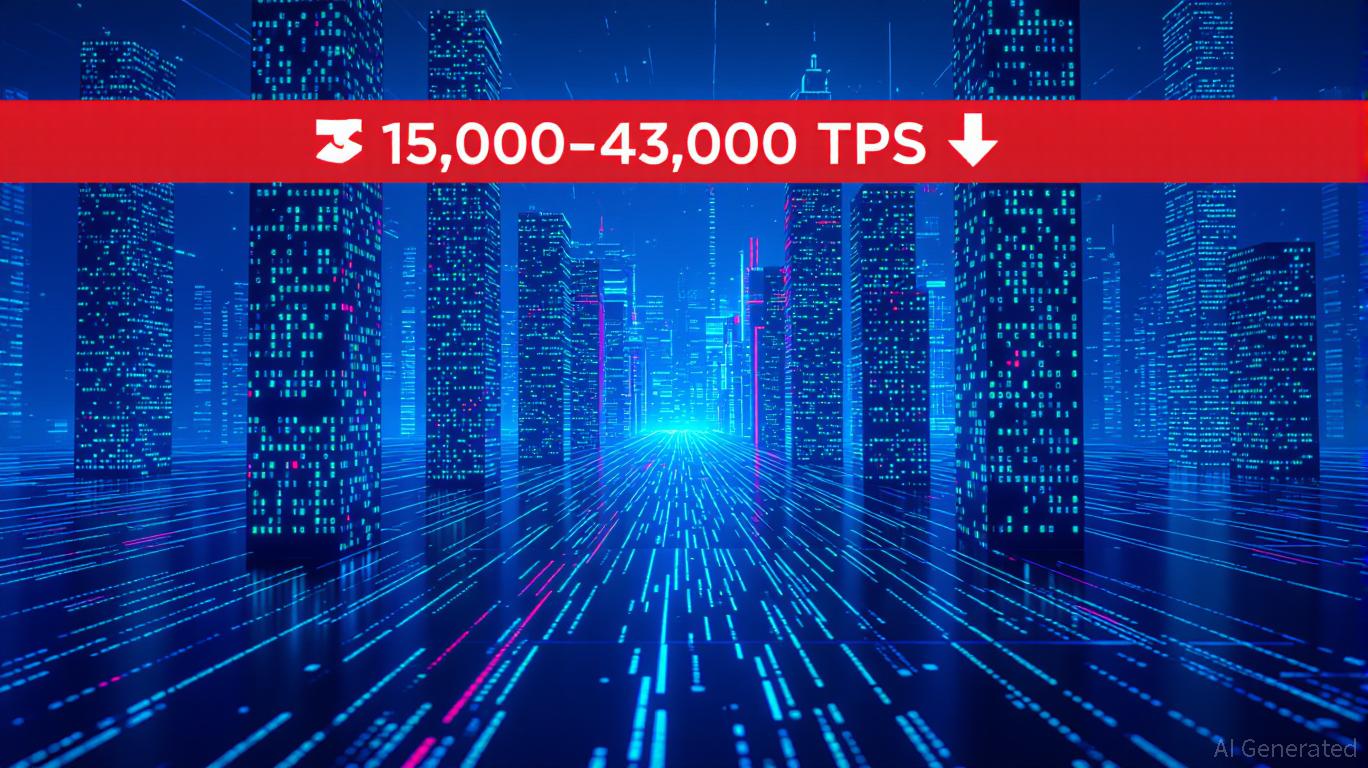
Performance metrics already highlight the upgrade’s impact: ZKsync now processes 25,000–30,000 TPS for payment-centric tasks, rivaling established payment networks. This capability has attracted prominent financial players like Deutsche Bank and Sony, who utilize ZKsync for cross-chain compliance and tokenized asset settlements. Ethereum co-founder Vitalik Buterin has commended the upgrade, emphasizing its significance in advancing Ethereum’s vision for secure and efficient Layer 2 infrastructure.
DeFi Revolution: Enhanced Scalability and Accessibility
The ZK Atlas Upgrade has ushered in a new era for decentralized finance, where low fees and high throughput are crucial. With transaction costs dropping to $0.0001, microtransactions and high-frequency trading are now practical, paving the way for innovative DeFi applications and tokenized assets. By early 2025, ZK-based platforms have amassed a $3.5 billion total value locked (TVL), fueled by institutional involvement and developer creativity.
Additionally, the upgrade’s modular design enables instant settlements and cross-chain liquidity, overcoming longstanding barriers in DeFi. By utilizing Ethereum’s mainnet as a central liquidity source, ZKsync enables rapid and secure interactions between Layer 2 and Layer 1, fostering a unified financial ecosystem. This has led to a 230% increase in developer participation in ZK technology during 2025, reflecting robust ecosystem expansion. For investors, this signals a maturing DeFi sector where ZK-based solutions are becoming essential infrastructure.
Enterprise Integration: Connecting Blockchain with Traditional Finance
The enterprise-grade capabilities of the ZK Atlas Upgrade have made it a preferred choice for organizations seeking scalable and compliant blockchain solutions. Financial institutions are particularly drawn to ZKsync’s ability to process 25,000–30,000 TPS for payment operations, enabling real-time international settlements and efficient management of tokenized assets. Leading banks such as Deutsche Bank and UBS have adopted ZKsync for secure settlements and digital rights management, benefiting from its advanced cryptographic security and regulatory alignment.
The upgrade’s support for diverse VM types, including RISC-V and WASM, further enhances its appeal to enterprises, allowing for tailored blockchain deployments that remain interoperable with Ethereum-based systems. As a result, ZKsync is establishing itself as a core layer for institutional blockchain adoption, with over $3.5 billion in TVL across ZK rollups. This trend marks a turning point, as blockchain technology transitions from experimental to essential infrastructure for global finance.
Looking Ahead: Fusaka Upgrade and Market Expansion
ZKsync’s future plans reinforce its leadership in the zero-knowledge space. The upcoming Fusaka upgrade, set for December 3, 2025, aims to double throughput to 30,000 TPS and further enhance ZK-SNARK capabilities. Projections indicate that the ZK Layer 2 market could reach $90 billion by 2031, growing at a compound annual rate of 60.7%. The global zero-knowledge proof (ZKP) sector is also expected to hit $7.59 billion by 2033, driven by demand for privacy-focused, scalable solutions in DeFi, gaming, and asset tokenization.
Investor optimism is reflected in the $ZK token’s 150% price increase following the upgrade, highlighting strong market confidence. As ZK-based platforms are poised to dominate the Layer 2 landscape, early investors could benefit from accelerating growth in TVL, developer activity, and institutional partnerships.
Investment Perspective: Why ZK-Based Platforms Stand Out
The ZK Atlas Upgrade presents a compelling opportunity for investors seeking long-term exposure to Layer 2 protocols and ZK-driven platforms. Key metrics—such as a 22.1% CAGR in ZK market growth, $28 billion TVL across ZK rollups, and $3.5 billion in institutional TVL—demonstrate the sector’s strength and scalability. The $ZK token’s 50% surge after Vitalik Buterin’s endorsement further underscores the market’s recognition of ZKsync’s strategic importance.
While regulatory uncertainties and competition from other Layer 2 solutions remain, the technical advantages and institutional traction of the ZK Atlas Upgrade create a significant competitive edge. Investors should focus on platforms featuring modular design, EVM compatibility, and clear plans for scaling throughput. With the Fusaka upgrade and the expanding ZKP market, ZKsync is positioned as a premier investment for the next phase of blockchain evolution.
Conclusion
The ZK Atlas Upgrade is more than a technical achievement—it is a driving force for mainstream blockchain adoption. By overcoming scalability barriers, slashing costs, and enabling enterprise-grade solutions, ZK-based platforms are reshaping the future of DeFi and institutional finance. For investors, the combination of strong performance indicators, expert endorsements, and a bullish outlook makes ZK-based protocols a strategic asset in an increasingly decentralized and privacy-oriented world. As the ZKP market accelerates toward $7.59 billion by 2033, now is the time to seize the opportunity.
Disclaimer: The content of this article solely reflects the author's opinion and does not represent the platform in any capacity. This article is not intended to serve as a reference for making investment decisions.
You may also like
Is FET Nearing a Recovery Phase? This Key Emerging Fractal Suggests So

Core (CORE) Testing Key Resistance – Could This Pattern Trigger an Upside Breakout?

Zcash Halving 2025: Effects on the Market, Investor Reactions, and Tactical Investment Prospects
- Zcash's 2025 halving reduces block rewards by 50%, tightening supply and reinforcing its deflationary model. - The event coincided with a 1,172% price surge, driven by institutional investments and growing shielded transaction adoption. - Institutional demand, including Grayscale and Cypherpunk's ZEC acquisitions, highlights Zcash's strategic value in privacy-focused crypto markets. - Regulatory risks under MiCA and short-term volatility remain concerns, but long-term projections suggest potential for $1
New Prospects in EdTech and Career Training: Fast-Expanding Academic Pathways Tailored to Meet Industry Demands
- Global higher education is reshaping curricula to align with AI, security, and green energy industry demands, creating high-growth career pathways. - AI programs see 45% annual enrollment growth (2020-2025), with graduates earning 56% higher wages than non-AI peers in fields like cybersecurity and data science. - Security programs address 750,000 U.S. cybersecurity job gaps through AI-driven threat detection, while wind energy training responds to 64% global wind power growth in 2025. - Institutions like

Trending news
MoreCrypto prices
More





