
LazAI mainnet goes live, we talked with Metis about this move

The "native sons" of L2 have always been projects not to be missed.
Written by: Eric, Foresight News
On the evening of December 22nd, East 8th District time, LazAI, an AI data and application layer incubated by Metis, officially announced the launch of its Alpha mainnet. The last impressive move by Metis that caught my attention was the pioneering launch of a decentralized sequencer. At a time when most L2s are shifting their focus to trading, why does Metis remain steadfast in choosing AI?
With this question in mind, we spoke with Metis.
Focusing on "Data": Metis' Unique Path
The Metis team told me that the launch of LazAI was not a spur-of-the-moment decision to chase the AI hype. As early as the beginning of this year, Metis had already set its strategic direction to focus on AI, and LazAI is the flagship product launched after nearly a year of dedicated development. LazAI is not simply an AI application, nor is it just an AI product with a token; rather, it is a network serving AI model training and applications.
Building a "Web3+AI" application may not be the best choice. Currently, the development of AI has not yet reached a level where integrating Web3 at the application layer is worthwhile, or in other words, the certainty of application directions is not high. The reason for the success of stablecoins and DeFi is that the financial infrastructure in many countries or regions is not perfect, leaving a market gap, whereas in the short term, I believe Web3 will not gain much advantage in AI applications.
However, the situation is completely different at the non-application layer. Looking back over the past year or two, cloud service providers including Alibaba Cloud and AWS have more or less integrated L2 or Alt L1-related tools or products, including Sui. This allows cloud service providers to offer more diversified choices, and Web3 tools are often a more cost-effective option.
In my view, Metis leveraging its L2 advantages in verification capability and speed to launch LazAI is the right choice. Moreover, LazAI is not simply applying Web3 concepts, but has created an original solution that is optimal both from an engineering and market fit perspective.
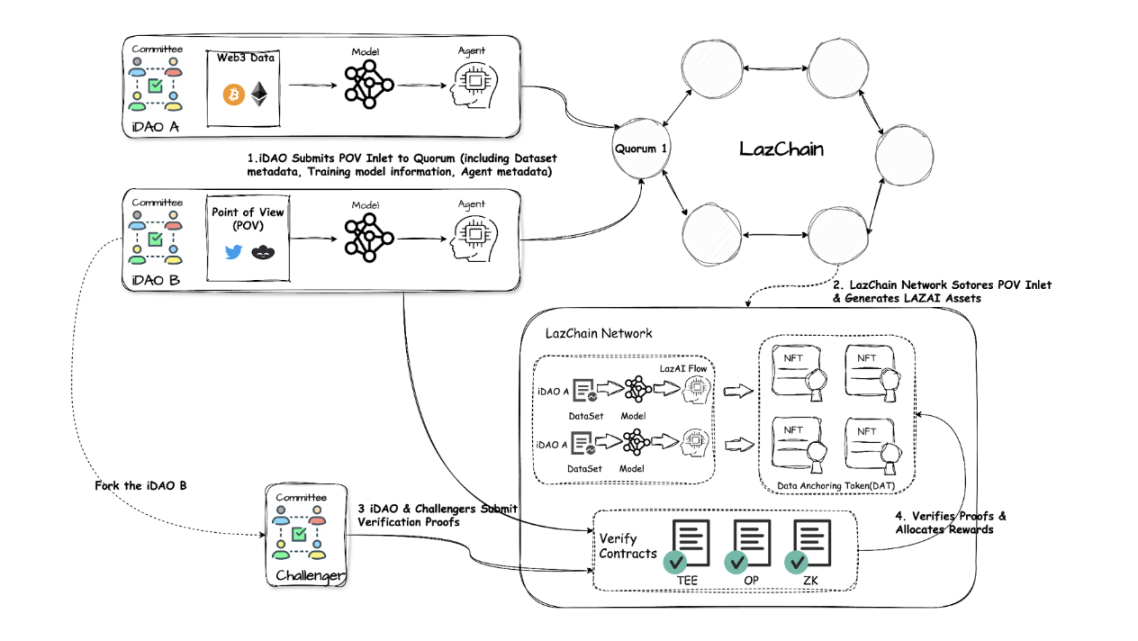
Let's look at the diagram first: The biggest feature of LazAI is that its design considers a complete solution from data, training, to application. The entire life cycle of AI—from training to usage to AI-based applications—can be completed on LazAI.
To explain LazAI clearly, we first need to clarify its three core components: iDAO, DATs, and the verifiable computation framework.
iDAO is the smallest unit participating in the network and also serves as a consensus node. It can play any role in the AI lifecycle: data providers, AI models trained using the data, entities providing computing power, or teams developing applications based on AI. LazAI modularizes the various participants in the AI ecosystem, providing greater composability for AI.
DATs (Data Anchoring Tokens) are a semi-fungible token standard originally created by the LazAI team and are a core innovation of LazAI. DAT encodes three key attributes: an "ownership certificate" proving the asset's source and author identity, "usage rights" defining access quotas (such as the number of inference calls), and "value sharing," which allows holders to automatically receive income proportionally. DAT enables data contributors and AI developers to monetize their contributions and continue to earn income from user usage in the future.
The verifiable computation framework is designed to solve the "black box" problem of AI computation, mainly to ensure confirmation of the data and model invocation process. LazAI uses TEEs (Trusted Execution Environments), ZKPs (Zero-Knowledge Proofs), and OPs (Optimistic Proofs) to minimize trust in off-chain AI execution. TEE provides private execution, ZKPs verify outputs without revealing data, and OPs assume validity to optimize speed. This hybrid proof system is similar to ZK Rollup but is tailored for AI, balancing privacy, efficiency, and verifiability.
Based on this, we can outline the overall workflow in the LazAI network: Users submit encrypted data to iDAO, which packages it into a LazAI Flow and sends it to the Quorum via VSC. The Quorum uses TEE/ZKP to verify and anchor the hash to LazChain. After on-chain verification, DATs can be minted, recording metadata and rights. Users transfer DATs to call services, off-chain TEE executes, and results are verified via ZKP/OP.
In this process, VSC (Verifiable Service Coordinator) can be understood as an expert group used to confirm the authenticity of specialized data, while Quorum is the consensus mechanism of LazChain. iDAO, as a consensus node, not only fulfills its own responsibilities but also ensures the operation of consensus.
With the Alpha Mainnet Launched, What Can We Do?
LazAI is designed to address the issue of acquiring learnable data in the AI field. Among the current Web3+AI projects we see—aside from x402—others include computing power networks, AI Launchpad incentive model networks, and, more recently, projects also aimed at providing learnable data. From my perspective, the first two do not address real existing needs but rather use Web3 as a better carrier for AI, while the latter's coverage is too narrow.
LazAI, designed for specific problems, has created an original mechanism that allows contributors to continuously profit, hard-coded into the logic rather than being added ad hoc each time, to ensure participant interests.
According to the team, LazAI's Alpha mainnet will not immediately launch a token. For those with expertise who can contribute, as well as AI model and product developers, this is not only a rare opportunity for self-presentation but also a chance to monetize their abilities through airdrops. In addition, LazAI will launch a developer incentive program for the Alpha mainnet with a total prize pool of 10,000 METIS, covering all stages from early prototypes to mature applications, and providing multi-level ecosystem empowerment, including cross-social channel promotion and user growth funds.
Before the mainnet launch, LazAI had already achieved impressive results on the testnet. According to the team, the total number of active users on the testnet is close to 140,000, and the evolvable AI companion Lazbubu, launched by the official team, has attracted nearly 15,000 users.
The achievements on the testnet go beyond this. ROVR Network, which transforms everyday vehicles into intelligent 3D physical world data mappers, has adopted LazAI's solution.
ROVR continuously maps the surrounding environment through its devices, generating rich geospatial datasets and inputting the data into the LazAI ecosystem. In this case, ROVR is an "iDAO," and the data it uploads is minted as DAT. As a result, LazAI gains a high-precision DePIN and RWA database, which can be used by future AI autonomous driving tools for self-learning and optimization.
The team told me that LazAI's team culture is very developer-friendly, as evidenced by the incentives provided to developers with this mainnet launch. This developer-focused culture has also attracted the favor of AI industry scholars. In June this year, Dr. Zehua Wang, a core member of the Blockchain Research Center at the University of British Columbia (UBC) and adjunct professor in the Department of Electrical and Computer Engineering, joined LazAI as a technical advisor. Dr. Wang has long been dedicated to decentralized multi-agent system collaboration and security, with research focusing on the integration of AI and blockchain technology, especially in trusted edge AI, blockchain and smart contract security, and zero-knowledge proofs.
As mentioned at the beginning, Metis was the first L2 to put decentralized sequencers into practice, which is a great example of its pursuit of technological iteration. This dedication to technology and attention to developers has laid a solid foundation for long-term development.
Why Choose AI?
This question may seem a bit silly. As a hot concept, choosing AI seems like a no-brainer, but the reality may not be as simple as it appears.
The challenges facing general-purpose Ethereum L2s are becoming increasingly severe. Many projects are choosing to build their own L1 or develop application chains based on mature Rollups to pursue more customized performance. This forces L2s to reposition themselves and seek new directions based on their own characteristics.
Some time ago, ByteDance's launch of a smartphone with built-in Doubao caused a sensation. The core of the excitement was that with AI, users no longer need to interact with multiple apps; they just tell the AI their needs, and the AI calls various apps to achieve the user's goals. This fundamentally changes the logic of "capturing traffic" in the internet era, and in the future, the entry point for traffic will likely become a competition between AIs.
I give this example to illustrate that even though many L2s have chosen trading, prediction markets, and RWA tokenization, they may have overlooked the fact that in the future, it may not be humans operating these applications, but AIs receiving human instructions. If the AI entry point is missed, no matter how many application chains there are, they will become mere tools for AI. Clearly, Metis realized this issue a year ago.
As I mentioned before, Metis has actually been implementing an AI-centric strategy since the beginning of the year. In March, at ETHDenver, Metis announced its dual-chain strategy: in addition to Metis itself, Hyperion is a high-throughput L2 optimized for AI applications, supporting parallel execution and instant feedback. Moreover, Hyperion is deeply integrated with the Metis SDK, supporting modular construction of application chains and targeting high-frequency trading and real-time AI applications.
LazAI is the "flagship product" under this strategy, and all previous planning now reveals its true value. All L2s, including Metis, understand one thing: the efficiency advantage of L2s is gradually being eroded by the Ethereum mainnet, so there must be a strong product to secure at least one track, ensuring the chain has stable usage and maintaining the steady operation of the ecosystem. AI infrastructure is more like something that is "difficult, but right."
Using Web3 solutions to optimize the problem of AI data labeling has only just begun to emerge in recent months, and Metis is among the first to take the plunge. However, Metis' solution is a very typical Web3 Native solution, not just a simple introduction of on-chain confirmation and token issuance.
For Metis, the expansion of the on-chain application ecosystem and the strategy of using the chain as a settlement layer to some extent are progressing in parallel. I believe that in the future, token prices will become increasingly linked to real value, and the extent to which the network is adopted and how much real demand there is for gas tokens will determine the value of the token and the network. Entering the AI field is also a feedback loop for the value of METIS itself. If my prediction comes true, the more non-AI application chains based on the L2 stack that emerge, the more value support METIS will have.
Blockchain-based products have already begun to penetrate all aspects of internet applications, and their performance in the AI field is even more prominent. I still firmly believe that purely "on-chain models" or "AI Launchpads" will not have a long life cycle, but products like LazAI, which serve the AI life cycle, are different. For developers and users, products that are placed at the core of the ecosystem strategy are always worth paying attention to and participating in.
Disclaimer: The content of this article solely reflects the author's opinion and does not represent the platform in any capacity. This article is not intended to serve as a reference for making investment decisions.
You may also like
Why Can’t Bitcoin Experience Massive Rallies Anymore? Anthony Pompliano Says the “Wild Era” Is Over and Explains Why
Bitcoin Stalls Below $90K as Traders Eye $86K Support, Says Michaël van de Poppe
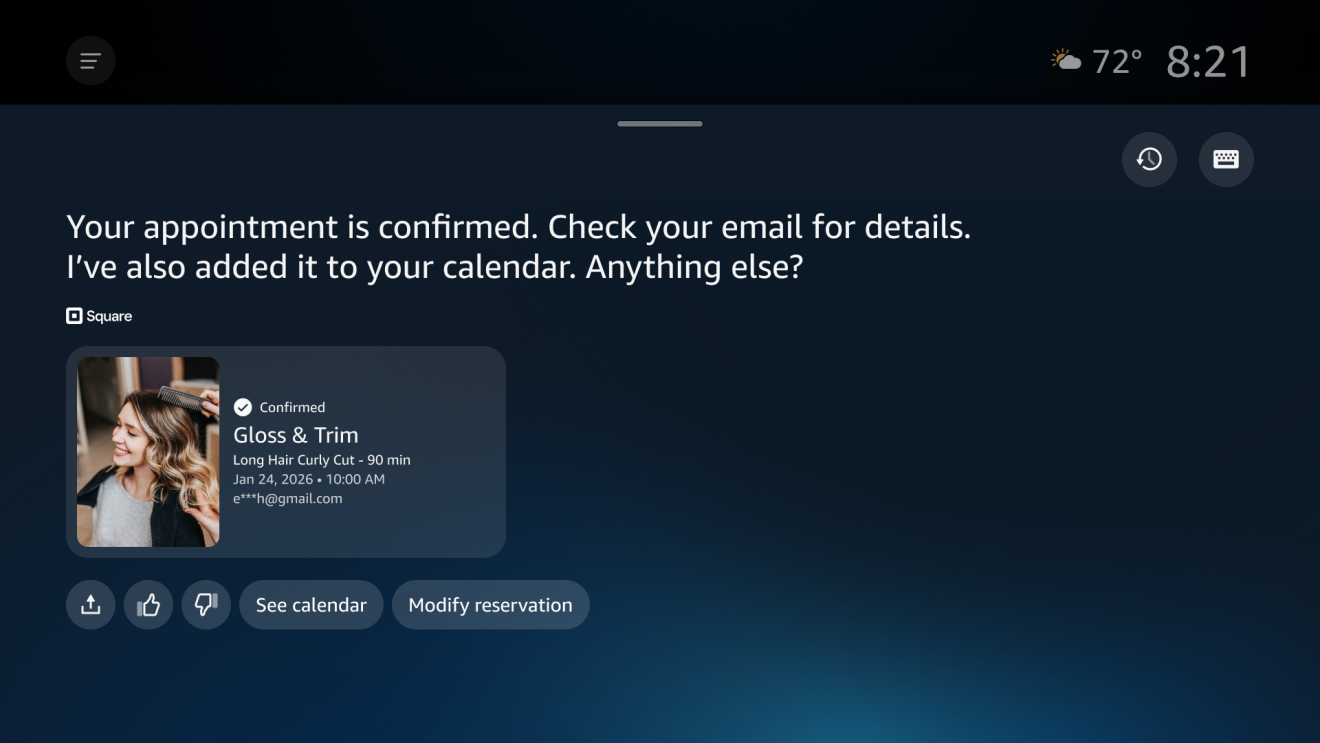
Amazon’s AI assistant Alexa+ now works with Angi, Expedia, Square, and Yelp
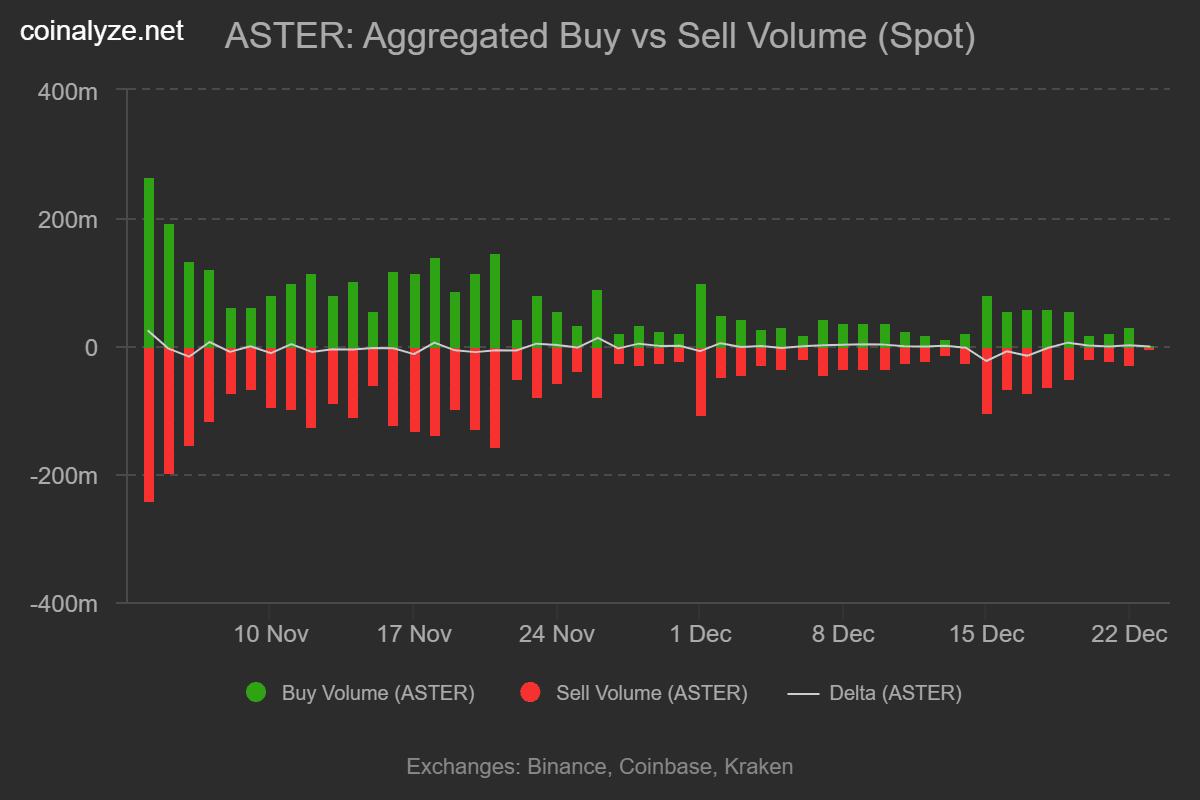
Aster DEX buys back $140M in tokens, yet prices stall – Why?
Trending news
MoreCrypto prices
More





