
What the Market Misunderstands about Renewable Energy

The Overlooked Impact of Renewables on Power Markets
U.S. electricity markets continue to underestimate the profound economic changes that renewable energy sources are bringing to power generation. A recent German research paper (Weidlich et al., 2025, “Base load power plants are not essential for future power systems,” Cell Reports Physical Sciences) suggests that base load power plants may soon become obsolete. The study, conducted by a team of German scholars, set out to determine whether Germany could fully decarbonize its energy sector within two decades by steadily increasing investments in renewables. Their conclusion was affirmative—provided certain conditions are met and with the understanding that some assets may become financially stranded. While it may not be surprising that a group of experts can design a theoretical path to a carbon-free grid in twenty years, the study also offers a comprehensive investment strategy for integrating renewables and understanding their broader effects on the energy system.
Key Elements for a Carbon-Free Grid
The researchers identified four main requirements for a fully operational, decarbonized electricity network:
- Significant expansion of renewable energy sources, such as wind and solar
- Development of a more resilient and adaptable transmission grid
- Implementation of a variety of battery storage solutions for both short and long durations
- Enhanced demand-side flexibility
These recommendations are not revolutionary. Expanding renewables and transmission infrastructure is a logical step. Increasing battery storage addresses periods of low generation, and greater demand management becomes more feasible as large-scale consumers like data centers enter the market, making it easier to negotiate flexible usage agreements.
Economic Consequences for Base Load Power
However, the transition to a decarbonized grid would fundamentally undermine the financial viability of existing base load power plants. In fact, all new generation technologies—whether fossil-fueled, nuclear, or geothermal—would struggle to compete with the cost advantages of renewables and flexible demand. The widespread adoption of solar and other renewable resources could meet energy needs at a lower cost and with less environmental impact, leaving little room for traditional plants to remain profitable. Even though there may be times when additional generation is needed, the limited revenue from these periods would not justify the high costs of maintaining large base load facilities. This is no longer just a theoretical issue—the study’s findings are clear: large-scale renewable adoption will erode the economic foundation of base load power, with significant implications for future investments and the risk of stranded assets across the sector. This logic is likely applicable to other Western countries as well.
Renewables: The Unstoppable Economic Force
For those familiar with the industry, these developments are hardly unexpected. Wind and solar consistently outperform conventional power sources economically, largely because their operating costs are minimal. In contrast, fossil-fueled plants face ongoing, substantial fuel expenses, making it impossible for them to compete. Solar technology, driven by chemical processes, continues to advance and become more cost-effective, while fossil-based technologies remain expensive and subject to volatile fuel prices. The German study found that gas-fired plants might offer some economic value to the grid, but new nuclear projects—regardless of size—are prohibitively expensive in this context.
The Future of Base Load Assets
The pressing question is whether recently built base load power stations are already on the path to becoming “stranded assets”—rendered obsolete by more affordable technologies. This is a matter of reaching a tipping point: as renewables and battery storage further disrupt market economics, large, costly base load plants may become financially unsustainable. The German study’s ultimate message is that a decarbonized grid is achievable, but it will come at the expense of traditional base load power plants. As the researchers put it:
“System level modeling for Europe shows that the question is not whether new base load plants are essential for a secure, net, zero grid—they are not. The defining question is whether they can become economical in a system dominated by low-cost renewables.”
The phrasing—whether new base load plants “can become economical”—suggests that they are already financially unviable. The study also highlights a further implication: renewables are poised not only to meet new electricity demand but also to replace existing infrastructure, potentially doubling or tripling the need for renewable assets over the next twenty years. Ultimately, these shifts are driven by economic realities.
By Leonard Hyman and William Tilles for Oilprice.com
Disclaimer: The content of this article solely reflects the author's opinion and does not represent the platform in any capacity. This article is not intended to serve as a reference for making investment decisions.
You may also like
XRP Poised To Move On Its Own, Separate From Bitcoin: CEO

Ireland voices concerns over the misuse of Grok on X
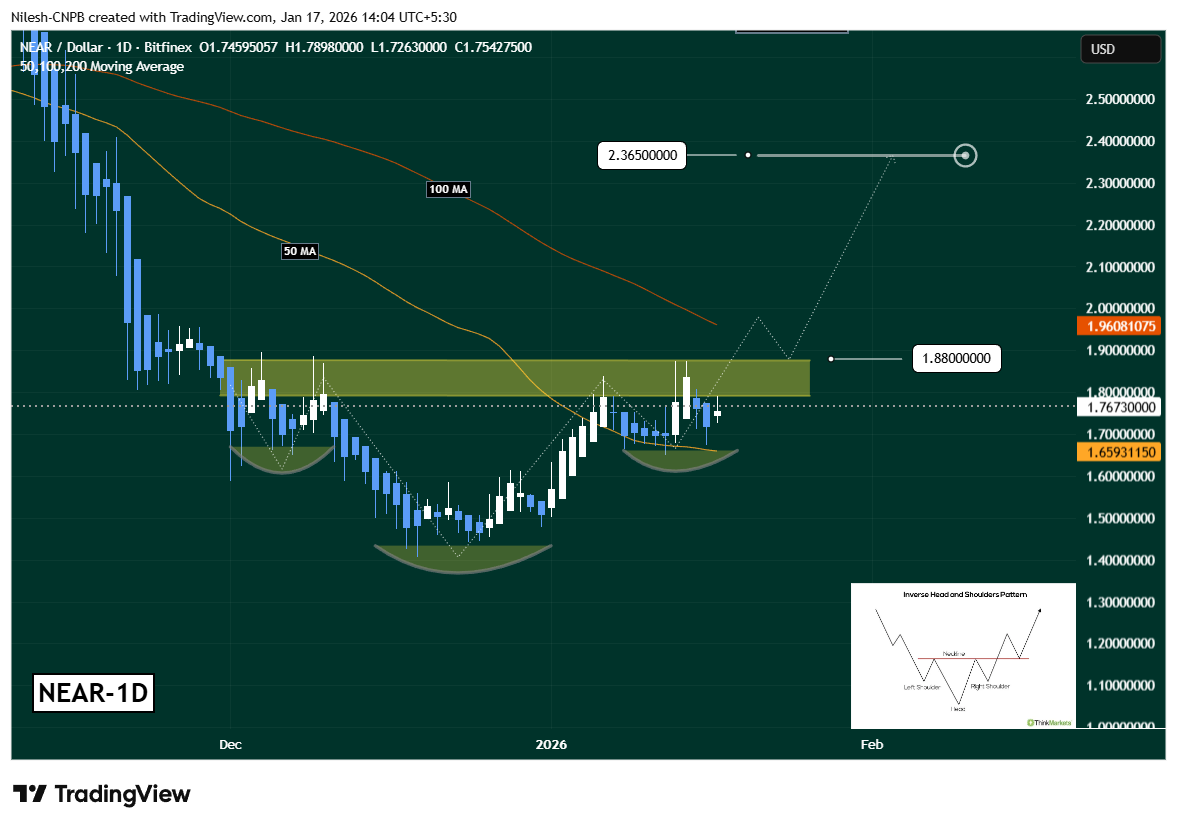
Near Protocol (NEAR) Leads Among Top Blockchains by Active Users — Is an Upside Breakout Brewing?
Bitcoin Faces a Rocky Recovery: Is It Just a Head Fake?
Trending news
MoreCrypto prices
More






