
Hands-on Experience with Bee: Amazon's Newest AI Wearable

Hands-On Experience with Bee: Usability and Features
During our initial trials with a review model of Bee, we found the device straightforward to operate. Activating or stopping a recording is as simple as pressing a button. Within the companion app, users can customize actions for a double press—such as bookmarking a conversation segment, processing the current discussion, or both. Additionally, you can choose whether holding the button allows you to leave a voice memo or interact with the AI assistant. (The app prompts you to enable voice notes, which we did.)
How Bee Stands Out Among AI Recorders
Bee, like other AI-powered tools, is capable of listening to, recording, and transcribing spoken conversations. However, Bee differentiates itself by dividing the audio into distinct segments and providing summaries for each, rather than simply offering a full transcript or a general overview. For example, an interview might be broken down into sections like introductions, detailed product discussions, industry trends, and other relevant topics.
Visual Organization and Transcription Access
Each segment in Bee’s app is highlighted with a unique background color, making it easier to distinguish between different parts as you scroll. Tapping on any section reveals the precise transcription for that portion.
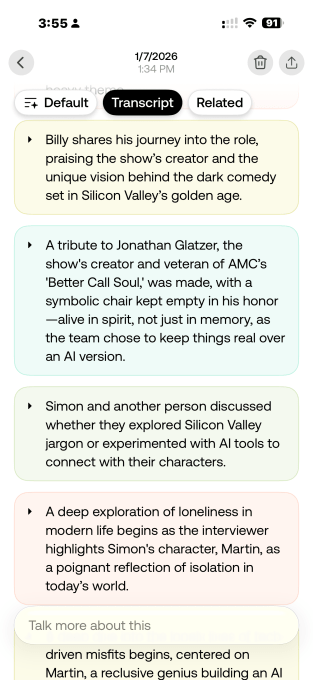
Image Credits: Bee screenshot
Speaker Identification and Audio Retention
Identifying speakers within the app wasn’t immediately intuitive. We discovered that tapping a conversation segment allowed us to confirm if we were the speaker, but this method doesn’t match the more robust speaker-labeling features found in other professional transcription tools. Furthermore, Bee deletes the audio after transcription, which means it’s not suitable for situations where you need to review the original recording for accuracy.
Bee’s Intended Use and Integration
Bee isn’t primarily designed as a workplace tool. Amazon envisions it as a personal AI companion that accompanies you throughout your daily routine. Through integration with Google services, Bee can link recorded conversations to actionable tasks. For instance, after meeting someone at a conference, it might prompt you to connect with them on LinkedIn or look up their product.
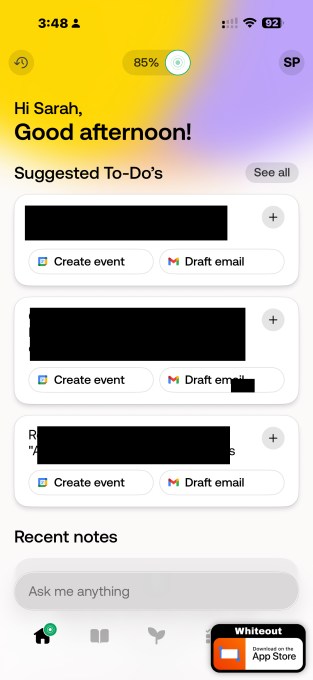
Image Credits: Bee screenshot with redacted personal data
Additional Features: Voice Notes and Personal Insights
Bee also allows you to record voice memos for yourself, offering a convenient alternative to jotting down notes manually. The app includes a section for revisiting memories from previous days, and a “Grow” area that provides insights as it learns more about your habits. There’s also a “facts” section where you can confirm or add personal details, similar to how other AI chatbots remember past interactions.
Amazon has announced plans to introduce more features to Bee in the coming year.
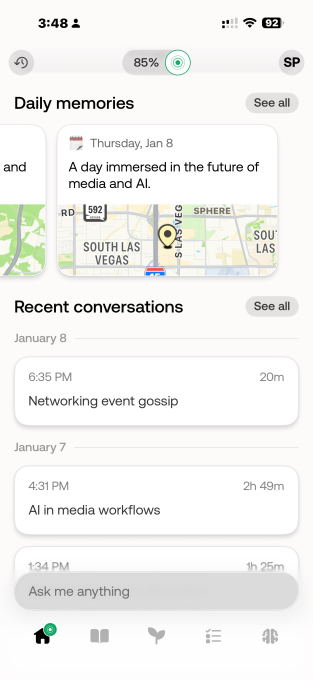
Image Credits: Bee screenshot
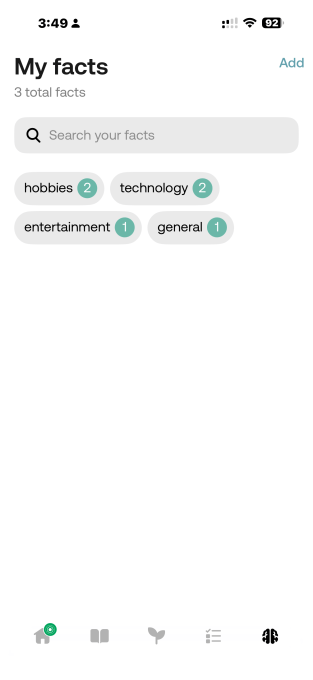
Image Credits: Bee screenshot
Privacy, Social Norms, and Device Design
Unlike some competing wearables, Bee only records when you activate it. Users are encouraged to request permission before recording someone (unless at a public event where recording is expected). When a recording is in progress, a green indicator light signals that the device is active.
Hardware Impressions
The included sports band felt somewhat fragile, coming loose twice during use—even while sitting still, such as in a taxi. We haven’t yet tried the clip-on pin, but it appears to be more secure.
App Design and Broader Implications
The Bee mobile app is notably more polished and user-friendly than Amazon’s previous in-house apps, like the Alexa app. However, the concept of using an AI device to record and analyze personal conversations is still largely unproven. It remains to be seen whether there’s a real demand for such technology among everyday users outside of professional environments like meetings or interviews.
If AI-powered listening devices become commonplace, society may need to reconsider what’s considered acceptable behavior. While recording video in public is technically legal, it’s often frowned upon; similarly, recording audio with an AI device without consent could be seen as inappropriate or intrusive.
Of course, not everyone will respect these social boundaries, which might lead people to be more guarded about what they say in public spaces.
Real-World Encounters and the Future of Recording
At CES, for example, we spoke with a representative at the Soundcore booth. After hearing a comment about a competitor’s product, they jokingly asked us to repeat it “louder into my microphone,” referencing the AI device discreetly attached to their shirt. This moment highlighted how, in the future, anything said in person could potentially be recorded—regardless of whether you’ve agreed to it.
Ultimately, Bee’s success or failure will help Amazon gauge whether consumers are ready to embrace this kind of technology in their daily lives.
Disclaimer: The content of this article solely reflects the author's opinion and does not represent the platform in any capacity. This article is not intended to serve as a reference for making investment decisions.
You may also like
Ads coming to OpenAI’s ChatGPT in U.S. free tier and $8 Go plan, plus tiers stay ad‑free
AutoStaking and Conflux Network Collaborate – Layer-1 Payments on DeFi with AI
Zuckerberg’s Threads starts 2026 ahead of Musk’s X in user count
Trending news
MoreCrypto prices
More






