
Bitcoin stayed above $90,000 over the weekend but failed to reclaim key resistance, as traders brace for three major U.S. events that could shake short-term market sentiment.
Markets Eye Major U.S. Events
This week, attention is focused on U.S. inflation data, a Supreme Court ruling on tariffs, and a key congressional vote on the CLARITY Act.
Sponsored
The next Consumer Price Index (CPI) report, scheduled for Tuesday, January 13, could quickly shift expectations for financial conditions. A higher-than-expected reading may tighten markets, while a softer print could give risk assets, including Bitcoin, room to advance.
At the same time, the Supreme Court case Learning Resources v. Trump is pending and could be decided soon. The case will determine the scope of emergency tariff authority, and its outcome may influence inflation expectations and broader market pricing, particularly if it leads to changes in U.S. trade policy.
Meanwhile, the CLARITY Act is set for a committee markup on January 15, which could clarify the regulatory framework for crypto markets. Clearer rules for exchanges, issuers, and brokers may shape product launches and listings in the United States, affecting the operational environment for digital assets.
Resistance Levels Test Bitcoin’s Strength
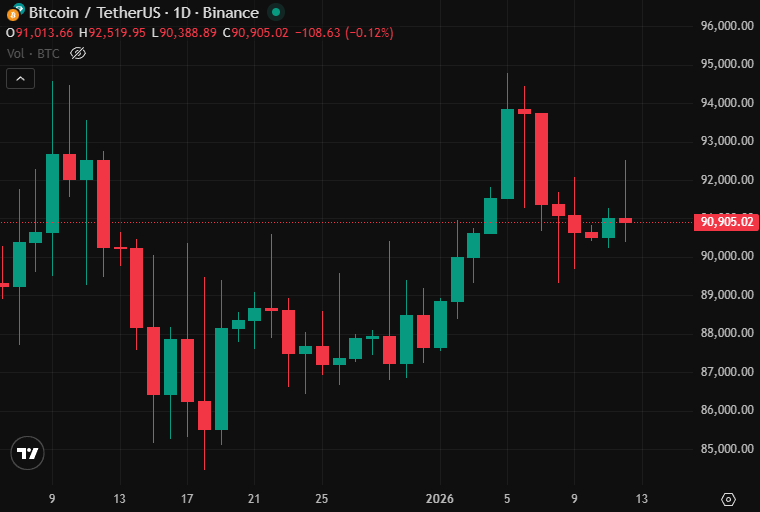
Over the past 30 days, Bitcoin has repeatedly tested levels above $94,000 but failed to hold them, turning the area into a near-term battleground.
 Source: TradingView
It also attempted to reclaim the key $92,000 resistance level on Monday but dumped back to $90,000, sparking discussion that it could fall back toward its 2026 yearly opening price of below $88,000.
“If Bitcoin fails to break and hold above the $92,000 level, the chances of revisiting the 2026 yearly open will go up,” noted investor Ted Pillows.
At the time of writing, the world’s largest cryptocurrency is trading at $90,700, remaining below key resistance.
Why This Matters
Any unexpected development from the CPI, Supreme Court, or CLARITY Act could trigger either a rapid rise or a sudden price decline.