
Exclusive Interview with Apple Vice President: What Apple Tools Should a Xiaohongshu Blogger Use?
 Think Together
 On January 29, 2026, Apple will launch Apple Creator Studio—a brand new subscription service that brings together all of Apple’s creativity and productivity software.
The price is as low as a cup of coffee per month.
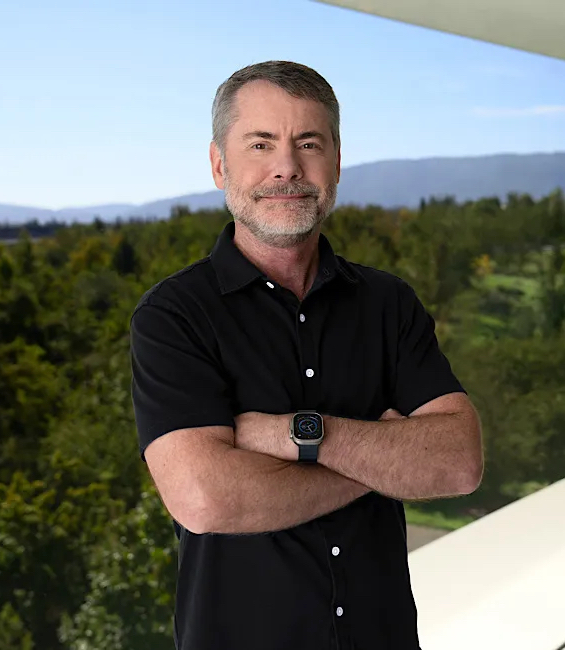
On the eve of the product launch, Bob Borchers, Apple's Vice President of Worldwide Product Marketing, and Brent Chiu-Watson, Senior Director of Worldwide App Product Marketing, gave an exclusive interview to Ifanr.

▲ Bob Borchers, Apple Global Product MarketingVice President
Through this interview, we tried to find an answer:
When a musician is also a video creator, a graphic designer, and a small business owner, what kind of tools should Apple provide for him?
A New Species of Creator
If you are a Xiaohongshu influencer, you are probably familiar with this workflow:
After deciding on a topic, you first write the script in a document, then shoot with your device, followed by a series of post-production steps—color grading, editing, soundtrack—then design an eye-catching cover, and finally upload everything to the platform and publish.

In Bob Borchers’ eyes, this is the typical profile of a modern creator:
They are no longer limited to a single field. A musician isn’t just writing songs—they have to produce tracks, design album covers, shoot music videos, and create merch.
The creator economy is not a new concept, but its form is rapidly changing.
A decade ago, a musician’s workflow was linear: write songs → record → find a label → release. Everyone focused on their own track, and the tools were vertical and specialized.
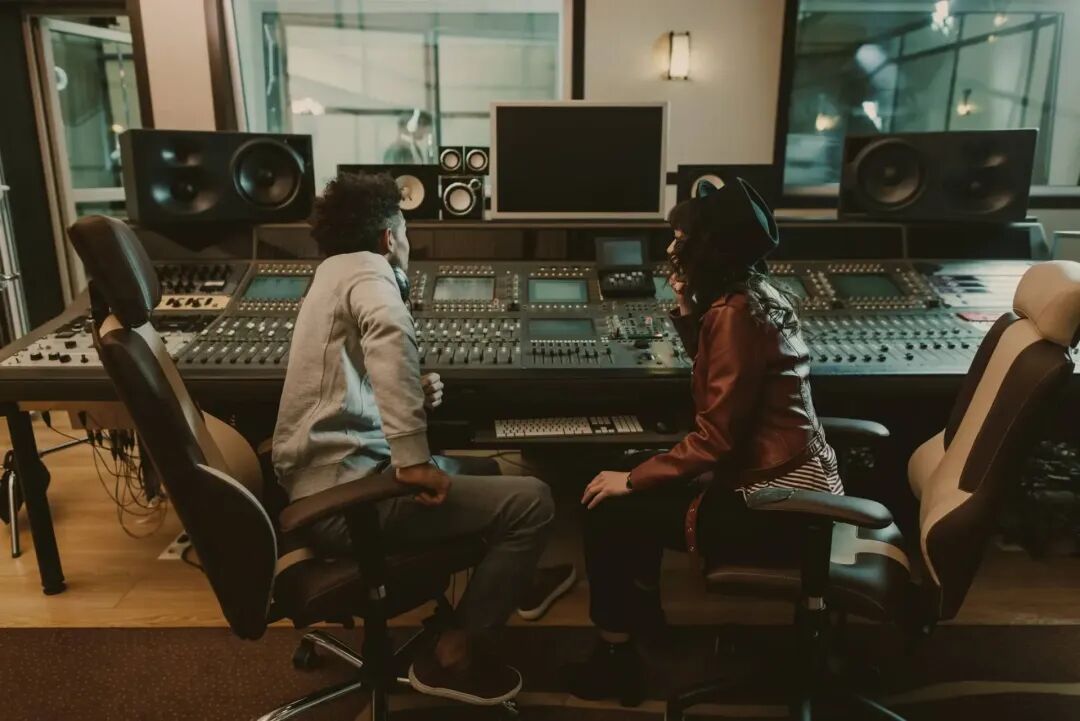
▲ Image|AudioDope
But today, this production chain has been completely flattened.
Irish musician Allie Sherlock, who has millions of fans, often performs on Grafton Street in Dublin and uploads the videos to YouTube. But what she does goes far beyond music creation: she uses Logic Pro to produce original music, Final Cut Pro to edit street performance videos, Pixelmator Pro to design album covers and merch, Keynote for promotional materials, Pages for her merchandise catalog—one person, five roles.
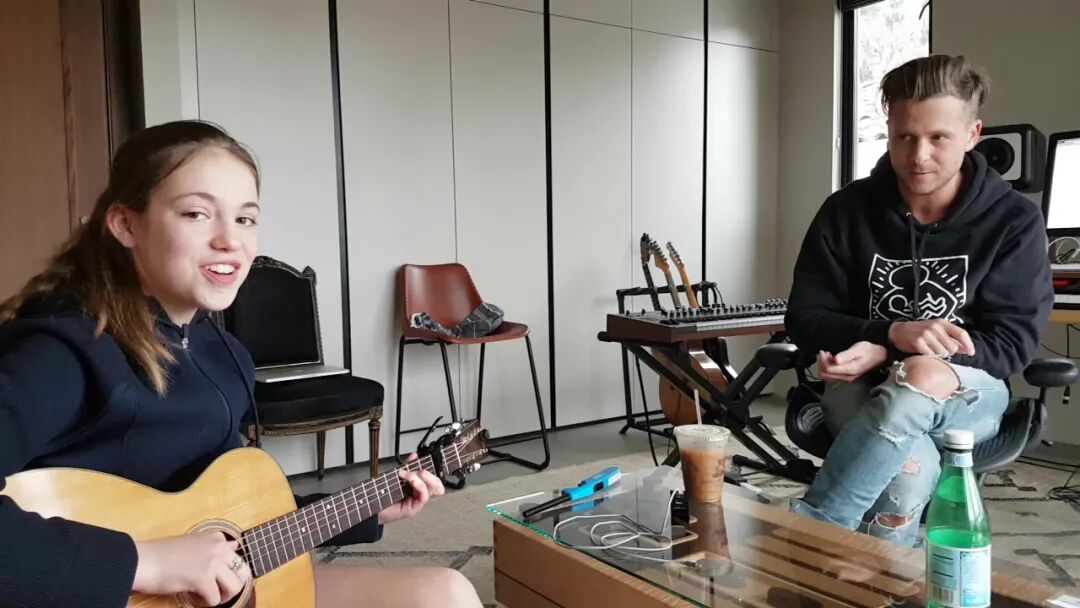
▲ Image|Youtube @Ellie Sherlock
As a media editor, writing is just one part of my job. In many cases, I also need to shoot videos, do editing, design covers—this is the norm for creators today, something you and I are now used to, but would have been unimaginable in the past.
The traditional creator toolchain is fragmented.
You make music with Logic Pro, edit videos with Final Cut Pro, retouch images with Photoshop, design with Illustrator… Each software has its learning curve, file format, and payment plan—they belong to different big companies, and you have to pay everywhere.
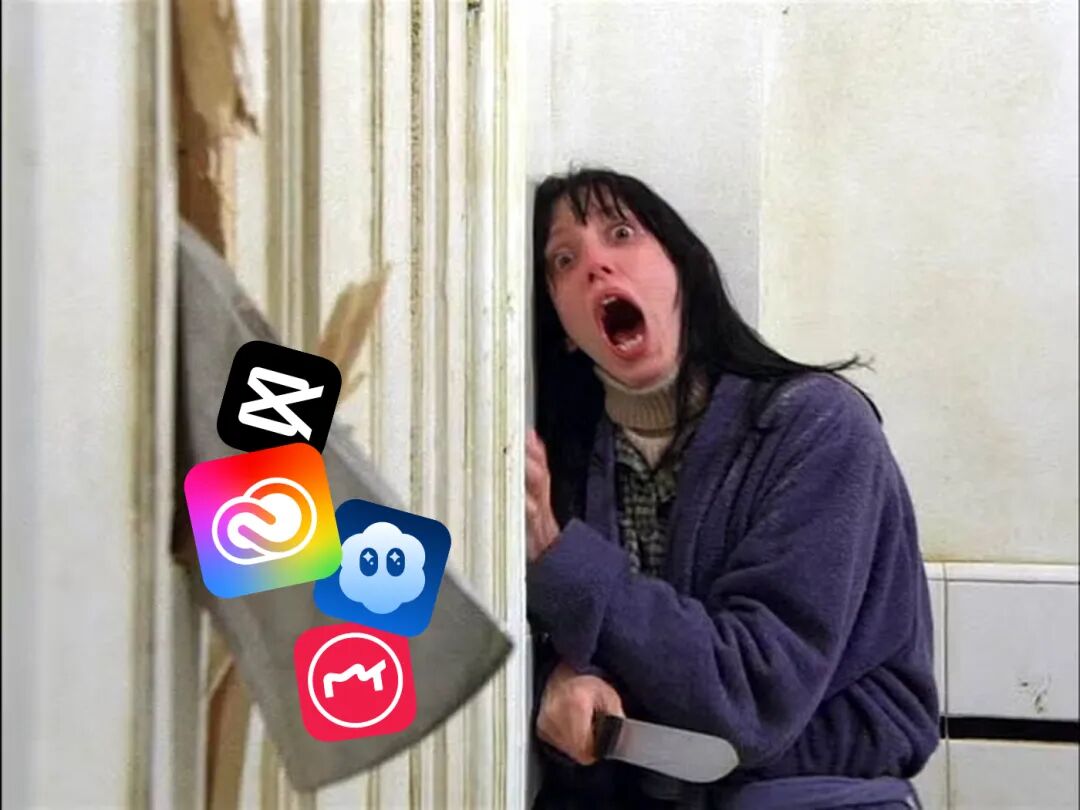
Apple Creator Studio wants to be all in one.
The Philosophy of the All-in-One Suite
What is Apple Creator Studio? In essence, it’s a complete suite of creator services—
Including Final Cut Pro (video editing), Logic Pro (music production), Pixelmator Pro (image editing), Pages, Numbers, Keynote, as well as supporting apps like Motion, Compressor, and MainStage. All these apps and their premium content are bundled for 38 RMB per month, or 380 RMB per year, and can be shared by up to 6 family members. Students and educators pay even less: 18 RMB per month or 180 RMB per year.
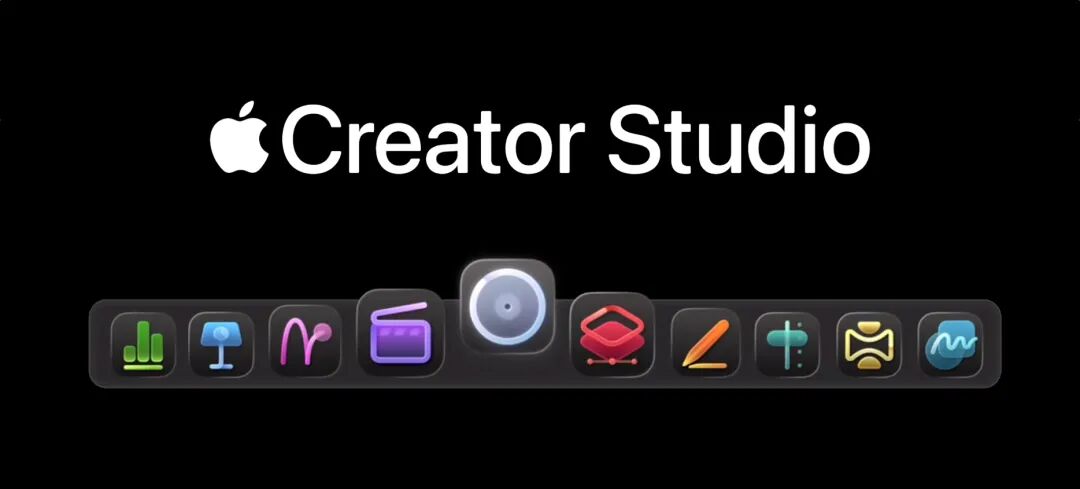
Behind this price is a calculation: if you buy these professional apps individually, Final Cut Pro costs 1,998 RMB, Logic Pro is 1,298 RMB, Pixelmator Pro is 328 RMB, plus other tools, the total exceeds 4,000 RMB. But with an Apple Creator Studio subscription, 4,000 RMB is enough for a Chinese creator to use it continuously for over 10 years.
Apple’s Product Marketing Director Brent Chiu-Watson explained the logic behind this system:
We believe that technology should let creativity flow freely, appearing in the most suitable form when you need it.
For example, Final Cut Pro has Logic Pro’s beat detection engine built in. When you import music, the system automatically analyzes the rhythm and marks each beat on the timeline. When editing video, the visuals snap to these beats automatically, without manual beat counting.
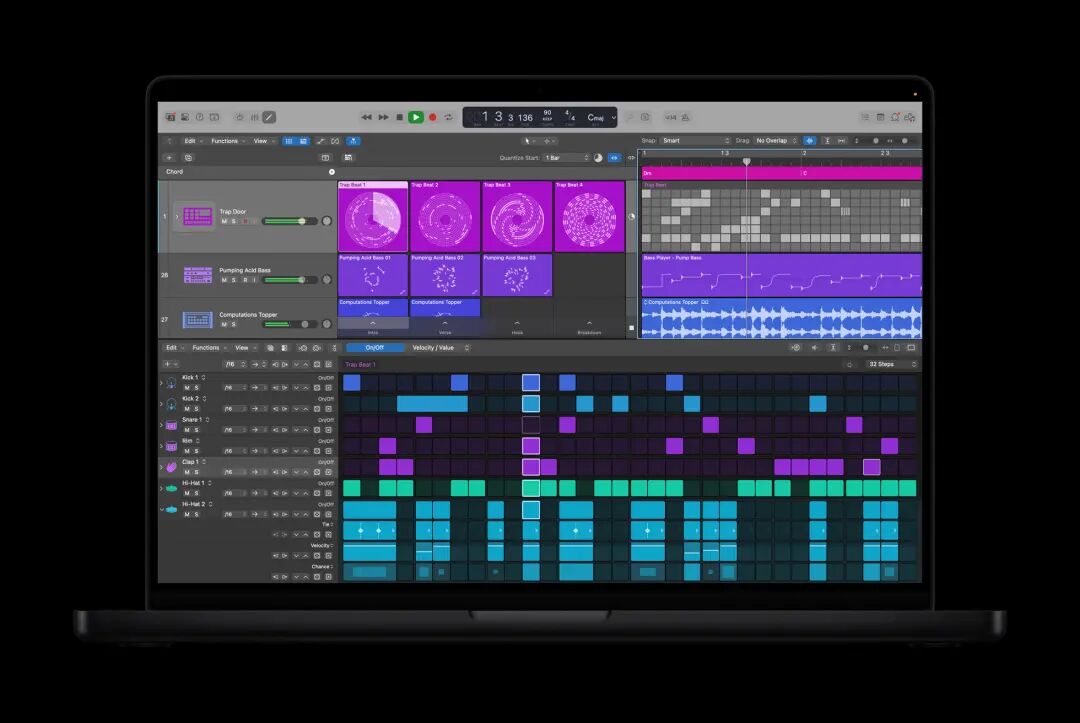
Deeper integration happens on the technical level.
All apps share Apple devices’ on-device AI capabilities, and feature a high degree of consistency: super-resolution and auto-cropping functions can be used across Pixelmator Pro, Keynote, Pages, and Numbers. For example, when adjusting image composition in Keynote, auto-cropping offers three optimized options.
Brent emphasized this consistency:
Users don't need to learn where the AI feature is in every app or how to use it. The same capability appears wherever you need it.
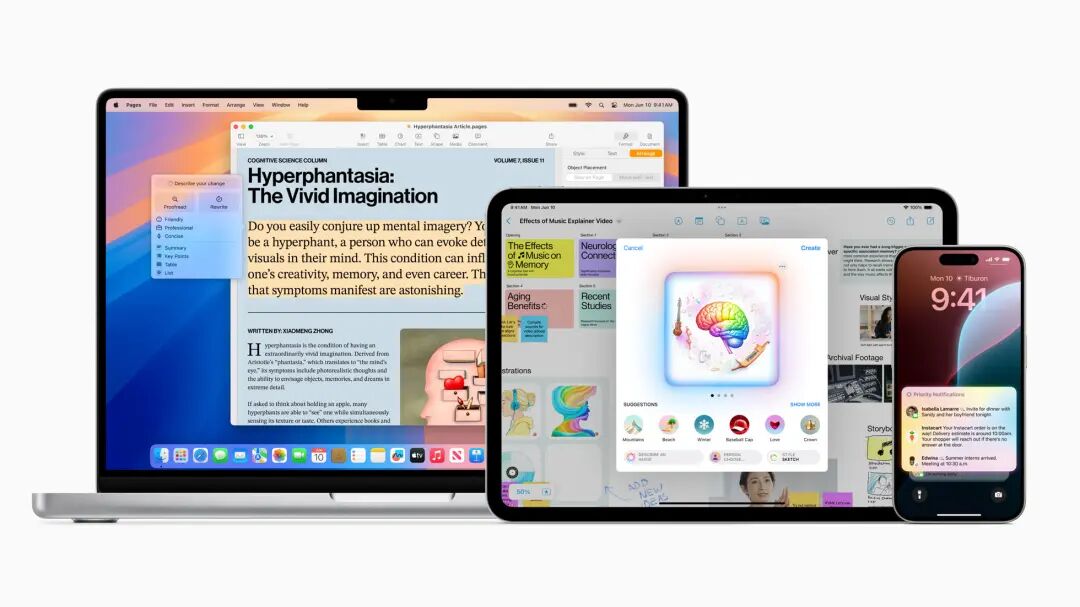
Such integration requires enormous engineering effort. All apps must use a unified image processing framework, a unified AI model interface, and unified interaction logic. Apple can do this because it controls the entire tech stack from chips to operating system to application layer.
In Apple’s view, deploying AI features on device brings fast, consistent, and secure experiences, but this doesn’t rule out opening up cloud AI capabilities. Brent Chiu-Watson told Ifanr:
The market changes quickly, and we will keep monitoring user needs. If certain scenarios require different technical solutions, we’ll consider them.
From chip to software, from Final Cut Pro to Logic Pro, from Pixelmator to Keynote—seemingly unrelated, but they all run on the same chip, share the same technical framework, and serve the same creativity.
Tools for the Mind
Since Steve Jobs founded Apple, "empowering creativity" has always been its core philosophy, even written into Apple’s vision:
To make tools for the mind that advance humankind.
To make a contribution to the world by making tools for the mind that advance humankind.
When the first Macintosh was born in 1984, it was positioned as a product "made for creators": with a strong sense of aesthetics and then-rare typesetting capability, and even equipped with HyperCard, allowing those without programming experience to visually develop programs or web pages.
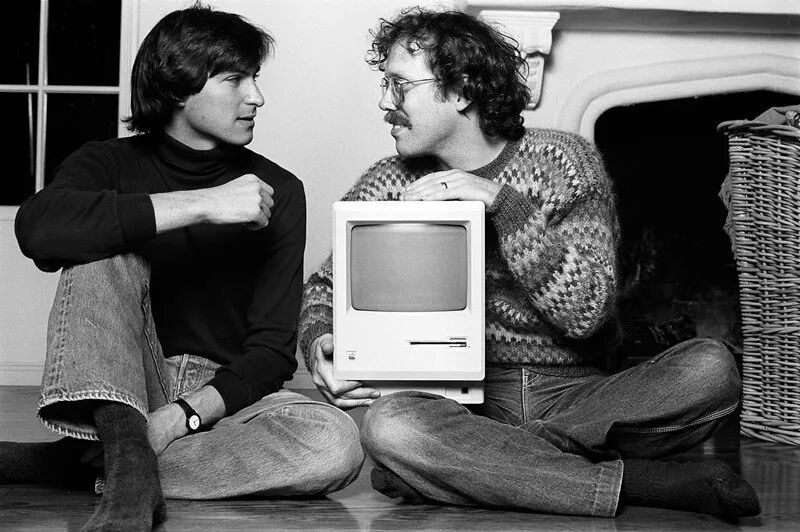
▲ Image|Norman Seeff’s photo of Steve Jobs and Bill Atkinson
Over the past 20 years, Apple has continuously acquired and integrated professional creative tools such as Final Cut Pro, Logic Pro, and Pixelmator. This consistent philosophy is embodied in:integrating the tools creators need.
Before the iPod and iPhone, Apple’s primary business model was selling users a complete box of creative tools through its hardware and software products.
Today, the number and reach of creators within the Apple ecosystem is by orders of magnitude greater than before. New-age creators routinely work across scenarios, categories, and boundaries, using multiple creative tools as a matter of course.
Thus, Apple is becoming an integrator and accelerator for “creativity tools”: buy an Apple device and, for 38 RMB a month, unlock more than 4,000 RMB worth of creative tools and gain professional productivity instantly—such a low entry barrier was unimaginable in the era of one-time software purchases.
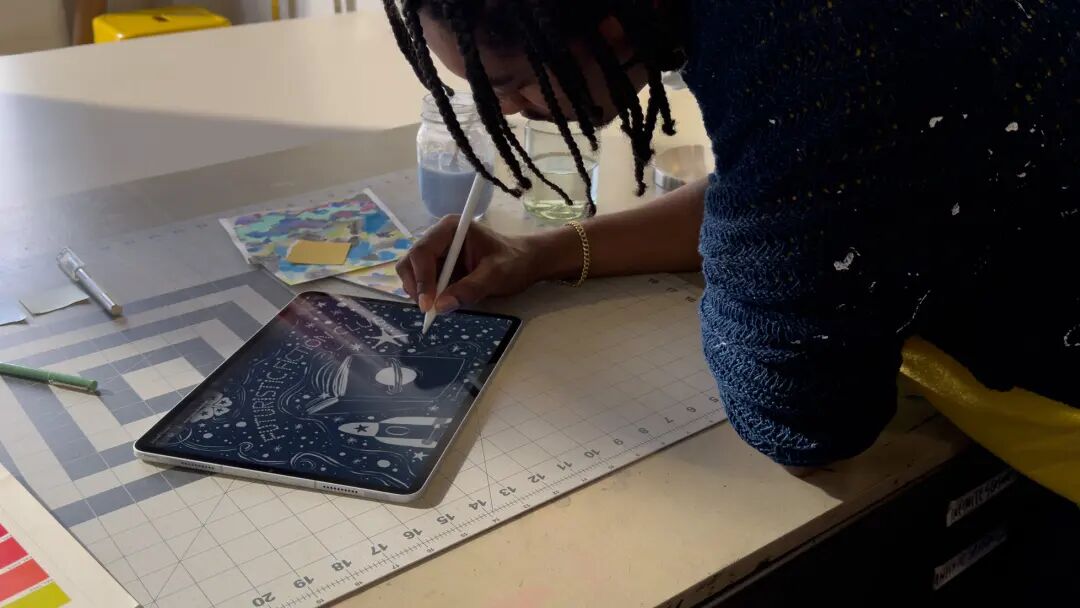
Bob Borchers explained this pricing strategy:
Our goal is to inspire and accelerate creativity as widely as possible. We want to provide the tools and capabilities for people to be more efficient at what they’re doing, and also to explore things they’d never thought of before.
From this perspective, Apple Creator Studio is not just playing a price war, but is making a long-term bet on the creator market.
Today, it’s so easy to become a creator, and distribution channels are so broad, that the threshold for creative tools should also keep dropping. Lowering the creative barrier means unleashing more creativity, which in turn feeds the whole ecosystem—the student creators of today may become tomorrow’s producers, musicians, or designers.

It’s worth noting that Apple Creator Studio uses a subscription model, but all apps can still be purchased individually. Bob Borchers explained:
We know some creators have very specific needs for a particular app, which is why we continue to offer one-time purchase options and will keep updating those versions.
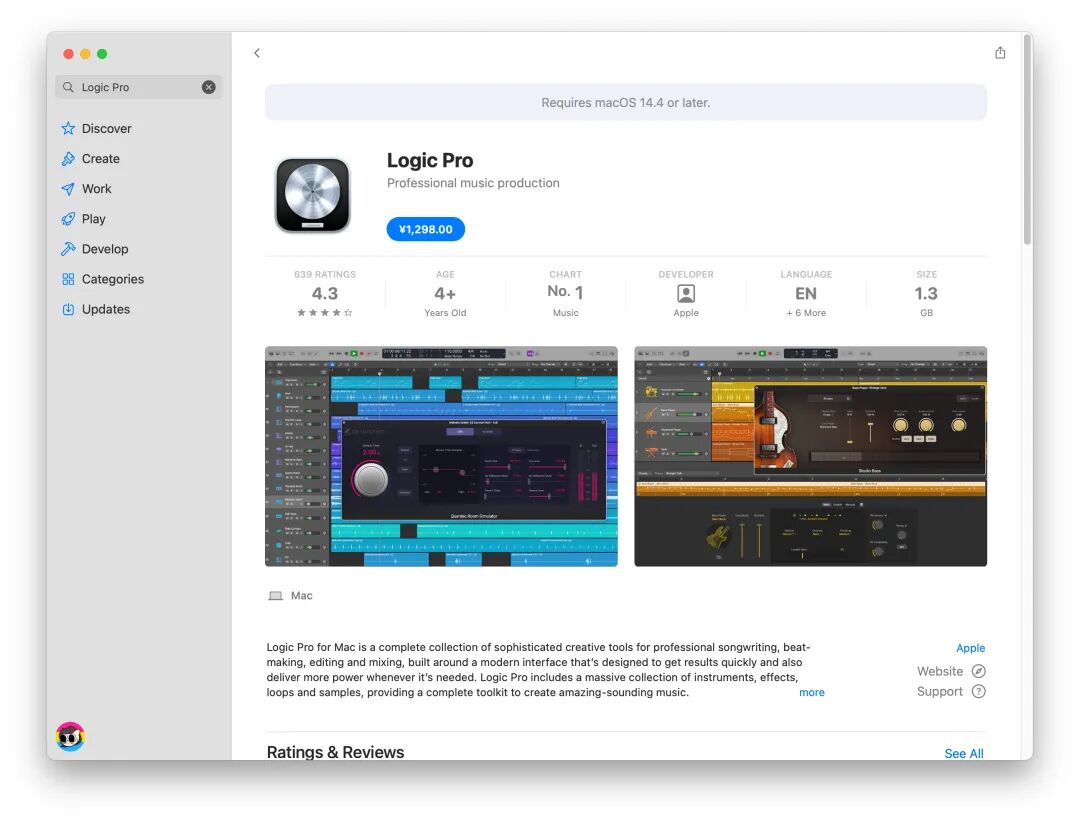
Subscription users value completeness and convenience, while one-time buyers value certainty and ownership. Apple’s strategy is to accommodate both: the subscription and purchase versions have almost identical features, with only a few premium features exclusive to subscribers. In Bob Borchers’ view, the future of Apple Creator Studio is still full of potential:
This is just the beginning—Apple Creator Studio will continue to grow, adding new content and features over time.
In 1984, when Macintosh launched, Apple didn’t know what designers would use it for; in 2001, when Final Cut Pro was released, Apple didn’t know indie filmmakers would use it to challenge Hollywood; now, with an iPad or Mac, anyone can become a professional creator anytime, anywhere—the meaning of tools is never to define the boundaries of creation, but to remove the obstacles to it.
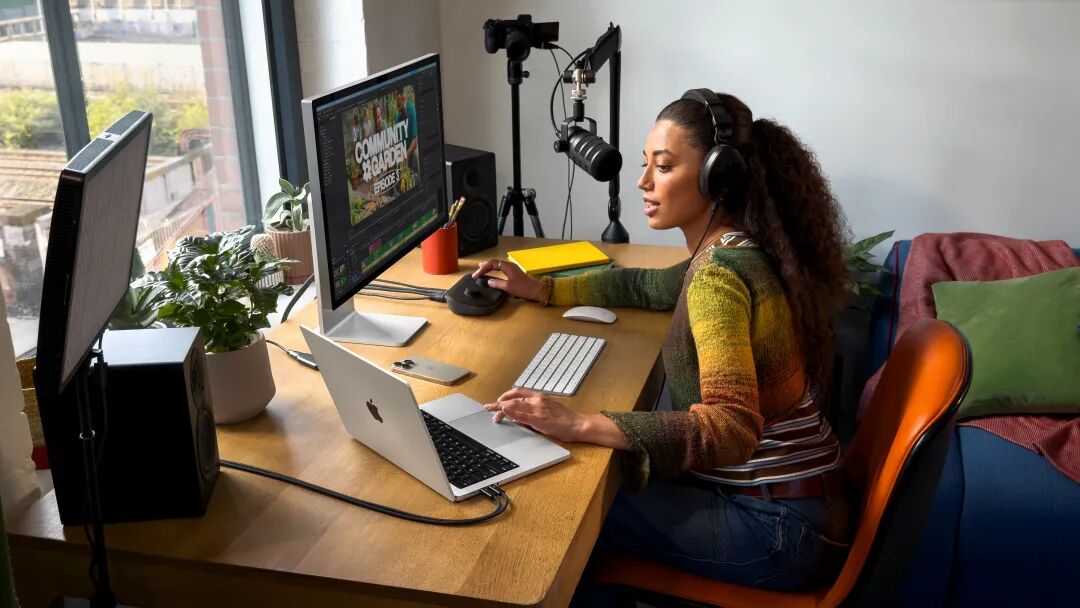
For creators of this era,"buying Apple devices, subscribing to Apple services, unlocking creative abilities"is evolving into a new cognitive paradigm. As creators evolve, tools must evolve too—and the ultimate form of tools will always be in the future.
The 38 RMB per month Apple Creator Studio is a bet on the future.

Disclaimer: The content of this article solely reflects the author's opinion and does not represent the platform in any capacity. This article is not intended to serve as a reference for making investment decisions.
You may also like
Why Molson Coors (TAP) Stock Is Dropping Today
Why Shares of Sirius XM (SIRI) Are Falling Today
Why Shares of PNC Financial Services Group (PNC) Are Rising Today
Why Trimble (TRMB) Stock Is Dropping Sharply Today
Trending news
MoreCrypto prices
More






