
Snapdragon Imaging: Heading to the "Uncharted Realm"

Show original
By:爱范儿
 From Distrusted To Indispensable
 We used a phone for the first time to shoot 8K resolution video, traveling to biodiversity hotspots such as Sanjiangyuan, Qilian Mountains, and Gaoligong Mountains, eventually producing four stunning films as the pilot for our mobile group.
Once the films were finished, there was consensus internally. In 2020, the film "The Last Mountain Newt," which won the Snapdragon Special Award in the mobile group, achieved the world's first video documentation of the mountain newt (Echinotriton maxiquadratus), a new species of amphibian discovered by a Chinese team in 2014, which was already critically endangered at the time of its discovery. From the very beginning, mobile imaging, science popularization and exploration, and environmental protection were closely intertwined, forming the clear main thread of Snapdragon and the Wildlife Image Competition: to inspire love through images, and drive action through love.
Everyone's "snapshots" can capture the beauty of life
The champion of the 2024 China Wildlife Image Competition Photography Unit—Snapdragon Special Award (Mobile Group) is Sun Zhixuan, a middle school student from Beijing, for his piece "You Can't Find Me."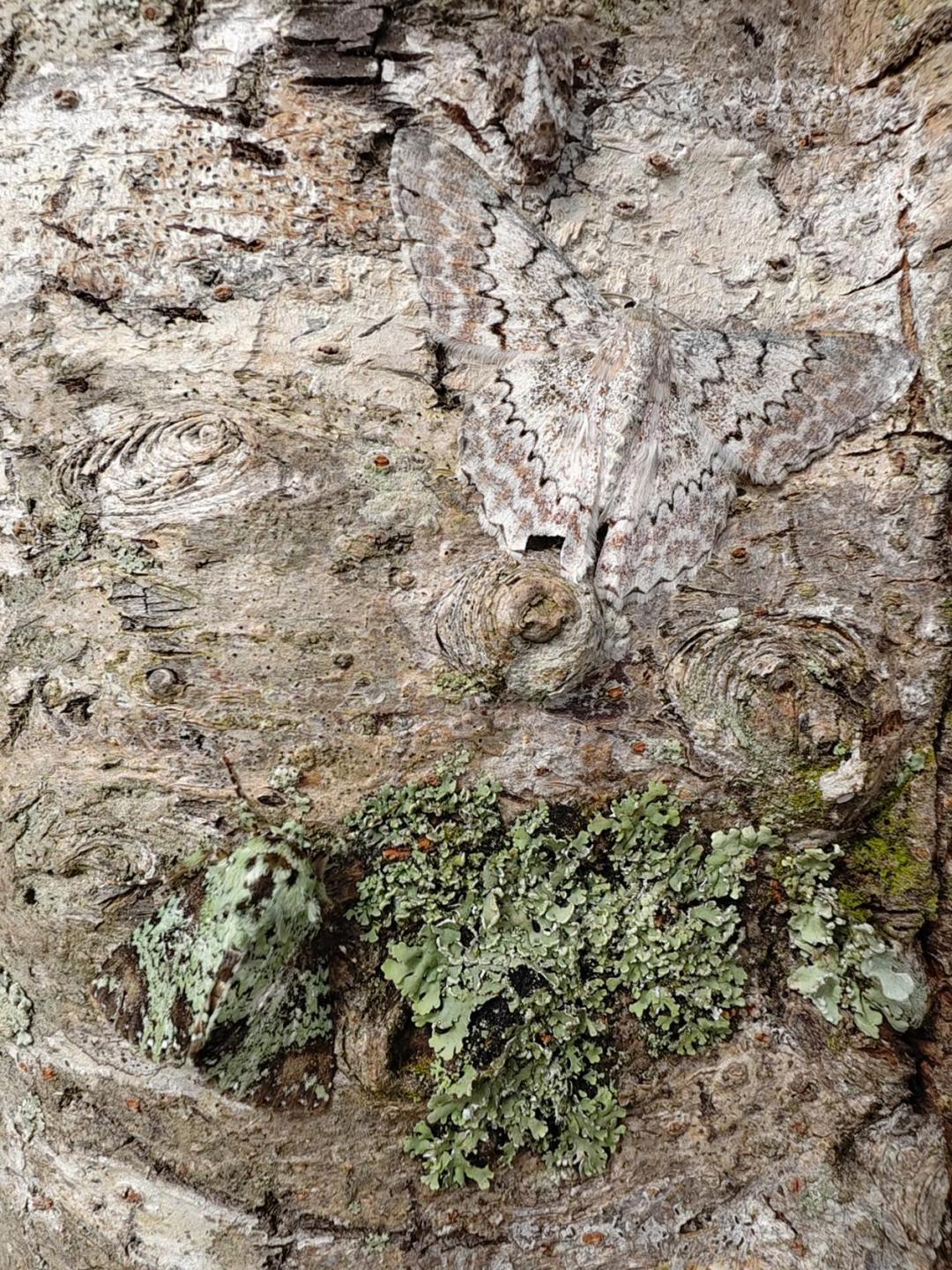 2024 China Wildlife Image Competition Photography Unit—Snapdragon Special Award (Mobile Group) Champion: "You Can't Find Me," photo by Sun Zhixuan At first glance, this photograph appears to be just a plain tree trunk, but on closer inspection, you can spot a large moth camouflaging itself by mimicking the color and texture of the bark. Only those with keen observation and patience can spot the second and third moths. Even Sun Zhixuan, while on site, only noticed two moths when shooting; it wasn't until reviewing the image afterward that he found the third. This serendipitous photo was taken during Sun Zhixuan’s trip to Xishuangbanna, Yunnan; he happened to spot the scene and quickly used his Snapdragon chip-powered vivo phone to capture it. Xi Zhinong, a judge for the China Wildlife Image Competition and renowned wildlife photographer, told iFanr: It’s another device, and it’s also an indispensable one. Xi Zhinong mentioned that in November last year, while photographing emperor penguins in the Weddell Sea, Antarctica, many of the shots were recorded using his phone. He needed to document the baby penguins and their parents. The hardworking adult penguins would return from the deep sea to feed their hungry chicks. Such urgent animal stories, happening nearby in the freezing Antarctic, were hard to catch with a 600mm fixed lens. The phone at hand became the fastest and most convenient tool. In 2020, Chen Yihuan and the staff of the China Wildlife Image Competition actually filmed five videos in total, one of which was unsuccessful. The unsuccessful video involved underwater filming. By the 2025 competition, many underwater photography works had emerged. This was thanks to the maturity of the mobile underwater photography accessory ecosystem and the continuous improvement of Snapdragon imaging technology. In the underwater world where sunlight barely reaches, light is scarce but the ecosystem is rich and colorful. To present this vibrant underwater world in such extreme conditions requires excellent low-light shooting capabilities—precisely what Qualcomm Snapdragon excels at.
 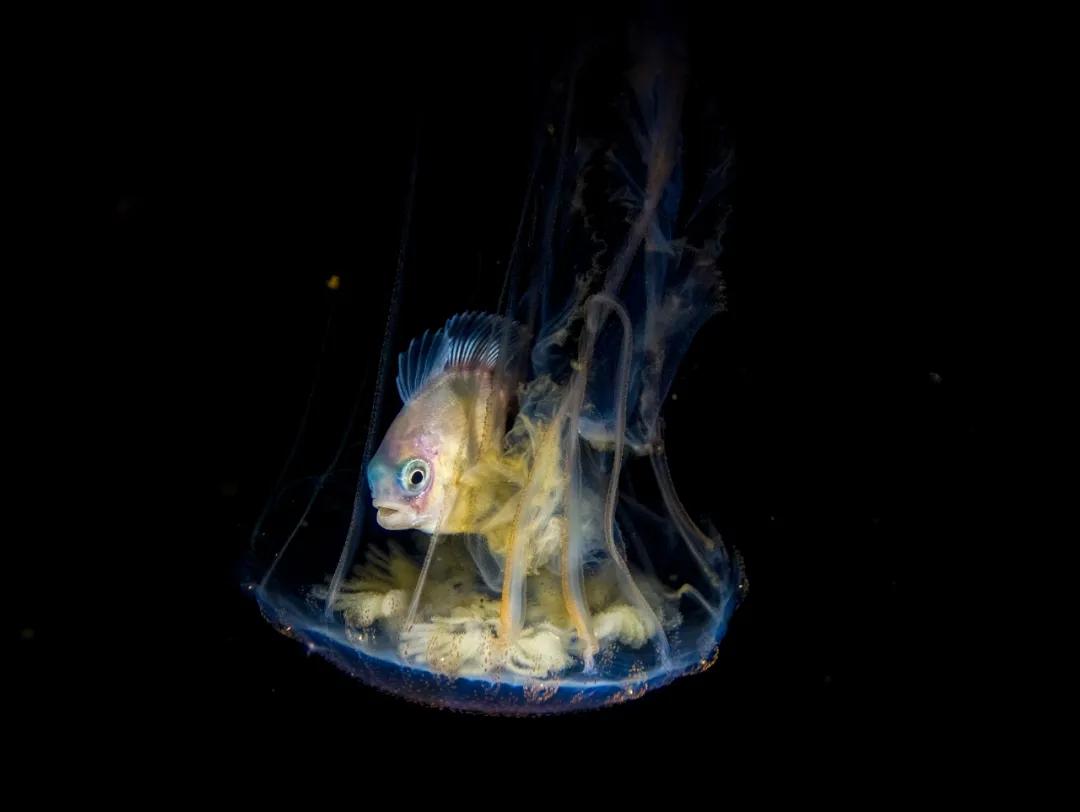 2025 China Wildlife Image Competition Photography Unit—Snapdragon Special Award Entry: "Malaysian Sea Nettle and Young Pomfret," photo by Wu Zhengjie Hou Mingjuan, Qualcomm Global Vice President, explained to iFanr why Qualcomm, as a technology company, has chosen to partner with the China Wildlife Image Competition for six years: Today, the largest industrial product is the mobile phone, and Qualcomm is one of the main technology suppliers. Our flagship product—the fifth-generation Snapdragon 8 Gen 3 mobile platform—is only slightly larger than a fingernail, yet contains immense power. However, such a chip is rarely directly seen by everyday consumers.
 Six years ago, we began collaborating with National Geographic China and the China Wildlife Image Competition. Driven by shared passion and purpose, we hope to use images as a bridge to convey the vitality of wildlife and the beauty of nature to more people who cannot be physically present at the shooting sites.
Qualcomm also hopes to use cutting-edge technology to support consumers in their daily lives, bringing more convenience. Why is documentation so important, and why is documenting with a phone so significant? Xi Zhinong, who has used cameras to record wildlife for over 40 years and phones for more than a decade, says: I picked up a camera over 40 years ago. Back then, how many ordinary Chinese families could own a camera? Hardly anyone was photographing animals at that time.
Today, it’s completely different. Many people have fallen in love with nature and photography through recording with their phones.
Mobile Photography: Not a Substitute, but an Option and an Inevitability
As previously mentioned, underwater photography was once a shortcoming for smartphones, but it has now become an area of advantage. Bu Yi’s video work "Unexplored Realms—Miracles of Life in the Depths of the Desert," shot with a Snapdragon-powered phone, won the 2025 China Wildlife Image Competition Video Unit—Snapdragon Special Award (Mobile Group) championship. She is a female photographer with 20 years of experience in the film industry, with extensive field shooting experience from deserts to the ocean floor, making her a perfect fit for the “unexplored realms.” In scenarios that allow no room for repeated trial and error and only offer one chance, Bu Yi believes smartphones have innate advantages: Before each dive, we have to plan in advance what we’ll shoot—either macro or wide-angle—because traditional cameras cannot change lenses underwater. For example, we may plan to use wide-angle to shoot a group of manta rays in this dive.During the wide-angle shoot, we might suddenly spot a flamboyant cuttlefish hunting on the sandy bottom. If I had a traditional camera, I wouldn't be able to switch from wide-angle to macro and might miss this rare moment.
But if I use a mobile phone, there’s no such barrier (switching from wide-angle to macro is very convenient). Not only for underwater scenes, but also in confined spaces—such as photographing insects in tree hollows or tiny creatures in dense rainforests—phones are not only compact and convenient, but also minimize disturbance to the creatures.
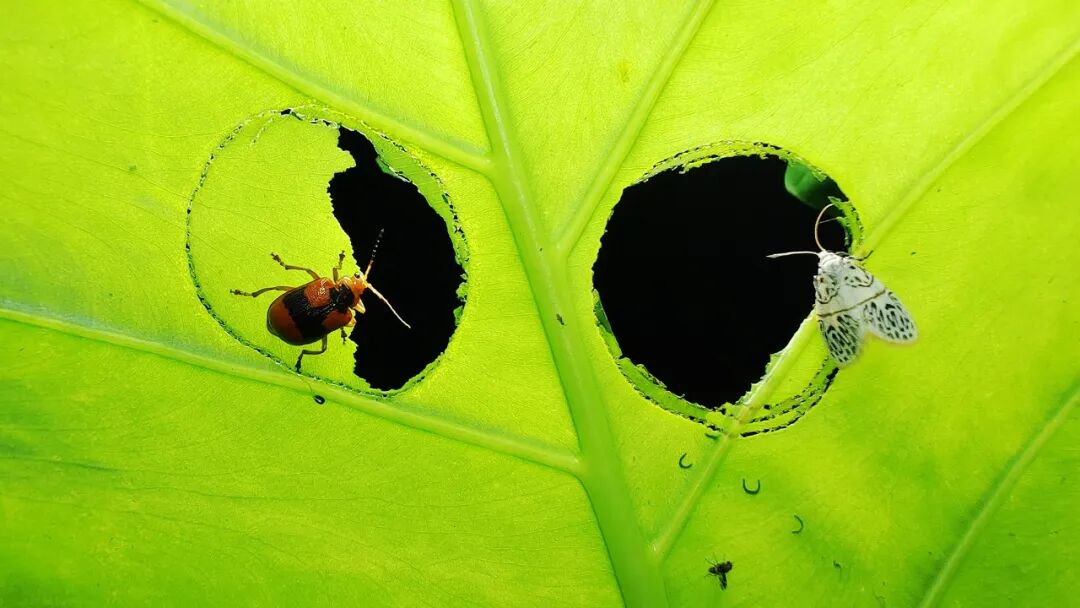 2021 China Wildlife Image Competition Photography Unit—Qualcomm Snapdragon Mobile Award Entry "Drawing a Circle," photo by Zhang Lihua As the competition’s producer, Chen Yihuan has also noticed that works from the mobile group are diverging from traditional groups in terms of subject matter and perspective: Looking at this year’s nominated works in the photography and video units, entries with small perspectives—such as insects, amphibians and reptiles, and underwater photography—stand out in particular.
 Mobile photography can reach the tiniest, most fascinating places and express them beautifully. Bu Yi shared a story from the desert, shot with the vivo X200 Ultra equipped with Snapdragon 8 Gen 3: she and her partner discovered a special golden curved-back ant, which had another ant’s head hanging from its leg. She speculated that the two ants had just fought, with one surviving and one dying. From the moment she found the ant to when it entered its hole was only two minutes.
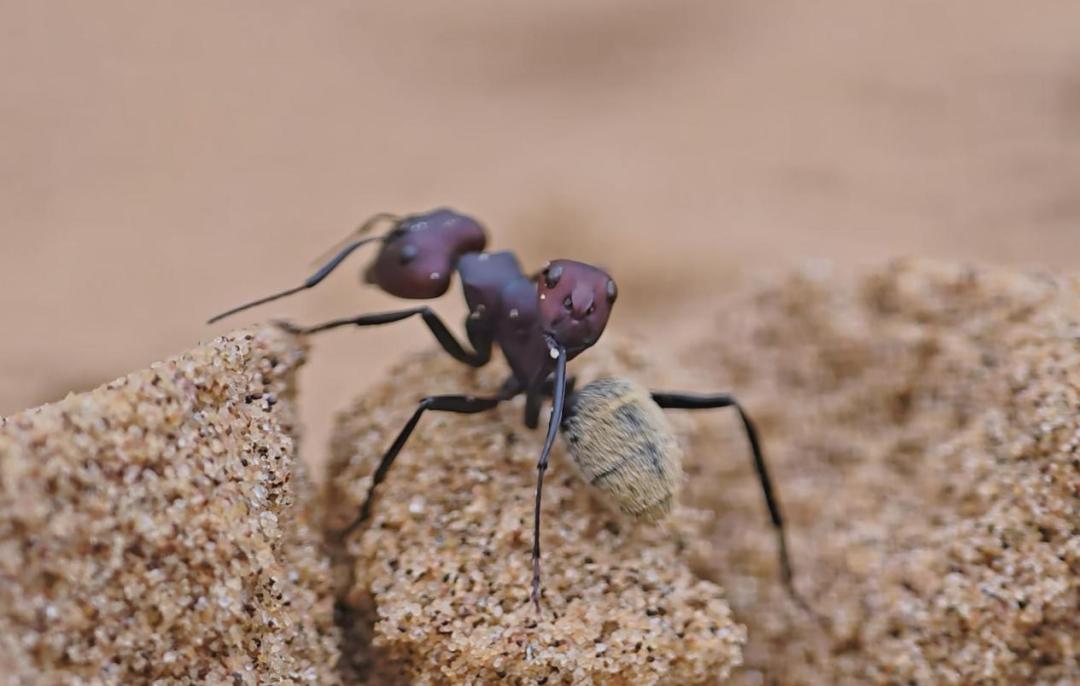 Close-up screenshot of the golden curved-back ant by Bu Yi During those two minutes, Bu Yi used her phone to shoot a close-up of the ant’s leg with another ant’s head, a medium shot of the ant struggling across the sand, and a wide shot of the ant’s survival in the desert. This fast-paced, seamless storytelling is hard to achieve with traditional equipment.
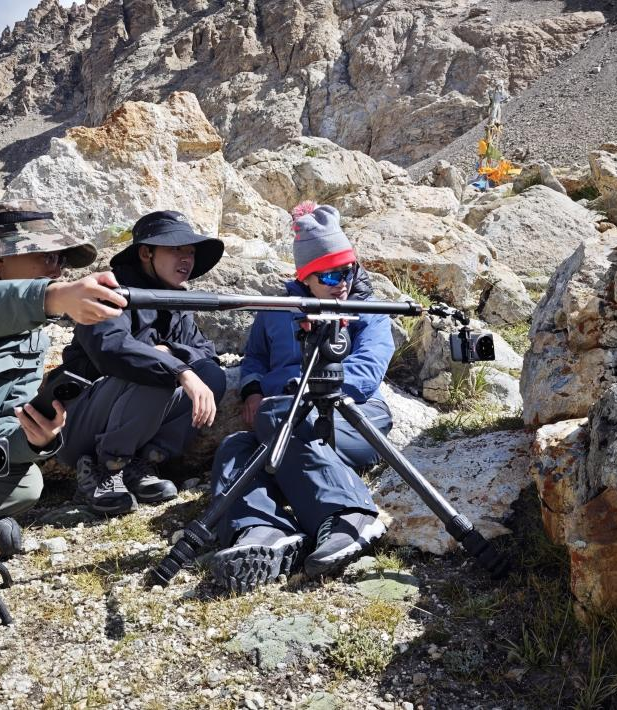
 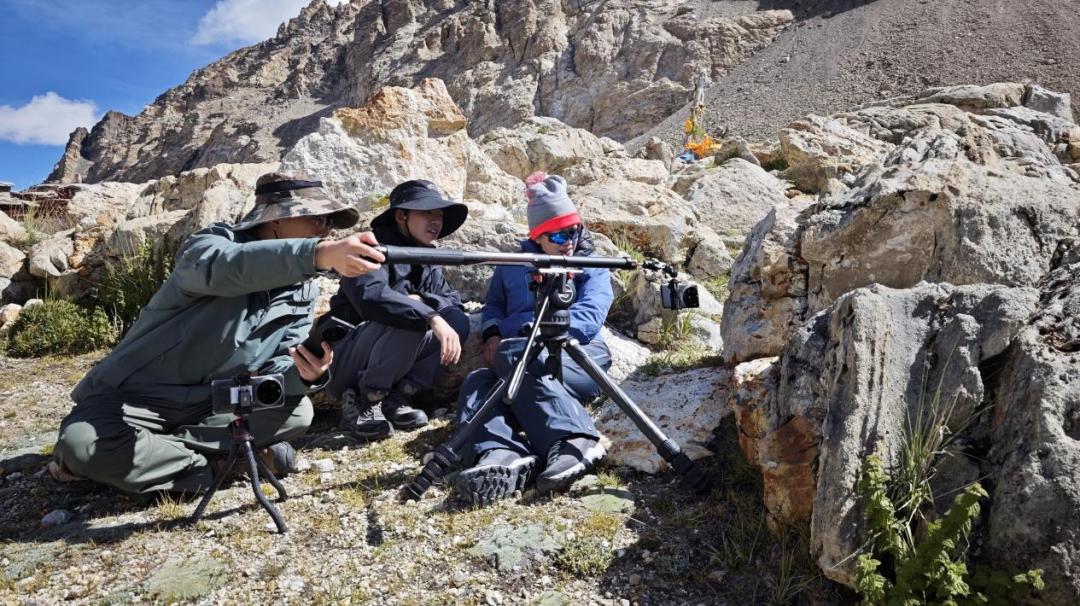 Qualcomm Global Vice President Hou Mingjuan filming with photographers in the Himalayas To better understand the work scenarios and needs of field photographers, Qualcomm Global Vice President Hou Mingjuan has also accompanied photographers to many "unknown places." Last year, she went to the Himalayas, where she deeply understood the challenges of the environment: light intensity in the Himalayas is far higher than usual, and weather conditions change rapidly—hail, rain, and strong winds alternate frequently. Such strong contrast lighting and rapidly changing weather place high demands on the imaging capabilities of mobile phones.
  "Evening at Sanfeng Mountain" shot with a Snapdragon platform phone, photo by Chen Bin Technology often proves itself here: the fifth-generation Snapdragon 8 Gen 3 mobile platform has upgraded its ISP, providing a fourfold increase in dynamic range. Through deep collaboration between the NPU and AI ISP, the system can intelligently recognize subjects and scenes, automatically optimize focus, exposure, and color. Even when facing fast-moving wildlife or rapidly changing outdoor light, it helps creators achieve "shoot and get." The unexplored realms often mean unknown beauty accompanied by unknown difficulties. The essence of Snapdragon imaging technology is to help field photographers overcome the unknown and record the beauty yet to be discovered. Over these six years of collaboration, we have seen mobile imaging cover mountains, rivers, and seas. More and more people are noticing the beauty of nature, and photographers increasingly trust and rely on mobile imaging capabilities. At the 2025 awards ceremony, Snapdragon’s role upgraded from "imaging technology partner" to "strategic technology partner," meaning Snapdragon's cooperation in field photography and the competition will expand from mobile imaging to more diverse terminal categories, including AI glasses, sports cameras, drones, and more, supporting a broader range of natural image creation and ecological protection practices.
 0
0
Disclaimer: The content of this article solely reflects the author's opinion and does not represent the platform in any capacity. This article is not intended to serve as a reference for making investment decisions.
PoolX: Earn new token airdrops
Lock your assets and earn 10%+ APR
Lock now!
You may also like
Zuckerberg’s Threads starts 2026 ahead of Musk’s X in user count
Cointelegraph•2026/01/17 00:30
Bitcoin Sees $1.65B Exodus From Exchanges as Holders Move to Cold Storage
BlockchainReporter•2026/01/17 00:00
Google Plans to Challenge US Court Decision Declaring Its Search Practices as an Illegal Monopoly
101 finance•2026/01/16 23:54
Trending news
MoreCrypto prices
More
Bitcoin
BTC
$95,443.75
-0.23%

Ethereum
ETH
$3,290.38
-0.93%

Tether USDt
USDT
$0.9995
-0.01%

BNB
BNB
$935.95
+0.29%

XRP
XRP
$2.06
-1.06%

Solana
SOL
$144.23
+1.14%

USDC
USDC
$0.9998
+0.02%

TRON
TRX
$0.3096
-0.52%

Dogecoin
DOGE
$0.1381
-1.56%

Cardano
ADA
$0.3954
+0.38%
How to buy BTC
Bitget lists BTC – Buy or sell BTC quickly on Bitget!
Trade now
Become a trader now?A welcome pack worth 6200 USDT for new users!
Sign up now