
Escalating Geopolitical Tensions in Greenland: Financial Markets Seek Safe Havens and Supply Logic Reshaped

Huitong Network, January 18—— On Sunday (January 18), in the East 8th time zone, US President Trump announced plans to impose tariffs on eight European countries over the Greenland issue, which immediately provoked strong reactions from leaders of many European countries and bipartisan members of the US Congress. This sudden outbreak of geopolitical tensions is expected to significantly disturb market sentiment early next week, dominating the short-term trends of gold, crude oil, and major forex pairs. The market is shifting from traditional macro trading models to a repricing of geopolitical risk premiums and energy supply stability.
On Sunday (January 18), in the East 8th time zone, the focus of global financial markets suddenly shifted from conventional economic data to the geopolitical vortex of the North Atlantic. US President Trump announced plans to impose tariffs on eight European countries over the Greenland issue, which immediately provoked strong reactions from leaders of many European countries and bipartisan members of the US Congress. The European Union has announced an emergency meeting on the 18th to discuss countermeasures, and the US Senate Democratic leader has explicitly stated he will push for legislation to block the move. This sudden outbreak of geopolitical tensions is expected to significantly disturb market sentiment early next week, dominating the short-term trends of gold, crude oil, and major forex pairs. The market is shifting from traditional macro trading models to a repricing of geopolitical risk premiums and energy supply stability.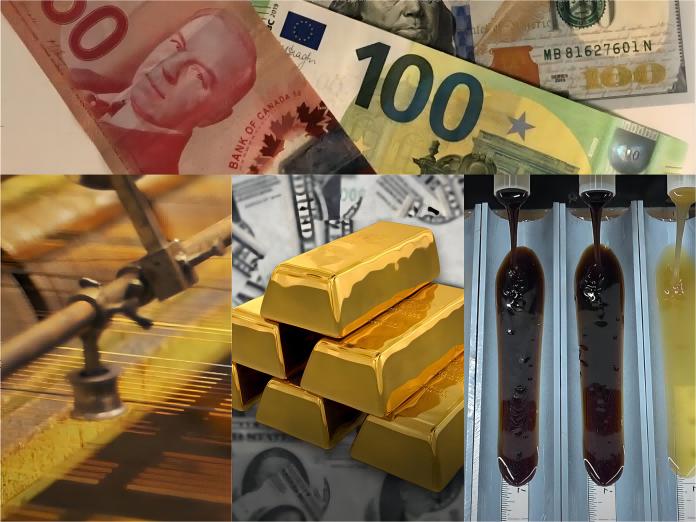
I. Escalating Geopolitical Conflict: From Tariff Rhetoric to Transatlantic Alliance Cracks
The latest developments have gone far beyond the scope of ordinary trade friction. Trump stated that starting February 1, the United States would impose a 10% tariff on imports from Denmark, Norway, Sweden, France, Germany, the United Kingdom, the Netherlands, and Finland, and threatened that if a “complete acquisition of Greenland” agreement could not be reached, tariffs would rise to 25% on June 1. This statement was immediately characterized by many European countries as “unacceptable” “blackmail” and “completely wrong” behavior.
The core logic of fundamental impact lies in two points: first, the fermentation of risk-off sentiment, and second, concerns about potential shocks to European energy supplies. On the EU side, the largest political group in the European Parliament has clearly stated it will suspend approval of the EU-US trade agreement and halt the arrangement to lower tariffs on US products within the agreement. This means that the transatlantic trade relationship may not only fail to deepen but also risk regressing. The leader of the Netherlands’ Green Party–Labour Party alliance said Europe must “draw a clear line” with the United States. The Finnish president warned that tariffs would undermine transatlantic relations and trigger a dangerous vicious circle.
Crucially, domestic political resistance in the US is beginning to emerge. Senate Democratic leader Schumer has promised to push for legislation to block the tariffs, calling them “reckless” and based on “unrealistic delusions.” The co-chairs of the Senate’s bipartisan NATO Observers Group have also issued warnings, believing such rhetoric only benefits adversaries and hoping to see NATO divided. The bipartisan opposition from Congress adds significant political uncertainty to the actual implementation of tariff threats. Traders should closely monitor statements from the EU emergency meeting on the 18th and the progress of relevant US legislative processes. Any signal of easing tensions could quickly calm market panic, while escalated confrontational rhetoric will intensify volatility.
II. Safe-Haven Asset Analysis: The “Decoupling” and Re-Anchoring of Gold and Real Yields
The current situation provides multiple positive supports for gold. First, the direct escalation of geopolitical risks, especially those involving disputes between the US and its traditional core allies, will drive safe-haven capital into gold. Second, the global level of “populist” policies is at a historical high; according to well-known institutional analysis, this is usually accompanied by slower economic growth, rising inflation, and declining trade openness over the next 10 to 15 years, fundamentally benefiting non-credit assets like gold.
Technically, gold prices have recently shown a “decoupling” from their traditionally negative correlation with US Treasury real yields. This means that under the current macro and geopolitical structural pattern, safe-haven demand and the diversified demand for global de-dollarization reserves are becoming stronger pricing factors than real yields.
For the COMEX gold main contract (GC), early next week’s trend will first reflect the digestion of weekend news. Key support levels can refer to the previous consolidation platform center, the logic being that geopolitical risk premiums provide bottom support; if the situation does not deteriorate sharply, some profit-taking may be active in this area. For upper resistance, attention should be paid to the trendline suppression extending from last year’s high; breaking through this area requires more explicit and sustained inflows of safe-haven funds or significant pressure on the US dollar index due to euro strength. Focus should be placed on subsequent statements by US and European officials, EU meeting results, and volatility in the US Treasury market. Any news showing easing tensions or successful congressional obstruction could trigger a short-term pullback in gold prices.
Renowned institutional analysts remind that, against the backdrop of rising populism and gold prices, asset allocation logic has changed, traditional frameworks have less explanatory power, and the failure of correlations itself has become a new source of risk. Gold’s volatility may intensify.
III. Energy and Forex Markets: Dual Pressures of Supply Concerns and the Dollar
The impact on the crude oil market will be even more complex. On the one hand, geopolitical risks themselves will bring a risk premium to oil prices. On the other hand, this dispute directly involves several European energy-importing countries and North Sea oil producers (such as Norway and the UK). Although the current tariff threat does not clearly differentiate by product category, any measure that hinders transatlantic trade flows could disrupt the global crude oil trade pattern and trigger concerns about supply stability. In addition, Russia is a key energy supplier to Europe; against the backdrop of the ongoing Russia-Ukraine situation, if cracks appear in the US-European alliance, it could affect the coordination of Europe’s energy security strategy, thereby impacting the global energy supply-demand balance over the longer term.
In the forex market, the euro against the US dollar (EUR/USD) will be in the spotlight. In the initial stage of the event, since Europe is the direct impact side, the euro is usually under pressure due to risk-aversion sentiment. However, as Europe demonstrates an unexpectedly united counter-stance (such as suspending approval of the EU-US trade agreement) and domestic opposition in the US rises, market logic may shift to “all the negatives are out” or concerns about damage to US dollar hegemony. If the euro can hold key psychological levels and the EU delivers a tough yet united response, there is short-term rebound momentum. The US dollar’s trend is in a dilemma: its traditional safe-haven attribute may bring support, but the US’s active undermining of allied relations, increased congressional political infighting, and the prospect of potential trade damage all fundamentally weigh on the dollar.
For the WTI crude oil main contract (CL), geopolitical risk premiums will underpin oil prices. Downside support is located at the recent multi-moving average convergence area, which is also a reference for short-term supply-demand balance. For upper resistance, attention should be paid to previous highs; whether these can be broken through will depend on whether the conflict materially affects energy supply or transportation. Special attention should be paid to whether the EU meeting mentions energy cooperation independence and whether US officials provide further clarification on the scope of tariff application.
IV. Outlook for the Coming Week: Political Games Dominate the Market, Beware of Rapid Sentiment Shifts
Looking ahead to next week, financial market trends will be highly dependent on the political game process surrounding the Greenland issue, rather than purely economic data.
1. Evolution of the Situation: If the EU emergency meeting shows a tough but united stance and opposition in the US Congress grows, the market may interpret this as a reduced likelihood of tariffs ultimately being implemented, risk appetite may temporarily recover, leading to a partial pullback in gold and the yen and a rebound in the euro and European stocks. Conversely, if the Trump administration maintains a hardline stance or US-Europe talks break down, risk-off sentiment will dominate the market, with gold, the US dollar, and US Treasuries likely rising together (showing a pure risk-off mode), while risk assets will come under pressure.
2. Restructuring Asset Correlations: As noted in institutional reports, the traditional “US Treasuries–US dollar–gold” relationship is failing. Next week may see the US dollar and gold rise together under the same risk-off driver, or a pattern of a declining dollar and rising gold due to US credit impairment. Traders need to abandon a purely historical correlation mindset and pay more attention to the actual direction of capital flows.
3. Impact on US Stocks: The tariff threat is directly aimed at Europe; if implemented, it will raise US import costs and consumer prices, which runs counter to the Federal Reserve’s anti-inflation goals. At the same time, corporate profit prospects will face new uncertainties. Therefore, the impact on major US stock indices like the Dow Jones is more bearish. However, if the tariff threat is successfully blocked by Congress, the market may see this as a dissipation of political risk, forming a short-term positive. Overall, political uncertainty itself will suppress risk appetite in US stocks.
Disclaimer: The content of this article solely reflects the author's opinion and does not represent the platform in any capacity. This article is not intended to serve as a reference for making investment decisions.
You may also like
USD/JPY, EUR/USD, USD/CHF: FX Futures Positions | COT Analysis
Australian Dollar remains steady as China’s economy grows in the fourth quarter of 2025
How Ethereum quietly crushed its $50 gas problem in 2026

Trending news
MoreCrypto prices
More





