
Japan mulls allowing local banks to buy and sell crypto: reports

Quick Take Japan’s FSA plans to discuss potentially allowing banks to buy and sell crypto in an upcoming meeting, according to local news reports. The FSA is also considering allowing banks to register as crypto exchanges.
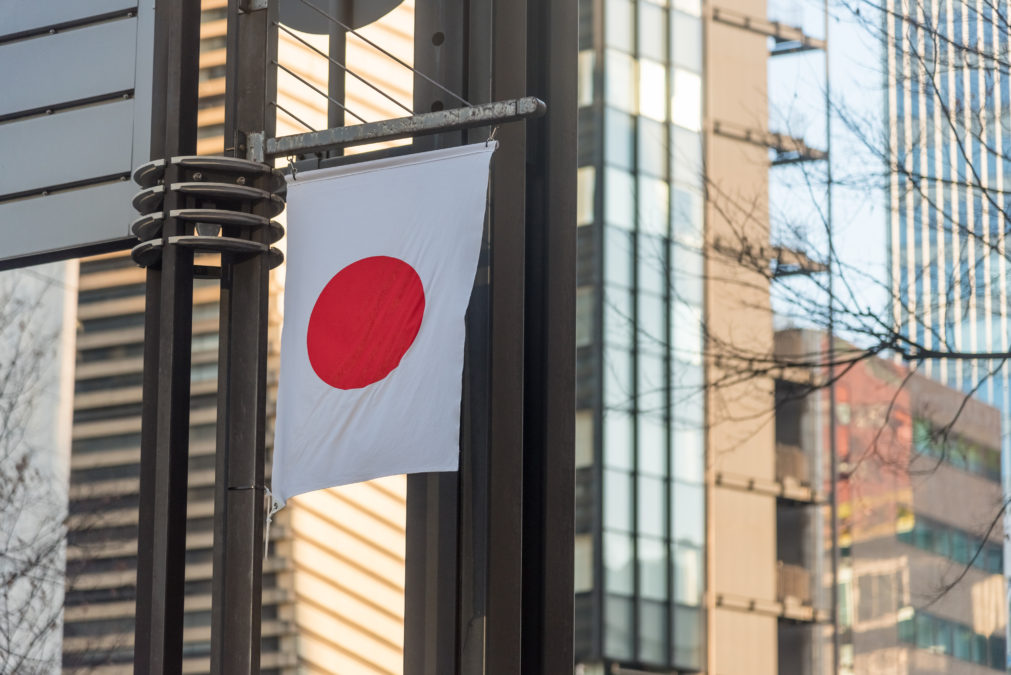
Japan's Financial Services Agency may allow local banks to trade and hold cryptocurrencies, local news outlets reported Sunday.
According to a report from Yomiuri Shimbun, the FSA is planning to discuss potentially reforming the current supervisory guidelines that ban domestic banks from holding digital assets due to price volatility.
The aim of the policy reform is to establish a system allowing banks to buy and sell crypto like stocks and government bonds, the report said. The agency also plans to create regulatory guardrails to mitigate financial risks from the potential update. The FSA is set to discuss the reform at an upcoming meeting of the Financial Services Council, an advisory body to the Prime Minister.
Furthermore, the FSA is also considering allowing banks to register as crypto exchanges to form an easier environment for retail investors to participate in the crypto market, via trusted banking institutions.
Meanwhile, the FSA has been putting efforts to make digital asset trading a fair market, as it reportedly plans to file amendments that would explicitly prohibit trading based on non-public information, with violators facing financial penalties proportional to their illicit gains.
Disclaimer: The content of this article solely reflects the author's opinion and does not represent the platform in any capacity. This article is not intended to serve as a reference for making investment decisions.
You may also like
The 2025 Bitcoin Collapse: Underlying Factors and Tactical Considerations for Cryptocurrency Investors
- The 2025 Bitcoin crash erased $1.2 trillion in value, driven by macroeconomic tightening, leverage, and geopolitical tensions. - Financialization linked crypto to traditional markets, exposing systemic risks through institutional entanglements and fragile liquidity. - Regulatory divergence between U.S. pro-blockchain policies and EU MiCAR rules created jurisdictional conflicts and operational misalignment. - Investors must prioritize diversification, monitor regulatory shifts, and prepare for prolonged v

Blockchain’s $6.8 Billion Bet: Will Advancements Outpace Its Security Risks?
- Terminal Finance's collapse exposed blockchain fintech vulnerabilities from delayed tech adoption and security flaws, triggering sector-wide scrutiny. - Naver-Upbit's $6.8B AI-blockchain merger faces challenges after Upbit's $36M Solana breach, mirroring 2019 North Korean-linked attacks. - Balancer's $116M hack revealed systemic DeFi risks, with debates over audit efficacy despite 11 prior security reviews. - Binance's legal troubles and BNB's price slump highlight market skepticism, while initiatives li
Bitcoin News Update: Krugman Links Bitcoin's Decline to Waning 'Trump Trade' Hype
- Bitcoin's 30% drop from October peak linked to fading "Trump trade" speculation, per Nobel laureate Paul Krugman, who frames it as speculative rather than stable value. - BlackRock's IBIT ETF regained $3.2B profit post-$90K rebound, while SpaceX's $105M BTC transfer sparks custodial strategy debates amid market volatility. - Naver's $10B Dunamu acquisition and corporate Bitcoin treasury moves highlight institutional crypto integration, despite $19B industry selloff and regulatory challenges. - Prediction
Bitcoin News Today: "Conflicting Whale Strategies Cast Uncertainty on Bitcoin's Path to $100K"
- Bitcoin's drop below $100,000 coincided with mixed whale strategies, including accumulation, shorting, and exchange deposits, signaling uncertain market direction. - Ethereum whales used 16.08 million DAI to buy 5,343 ETH at $3,010, while Bitcoin whales deposited 9,000 BTC, potentially signaling selling preparation. - Derivatives markets showed conflicting bets, with a $91M BTC short and $36.4M long flip, while ETF inflows ($84M total) hinted at institutional confidence amid macroeconomic risks. - Analys

Trending news
MoreCrypto prices
More





