Bitget App
Trade smarter
Buy cryptoMarketsTradeFuturesEarnSquareMore

News

Stay up to date on the latest crypto trends with our expert, in-depth coverage.

banner
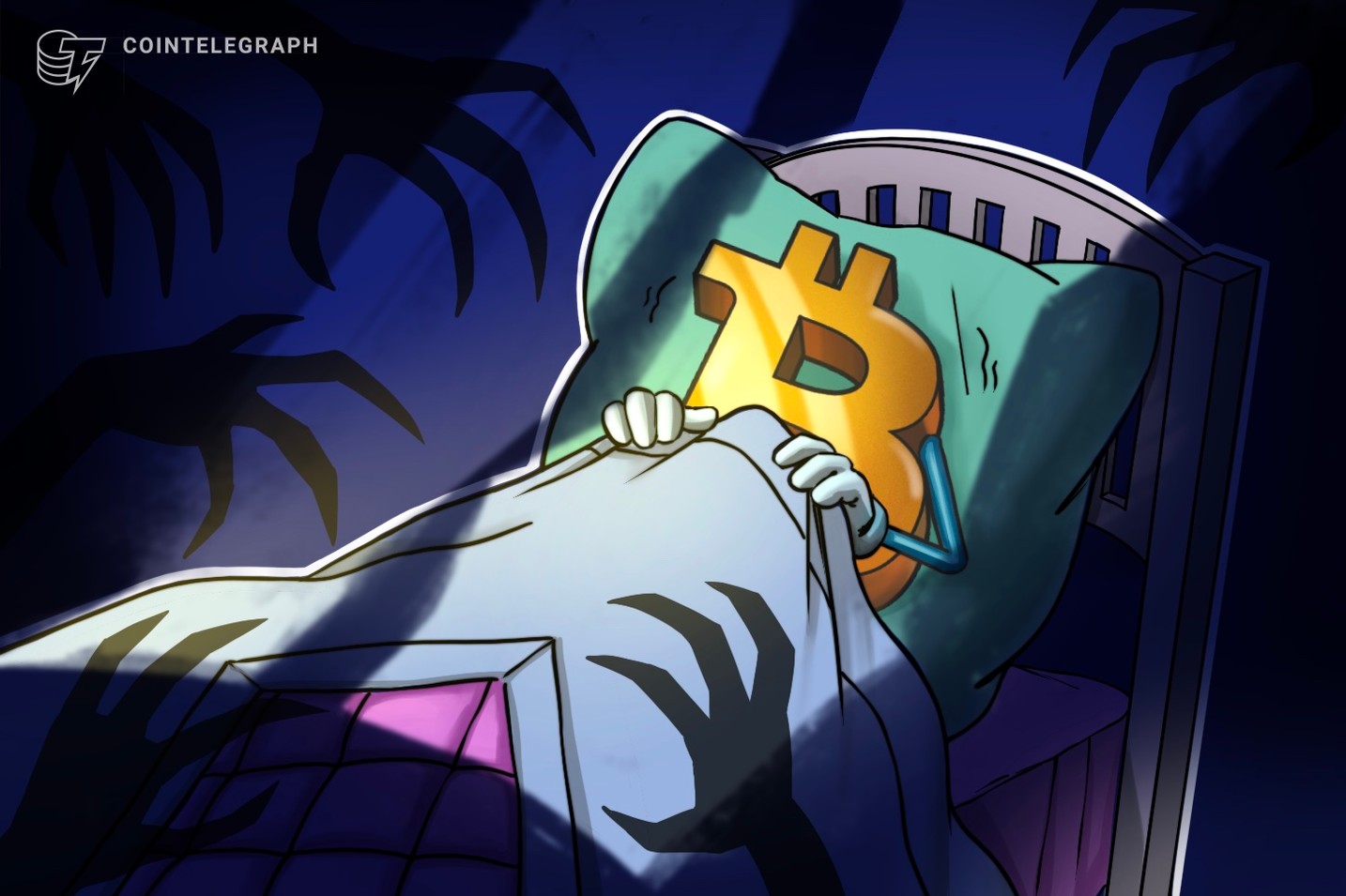
From yen rate hikes to mining farms shutting down, why is bitcoin still falling?

The recent decline in bitcoin prices is primarily driven by expectations of a rate hike by the Bank of Japan, uncertainty regarding the US Federal Reserve's rate cut trajectory, and systemic de-risking by market participants. Japan's potential rate hike may trigger the unwinding of global arbitrage trades, leading to a sell-off in risk assets. At the same time, increased uncertainty over US rate cuts has intensified market volatility. In addition, selling by long-term holders, miners, and market makers has further amplified the price drop. Summary generated by Mars AI This summary was generated by the Mars AI model, and the accuracy and completeness of its content are still being iteratively updated.

MarsBit·2025/12/16 04:27
The Economist: The Real Threat of Cryptocurrency to Traditional Banks

The crypto industry is replacing Wall Street's privileged status within the American right-wing camp.

ForesightNews 速递·2025/12/16 04:23
Grayscale's Top 10 Crypto Predictions: Key Trends for 2026 You Can't Miss

The market is transitioning from an emotion-driven cycle of speculation to a phase of structural differentiation driven by regulatory channels, long-term capital, and fundamental-based pricing.

BlockBeats·2025/12/16 03:57
From Yen Interest Rate Hike to Mining Farm Shutdown, Why Is Bitcoin Still Falling

The market is down again, but this may not be a good buying opportunity this time.

BlockBeats·2025/12/16 03:55
Flash
03:17
an exchange Bitcoin Price Premium Index has been in negative premium for 7 consecutive days, currently at -0.1184%.
BlockBeats News, January 13th, according to Coinglass data, the an exchange Bitcoin Premium Index has been in a negative premium for 7 consecutive days, currently at -0.1184%. Over the past 30 days, it has been in a negative premium for 29 days. BlockBeats Note: The an exchange Bitcoin Premium Index is used to measure the difference between the Bitcoin price on an exchange (a major U.S. exchange) and the global market average price. This index is an important indicator for observing U.S. market capital inflows, institutional investment enthusiasm, and market sentiment changes. A positive premium indicates that the an exchange price is higher than the global average, usually indicating: strong buying pressure in the U.S. market, institutional or regulatory funds actively entering, ample USD liquidity, and a generally optimistic investment sentiment. A negative premium indicates that the an exchange price is lower than the global average, typically reflecting: significant selling pressure in the U.S. market, a decrease in investor risk appetite, a rise in market risk aversion, or capital outflows.
03:15
WLFI Markets officially launches the USD1 points program.
 Zak Folkman, co-founder and COO of the Trump family’s crypto project World Liberty Finance, announced on the X platform that WLFI Markets has officially launched the USD1 points program. Users who supply USD1 will have the opportunity to earn points, but the specific point rewards depend on the terms of each cooperative promotion partner. These terms may change at any time, and users can decide whether to participate.
03:15
The US Solana spot ETF saw a total net inflow of $10.67 million in a single day.
```  according to SoSoValue data, yesterday (Eastern Time January 12) Solana spot ETFs had a total net inflow of 10.67 million USD. The spot SOL ETF with the highest net inflow yesterday (Eastern Time January 12) was the Bitwise SOL ETF BSOL, with a single-day net inflow of 8.56 million USD and a historical total net inflow of 657 million USD. Next was the Fidelity SOL ETF FSOL, with a single-day net inflow of 1.65 million USD and a historical total net inflow of 133 million USD. ```
News
© 2025 Bitget